

lator of biological phenomena that is easily
delivered by external illumination technologies.
In this way, light-controlled approaches
improve spatiotemporal resolution in relation
to traditional chemical inducers. However, light
has some issues that must be solved to establish
it as the main modulator of biological processes
in scientific investigation. For instance, phototoxicity can be a relevant point that depends on
light intensity and duration of its exposure. In
addition, the penetrance of light is crucial when
it is applied in high-density cell cultures or
opaque tissues.
Considering the great advantages and little
disadvantages of light as inducer, a broad number of optogenetic tools have been developed in
several biological chassis and responding to
different wavelengths. Based on natural and
engineered photoreceptors, it is now possible
to study and manipulate different cell processes
with great precision. To date, over 500 articles/
reviews related to optogenetics research have
been published, where 318 use mammalian
hosts, while only 56 cover fungi. In that context,
the number of articles mentioning LOV
domains reaches 128, in which there are just
28 publications related to VVD and/or WC-1
(https://www.optobase.org). Considering the
kingdom mycota comprises some 100,000
described species, with a diversity estimated at
0.8 million to 5.1 million species (Blackwell
2011), this poses an open invitation to the scientific community to consider the rather unexplored photobiology of fungi in the
development of new optogenetic devices to
address pending biological questions. In that
context, we expect that advances in optics technology and discovery of light-sensitive domains
with novel biochemical properties can enrich
the optogenetic toolkit and the applications of
this field in basic and applied research.
VVD
WC-1
Fungal known
Characterized photoreceptors
Complete photoreceptor universe
photoreceptors
Commonly used
photoreceptors
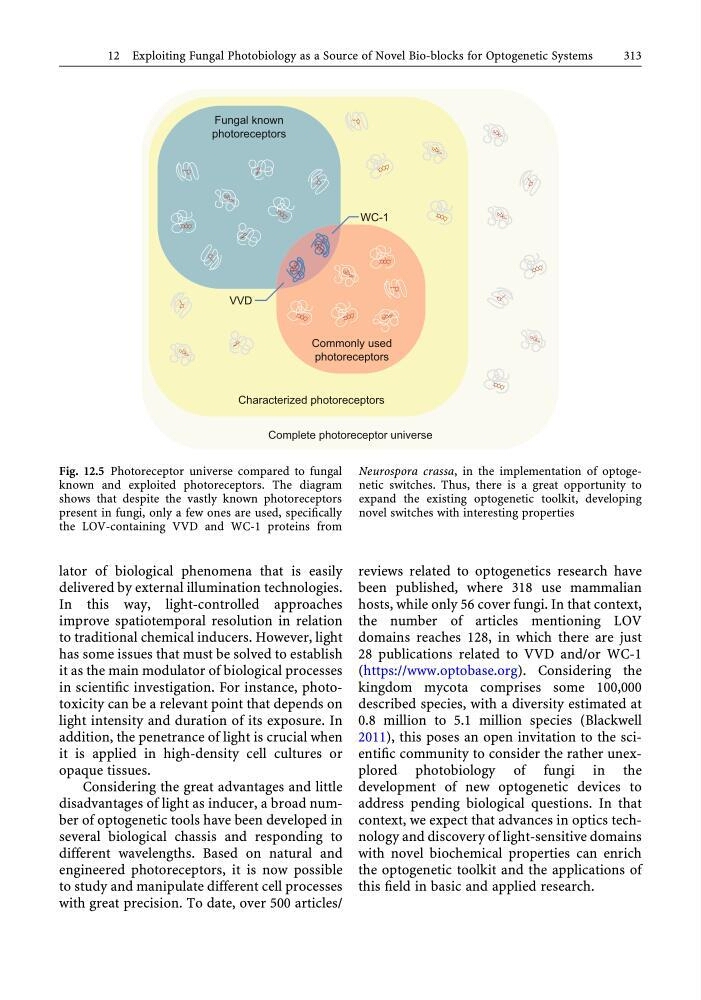
Fig. 12.5 Photoreceptor universe compared to fungal
known and exploited photoreceptors. The diagram
shows that despite the vastly known photoreceptors
present in fungi, only a few ones are used, specifically
the LOV-containing VVD and WC-1 proteins from
Neurospora crassa, in the implementation of optogenetic switches. Thus, there is a great opportunity to
expand the existing optogenetic toolkit, developing
novel switches with interesting properties
12 Exploiting Fungal Photobiology as a Source of Novel Bio-blocks for Optogenetic Systems
313
delivered by external illumination technologies.
In this way, light-controlled approaches
improve spatiotemporal resolution in relation
to traditional chemical inducers. However, light
has some issues that must be solved to establish
it as the main modulator of biological processes
in scientific investigation. For instance, phototoxicity can be a relevant point that depends on
light intensity and duration of its exposure. In
addition, the penetrance of light is crucial when
it is applied in high-density cell cultures or
opaque tissues.
Considering the great advantages and little
disadvantages of light as inducer, a broad number of optogenetic tools have been developed in
several biological chassis and responding to
different wavelengths. Based on natural and
engineered photoreceptors, it is now possible
to study and manipulate different cell processes
with great precision. To date, over 500 articles/
reviews related to optogenetics research have
been published, where 318 use mammalian
hosts, while only 56 cover fungi. In that context,
the number of articles mentioning LOV
domains reaches 128, in which there are just
28 publications related to VVD and/or WC-1
(https://www.optobase.org). Considering the
kingdom mycota comprises some 100,000
described species, with a diversity estimated at
0.8 million to 5.1 million species (Blackwell
2011), this poses an open invitation to the scientific community to consider the rather unexplored photobiology of fungi in the
development of new optogenetic devices to
address pending biological questions. In that
context, we expect that advances in optics technology and discovery of light-sensitive domains
with novel biochemical properties can enrich
the optogenetic toolkit and the applications of
this field in basic and applied research.
VVD
WC-1
Fungal known
Characterized photoreceptors
Complete photoreceptor universe
photoreceptors
Commonly used
photoreceptors
Fig. 12.5 Photoreceptor universe compared to fungal
known and exploited photoreceptors. The diagram
shows that despite the vastly known photoreceptors
present in fungi, only a few ones are used, specifically
the LOV-containing VVD and WC-1 proteins from
Neurospora crassa, in the implementation of optogenetic switches. Thus, there is a great opportunity to
expand the existing optogenetic toolkit, developing
novel switches with interesting properties
12 Exploiting Fungal Photobiology as a Source of Novel Bio-blocks for Optogenetic Systems
313