

superior protein secretory potential. This
potential has been further improved by classical mutagenesis yielding strains with superior
protein secretion properties. This includes A.
niger CBS 513.88 and T. reesei RUT-C30, which
can reach titers of 30 and 100 g/L of endogenous cellulolytic enzymes by optimized cultivations, respectively (Cairns et al. 2018; Cherry
and Fidantsef 2003). Detailed mechanistic
insights into the secretory pathway combined
with fully sequenced genomes and a diverse
range of omics data set the stage for rational
strain engineering. In this section, we will present examples of genetically modified strains,
which serve as platforms for heterologous protein production. This includes strains with
improved production and secretion physiology
obtained by introducing defined mutations
influencing processes ranging from the delivery
of amino acid building blocks for protein synthesis to processes involved in exocytosis.
Specifically, we will treat two major topics:
firstly, engineering the secretory pathway
focusing on transport signals, the associated
processes of protein glycosylation and folding,
and vesicular trafficking and secondly, expression in protease-deficient strains as a method
for reducing degradation of the heterologous
protein.
A. Engineering the Secretory Pathway
The protein secretion pathway is complex and
provides several processes that can be engineered to enhance production yields. Generally,
protein secretion processes can be grouped into
three major themes. Firstly, secretion signals
that mediate translocation into the endoplasmic reticulum (ER). Secondly, folding and glycosylation of secretory proteins. Thirdly, the
complex machinery, which transports proteins
through the secretory pathway and leads to
secretion by exocytosis. Below, we provide
examples showing how each of these steps can
be optimized by rational genetic engineering.
1. Transport Signals
A significant obstacle in optimizing secretion of
a heterologous protein is choosing the right
pre- and pro-sequence, as protein secretion is
Secretion signal
(SS)
SS
GOI
a
b
Bio-blocks
GOI
Ordered
assembly
GFP
GOI
GFP tag
(GFP)
Bio-block
examples
H 6
GOI
PCR
fragment
Doublestranded
oligo
Primer
tail
Poly-histidine
(H 6 )
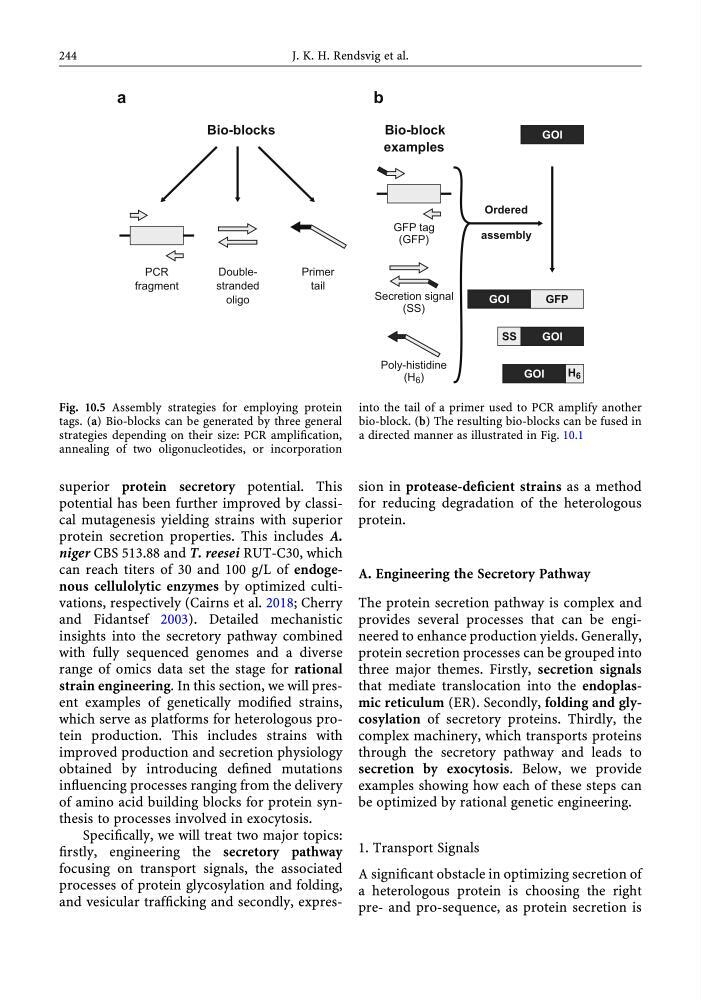
Fig. 10.5 Assembly strategies for employing protein
tags. (a) Bio-blocks can be generated by three general
strategies depending on their size: PCR amplification,
annealing of two oligonucleotides, or incorporation
into the tail of a primer used to PCR amplify another
bio-block. (b) The resulting bio-blocks can be fused in
a directed manner as illustrated in Fig. 10.1
244
J. K. H. Rendsvig et al.
potential has been further improved by classical mutagenesis yielding strains with superior
protein secretion properties. This includes A.
niger CBS 513.88 and T. reesei RUT-C30, which
can reach titers of 30 and 100 g/L of endogenous cellulolytic enzymes by optimized cultivations, respectively (Cairns et al. 2018; Cherry
and Fidantsef 2003). Detailed mechanistic
insights into the secretory pathway combined
with fully sequenced genomes and a diverse
range of omics data set the stage for rational
strain engineering. In this section, we will present examples of genetically modified strains,
which serve as platforms for heterologous protein production. This includes strains with
improved production and secretion physiology
obtained by introducing defined mutations
influencing processes ranging from the delivery
of amino acid building blocks for protein synthesis to processes involved in exocytosis.
Specifically, we will treat two major topics:
firstly, engineering the secretory pathway
focusing on transport signals, the associated
processes of protein glycosylation and folding,
and vesicular trafficking and secondly, expression in protease-deficient strains as a method
for reducing degradation of the heterologous
protein.
A. Engineering the Secretory Pathway
The protein secretion pathway is complex and
provides several processes that can be engineered to enhance production yields. Generally,
protein secretion processes can be grouped into
three major themes. Firstly, secretion signals
that mediate translocation into the endoplasmic reticulum (ER). Secondly, folding and glycosylation of secretory proteins. Thirdly, the
complex machinery, which transports proteins
through the secretory pathway and leads to
secretion by exocytosis. Below, we provide
examples showing how each of these steps can
be optimized by rational genetic engineering.
1. Transport Signals
A significant obstacle in optimizing secretion of
a heterologous protein is choosing the right
pre- and pro-sequence, as protein secretion is
Secretion signal
(SS)
SS
GOI
a
b
Bio-blocks
GOI
Ordered
assembly
GFP
GOI
GFP tag
(GFP)
Bio-block
examples
H 6
GOI
PCR
fragment
Doublestranded
oligo
Primer
tail
Poly-histidine
(H 6 )
Fig. 10.5 Assembly strategies for employing protein
tags. (a) Bio-blocks can be generated by three general
strategies depending on their size: PCR amplification,
annealing of two oligonucleotides, or incorporation
into the tail of a primer used to PCR amplify another
bio-block. (b) The resulting bio-blocks can be fused in
a directed manner as illustrated in Fig. 10.1
244
J. K. H. Rendsvig et al.