

domains can occupy the N-terminal position,
the majority of which have no functional annotation (in particular in Basidiomycota) (Dyrka
et al. 2014). Figure 6.2a (left chart) presents the
14 most frequent effector/signaling domains
found in the fungal NLR set. The annotated
domains fall into several broad categories. Several domains display enzymatic activities as
lipases (sesB-like, patatin), proteases (peptidase S8, CHAT), or purine nucleoside phosphorylases (PNP-UDP). A second category
corresponds to HeLo-related membranetargeting cell death-inducing domains (HeLolike and HeLo). Different types of amyloid signaling motifs (PFD-like as in prion-forming
domain) were identified that function by amyloid templating and activation of downstream
effectors as will be developed below. Finally, the
HET domain, which shows a remote homology
with the TIR domain prevalent in plant NLRs
and animal immune receptors, is likely to function (as described for TIR domains) as a signaling domain engaging in homotypic interaction
with downstream effectors also bearing a HET
domain (Dyrka et al. 2014; Nimma et al. 2017).
In comparison with the 2014 survey, two newcomers to the list of common N-terminal
domains are the TIR and CHAT domains. TIR
domains were found in a group of NLRs from
the flagellated Chytridiomycota, Rhizoclosmatium globosum. The CHAT domain is a protease domain evolutionarily related to caspases
(Aravind and Koonin 2002).
Considering these different annotation classes, one
might propose that these N-terminal domains could
either be termed signaling domains when their putative
function is as adaptors that transmit the receptor activation signal to further downstream effector proteins
(typically HET/TIR domains or prion amyloid signaling
motifs), or alternatively as effector domains, where it is
presumed or shown that the domain functions as a
terminal execution module (as is, for instance, the
case for the HeLo cell death-inducing domain which
directly targets membrane integrity). Of course, due to
the scarcity of functional studies, this distinction cannot be clearly made at present.
The functional annotation of the fungal
NLR repertoires revealed a greater diversity of
the N-terminal domain but also point to some
similarities with plant and animal NLRs and
also NLR-related proteins from bacteria. The
HET and HeLo-like domains have been shown
to exhibit a remote homology with the TIR
domain (as already mentioned) and the RPW8
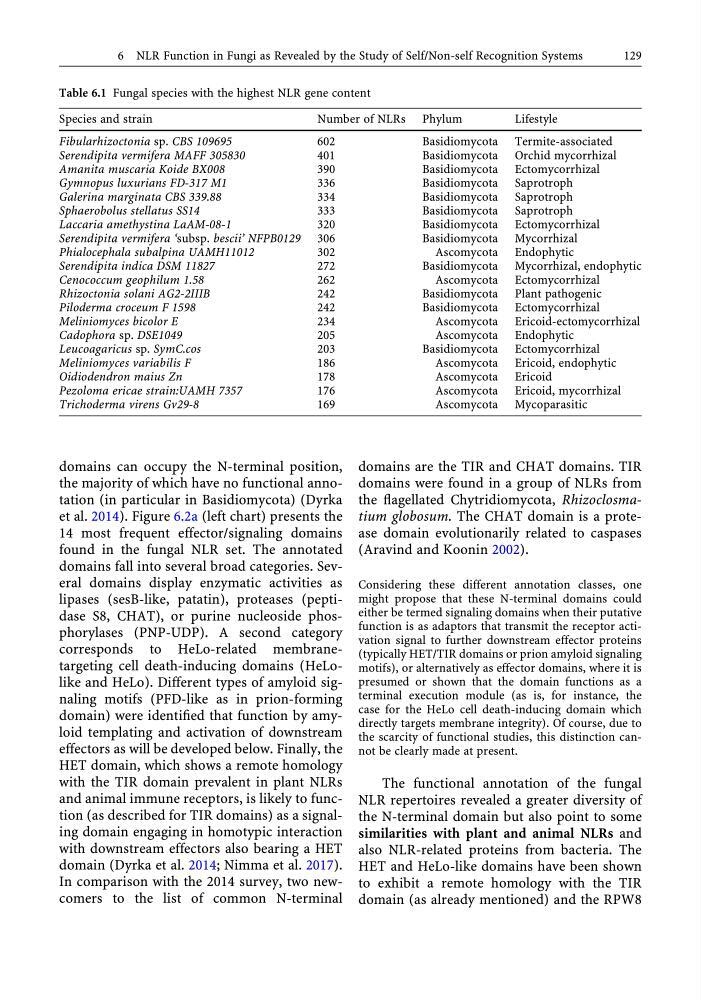
Table 6.1 Fungal species with the highest NLR gene content
Species and strain
Number of NLRs Phylum
Lifestyle
Fibularhizoctonia sp. CBS 109695
602
Basidiomycota Termite-associated
Serendipita vermifera MAFF 305830
401
Basidiomycota Orchid mycorrhizal
Amanita muscaria Koide BX008
390
Basidiomycota Ectomycorrhizal
Gymnopus luxurians FD-317 M1
336
Basidiomycota Saprotroph
Galerina marginata CBS 339.88
334
Basidiomycota Saprotroph
Sphaerobolus stellatus SS14
333
Basidiomycota Saprotroph
Laccaria amethystina LaAM-08-1
320
Basidiomycota Ectomycorrhizal
Serendipita vermifera ‘subsp. bescii’ NFPB0129 306
Basidiomycota Mycorrhizal
Phialocephala subalpina UAMH11012
302
Ascomycota Endophytic
Serendipita indica DSM 11827
272
Basidiomycota Mycorrhizal, endophytic
Cenococcum geophilum 1.58
262
Ascomycota Ectomycorrhizal
Rhizoctonia solani AG2-2IIIB
242
Basidiomycota Plant pathogenic
Piloderma croceum F 1598
242
Basidiomycota Ectomycorrhizal
Meliniomyces bicolor E
234
Ascomycota Ericoid-ectomycorrhizal
Cadophora sp. DSE1049
205
Ascomycota Endophytic
Leucoagaricus sp. SymC.cos
203
Basidiomycota Ectomycorrhizal
Meliniomyces variabilis F
186
Ascomycota Ericoid, endophytic
Oidiodendron maius Zn
178
Ascomycota Ericoid
Pezoloma ericae strain:UAMH 7357
176
Ascomycota Ericoid, mycorrhizal
Trichoderma virens Gv29-8
169
Ascomycota Mycoparasitic
6 NLR Function in Fungi as Revealed by the Study of Self/Non-self Recognition Systems
129
the majority of which have no functional annotation (in particular in Basidiomycota) (Dyrka
et al. 2014). Figure 6.2a (left chart) presents the
14 most frequent effector/signaling domains
found in the fungal NLR set. The annotated
domains fall into several broad categories. Several domains display enzymatic activities as
lipases (sesB-like, patatin), proteases (peptidase S8, CHAT), or purine nucleoside phosphorylases (PNP-UDP). A second category
corresponds to HeLo-related membranetargeting cell death-inducing domains (HeLolike and HeLo). Different types of amyloid signaling motifs (PFD-like as in prion-forming
domain) were identified that function by amyloid templating and activation of downstream
effectors as will be developed below. Finally, the
HET domain, which shows a remote homology
with the TIR domain prevalent in plant NLRs
and animal immune receptors, is likely to function (as described for TIR domains) as a signaling domain engaging in homotypic interaction
with downstream effectors also bearing a HET
domain (Dyrka et al. 2014; Nimma et al. 2017).
In comparison with the 2014 survey, two newcomers to the list of common N-terminal
domains are the TIR and CHAT domains. TIR
domains were found in a group of NLRs from
the flagellated Chytridiomycota, Rhizoclosmatium globosum. The CHAT domain is a protease domain evolutionarily related to caspases
(Aravind and Koonin 2002).
Considering these different annotation classes, one
might propose that these N-terminal domains could
either be termed signaling domains when their putative
function is as adaptors that transmit the receptor activation signal to further downstream effector proteins
(typically HET/TIR domains or prion amyloid signaling
motifs), or alternatively as effector domains, where it is
presumed or shown that the domain functions as a
terminal execution module (as is, for instance, the
case for the HeLo cell death-inducing domain which
directly targets membrane integrity). Of course, due to
the scarcity of functional studies, this distinction cannot be clearly made at present.
The functional annotation of the fungal
NLR repertoires revealed a greater diversity of
the N-terminal domain but also point to some
similarities with plant and animal NLRs and
also NLR-related proteins from bacteria. The
HET and HeLo-like domains have been shown
to exhibit a remote homology with the TIR
domain (as already mentioned) and the RPW8
Table 6.1 Fungal species with the highest NLR gene content
Species and strain
Number of NLRs Phylum
Lifestyle
Fibularhizoctonia sp. CBS 109695
602
Basidiomycota Termite-associated
Serendipita vermifera MAFF 305830
401
Basidiomycota Orchid mycorrhizal
Amanita muscaria Koide BX008
390
Basidiomycota Ectomycorrhizal
Gymnopus luxurians FD-317 M1
336
Basidiomycota Saprotroph
Galerina marginata CBS 339.88
334
Basidiomycota Saprotroph
Sphaerobolus stellatus SS14
333
Basidiomycota Saprotroph
Laccaria amethystina LaAM-08-1
320
Basidiomycota Ectomycorrhizal
Serendipita vermifera ‘subsp. bescii’ NFPB0129 306
Basidiomycota Mycorrhizal
Phialocephala subalpina UAMH11012
302
Ascomycota Endophytic
Serendipita indica DSM 11827
272
Basidiomycota Mycorrhizal, endophytic
Cenococcum geophilum 1.58
262
Ascomycota Ectomycorrhizal
Rhizoctonia solani AG2-2IIIB
242
Basidiomycota Plant pathogenic
Piloderma croceum F 1598
242
Basidiomycota Ectomycorrhizal
Meliniomyces bicolor E
234
Ascomycota Ericoid-ectomycorrhizal
Cadophora sp. DSE1049
205
Ascomycota Endophytic
Leucoagaricus sp. SymC.cos
203
Basidiomycota Ectomycorrhizal
Meliniomyces variabilis F
186
Ascomycota Ericoid, endophytic
Oidiodendron maius Zn
178
Ascomycota Ericoid
Pezoloma ericae strain:UAMH 7357
176
Ascomycota Ericoid, mycorrhizal
Trichoderma virens Gv29-8
169
Ascomycota Mycoparasitic
6 NLR Function in Fungi as Revealed by the Study of Self/Non-self Recognition Systems
129