

156
5.1 Thermal Energy-Driven Cross-Coupling Reactions
with H 2 Evolution
An oxidant-free Heck-type cross-coupling reaction between a vinyl C-H bond and
X-H bond (X = carbon or heteroatom) with H 2 evolution is a typical example of a
thermal energy-driven cross-coupling reaction. A general mechanism of this reaction is shown in Scheme 5.2. The pathway begins with X-H activation to generate
intermediate B via a deprotonation process. The subsequent insertion of an alkene
into the M-X bond leads to the formation of alkyl metal complex C. The following
β-H elimination of complex C leads to the target cross- coupling product and generates the metal hydride species D. Finally, intermediate D reacts with a proton to
regenerate catalytically active species A along with the release of H 2 gas. Based on
this strategy, the following two types of reactions were realized under oxidant-free
conditions: (1) construction of heterocyclic compounds with formation of both C-C
and C-X bonds, which has been used to synthesize N- and O-containing heterocyclic compounds and (2) direct functionalization of C(sp
2
)-H bonds, including alkenylation, aromatization, and phosphorylation.
5.1.1 Construction of Heterocyclic Compounds
5.1.1.1 Synthesis of N-Containing Heterocyclic Compounds
In 2014, Wang’s group developed the annulation of imines and alkynes by C-H/N-H
activation under oxidant-free conditions [2] (Scheme 5.3). In this work, isoquinolines were produced in good yields along with H 2 gas as the sole by-product in the
presence of manganese catalyst [MnBr(CO) 5 ] at 105 °C.
To probe the mechanism, five-membered manganacycle 3a was prepared using
stoichiometric amounts of [MnBr(CO) 5 ] and imine 1a. Treatment of 3a with alkyne
2 generated annulation product 4a. Moreover, a catalytic amount of 3a promoted the
C H + X H
Ox
C X +
O x H
H
C H + X H
Ox
C X +
H 2
Previous strategy:
The fourth generation oxidave cross coupling reaction:
X = carbon or heteroatoms
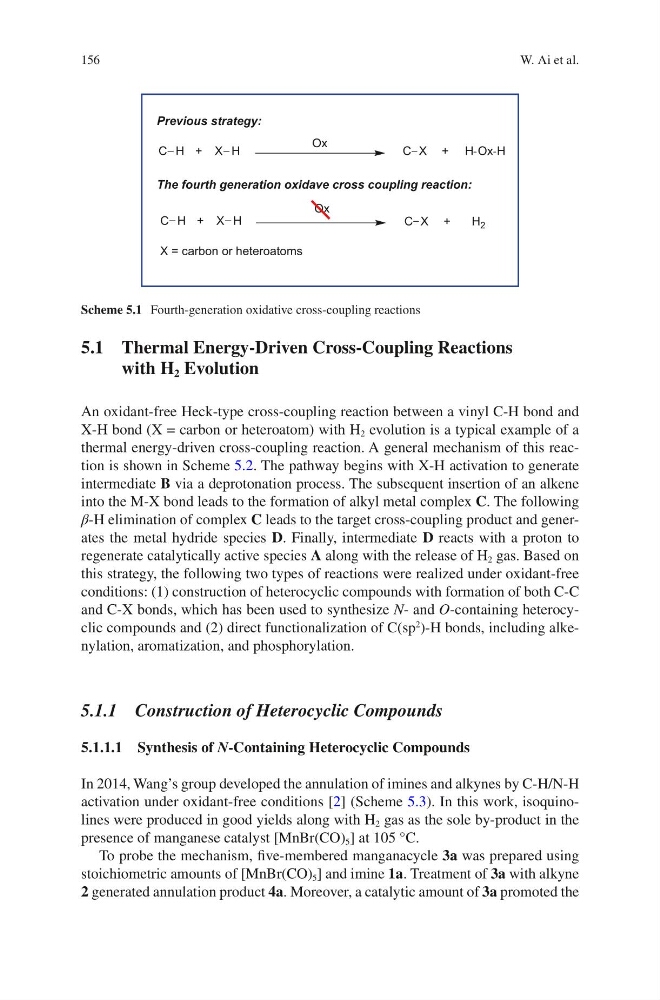
Scheme 5.1 Fourth-generation oxidative cross-coupling reactions
W. Ai et al.
5.1 Thermal Energy-Driven Cross-Coupling Reactions
with H 2 Evolution
An oxidant-free Heck-type cross-coupling reaction between a vinyl C-H bond and
X-H bond (X = carbon or heteroatom) with H 2 evolution is a typical example of a
thermal energy-driven cross-coupling reaction. A general mechanism of this reaction is shown in Scheme 5.2. The pathway begins with X-H activation to generate
intermediate B via a deprotonation process. The subsequent insertion of an alkene
into the M-X bond leads to the formation of alkyl metal complex C. The following
β-H elimination of complex C leads to the target cross- coupling product and generates the metal hydride species D. Finally, intermediate D reacts with a proton to
regenerate catalytically active species A along with the release of H 2 gas. Based on
this strategy, the following two types of reactions were realized under oxidant-free
conditions: (1) construction of heterocyclic compounds with formation of both C-C
and C-X bonds, which has been used to synthesize N- and O-containing heterocyclic compounds and (2) direct functionalization of C(sp
2
)-H bonds, including alkenylation, aromatization, and phosphorylation.
5.1.1 Construction of Heterocyclic Compounds
5.1.1.1 Synthesis of N-Containing Heterocyclic Compounds
In 2014, Wang’s group developed the annulation of imines and alkynes by C-H/N-H
activation under oxidant-free conditions [2] (Scheme 5.3). In this work, isoquinolines were produced in good yields along with H 2 gas as the sole by-product in the
presence of manganese catalyst [MnBr(CO) 5 ] at 105 °C.
To probe the mechanism, five-membered manganacycle 3a was prepared using
stoichiometric amounts of [MnBr(CO) 5 ] and imine 1a. Treatment of 3a with alkyne
2 generated annulation product 4a. Moreover, a catalytic amount of 3a promoted the
C H + X H
Ox
C X +
O x H
H
C H + X H
Ox
C X +
H 2
Previous strategy:
The fourth generation oxidave cross coupling reaction:
X = carbon or heteroatoms
Scheme 5.1 Fourth-generation oxidative cross-coupling reactions
W. Ai et al.