

101
4.1.2 Coupling of C sp3 -H with C sp2 -H Bonds
Methylation of 2-phenylpyridines is smoothly performed with di-tert-butyl peroxide (TBP) as the oxidant in the presence of catalytic amount of Pd(OAc) 2
(Scheme 4.5). The peroxide TBP served both as the oxidant and the methylating
reagent. The methylation of the heterocyclic palladacycle might proceed through
radical intermediates which are generated from the thermal decomposition of TBP.
The oxidative radical coupling of 2-phenylpyridines with simple nonactivated
alkanes (Scheme 4.6) was achieved using 10 mol% [{(p-cymene)RuCl 2 } 2 ] as catalyst and 4 equiv. TBP as oxidant under aerobic conditions [2]. Various 2-aryl pyridines can be coupled with cycloalkanes to generate ortho-alkylated products.
However, overalkylation can be observed in many cases, and the mono-alkylation
products are hard to be isolated from the isomeric mixtures.
The oxidative radical coupling of directing-group-containing-arenes with alkylbenzene (toluene, etc.) can be performed using 10 mol% Pd(OAc) 2 as the catalyst
and 2 equiv. TBHP as the oxidant under aerobic conditions [3]. Arenes containing
various directing groups (2-pyridyl, 2-oxopyridyl, and O-methyl oxime, etc.) can
undergo ortho-aroylation with toluene derivatives (2 equiv) in good yields, and
mono-aroylation can be achieved under this reaction conditions (Scheme 4.7).
With similar strategy, oxidative cross-coupling of acetanilide and toluene for the
synthesis of ortho-acylacetanilide can be achieved by Pd(OAc) 2 catalyst
(Scheme 4.8) [4]. Toluene derivatives can act as effective acyl precursors in the
oxidative coupling under TBHP (12 equiv) conditions. This Pd-catalyzed orthoacylation proceeds under mild reaction conditions with good functional group tolerance (bromo, amide, ester, etc.) and excellent site selectivity. And reaction
mechanism was proposed that acyl radical was generated in situ via aliphatic C-H
bond oxidation to aldehyde by Pd/TBHP and H atom abstraction by t-BuOO radical
to produce reactive acyl radicals (Scheme 4.9).
In the same time, a very similar protocol to synthesis of ortho-acylacetanilide
was reported (Scheme 4.10). Good isolated yields of ortho-acylacetanilide can be
obtained only using 5 mol% Pd(OAc) 2 catalyst and accepted amount of TBHP (4
equiv) as oxidant. The amount of toluene derivatives can be reduced to only 2.0
equiv., and excellent yields can be also obtained.
up to 83%
[(CuOTf) 2 ] . toluene
1.5 equiv DDQ
120 °C, 24 h
H
R
+ H
Ar
R
Ar
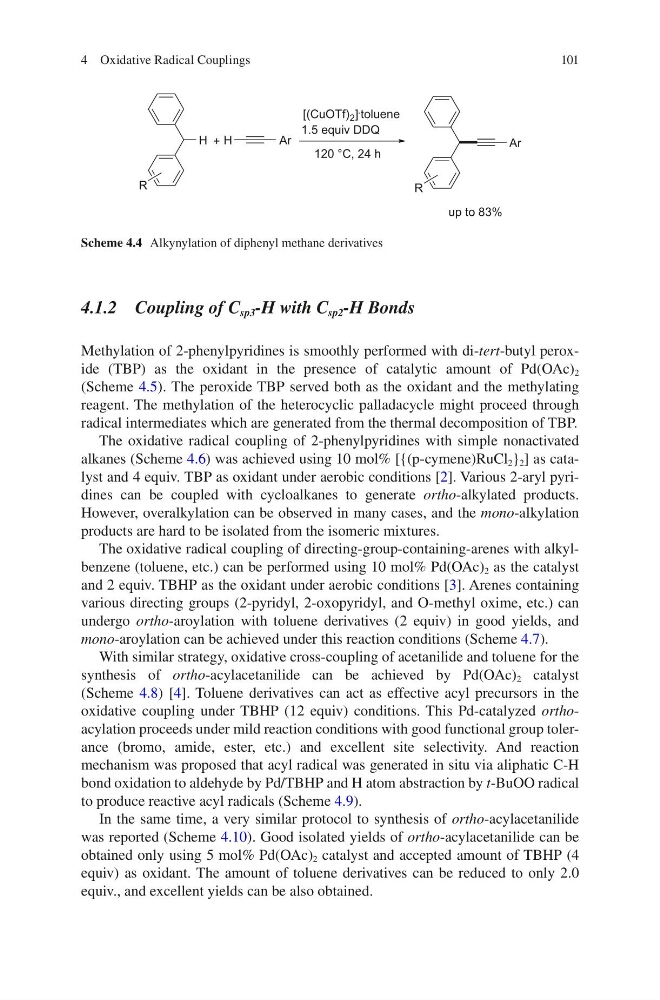
Scheme 4.4 Alkynylation of diphenyl methane derivatives
4 Oxidative Radical Couplings
4.1.2 Coupling of C sp3 -H with C sp2 -H Bonds
Methylation of 2-phenylpyridines is smoothly performed with di-tert-butyl peroxide (TBP) as the oxidant in the presence of catalytic amount of Pd(OAc) 2
(Scheme 4.5). The peroxide TBP served both as the oxidant and the methylating
reagent. The methylation of the heterocyclic palladacycle might proceed through
radical intermediates which are generated from the thermal decomposition of TBP.
The oxidative radical coupling of 2-phenylpyridines with simple nonactivated
alkanes (Scheme 4.6) was achieved using 10 mol% [{(p-cymene)RuCl 2 } 2 ] as catalyst and 4 equiv. TBP as oxidant under aerobic conditions [2]. Various 2-aryl pyridines can be coupled with cycloalkanes to generate ortho-alkylated products.
However, overalkylation can be observed in many cases, and the mono-alkylation
products are hard to be isolated from the isomeric mixtures.
The oxidative radical coupling of directing-group-containing-arenes with alkylbenzene (toluene, etc.) can be performed using 10 mol% Pd(OAc) 2 as the catalyst
and 2 equiv. TBHP as the oxidant under aerobic conditions [3]. Arenes containing
various directing groups (2-pyridyl, 2-oxopyridyl, and O-methyl oxime, etc.) can
undergo ortho-aroylation with toluene derivatives (2 equiv) in good yields, and
mono-aroylation can be achieved under this reaction conditions (Scheme 4.7).
With similar strategy, oxidative cross-coupling of acetanilide and toluene for the
synthesis of ortho-acylacetanilide can be achieved by Pd(OAc) 2 catalyst
(Scheme 4.8) [4]. Toluene derivatives can act as effective acyl precursors in the
oxidative coupling under TBHP (12 equiv) conditions. This Pd-catalyzed orthoacylation proceeds under mild reaction conditions with good functional group tolerance (bromo, amide, ester, etc.) and excellent site selectivity. And reaction
mechanism was proposed that acyl radical was generated in situ via aliphatic C-H
bond oxidation to aldehyde by Pd/TBHP and H atom abstraction by t-BuOO radical
to produce reactive acyl radicals (Scheme 4.9).
In the same time, a very similar protocol to synthesis of ortho-acylacetanilide
was reported (Scheme 4.10). Good isolated yields of ortho-acylacetanilide can be
obtained only using 5 mol% Pd(OAc) 2 catalyst and accepted amount of TBHP (4
equiv) as oxidant. The amount of toluene derivatives can be reduced to only 2.0
equiv., and excellent yields can be also obtained.
up to 83%
[(CuOTf) 2 ] . toluene
1.5 equiv DDQ
120 °C, 24 h
H
R
+ H
Ar
R
Ar
Scheme 4.4 Alkynylation of diphenyl methane derivatives
4 Oxidative Radical Couplings