

78
F. Sagan and M. P. Mitoraj
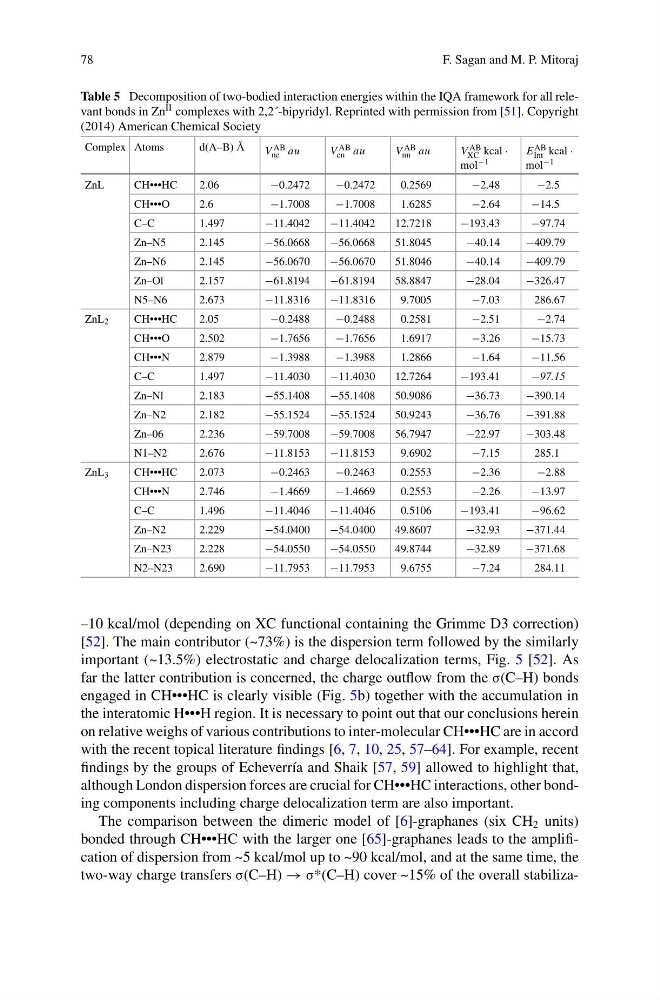
Table 5 Decomposition of two-bodied interaction energies within the IQA framework for all relevant bonds in Zn II complexes with 2,2´-bipyridyl. Reprinted with permission from [51]. Copyright
(2014) American Chemical Society
Complex Atoms
d(A–B) Å
V AB
ne au
V AB
en au
V AB
nn au
V AB
XC kcal ·
mol −1
E AB
Int kcal ·
mol −1
ZnL
CH•••HC
2.06
−0.2472
−0.2472
0.2569
−2.48
−2.5
CH•••O
2.6
−1.7008
−1.7008
1.6285
−2.64
−14.5
C–C
1.497
−11.4042
−11.4042
12.7218
−193.43
−97.74
Zn–N5
2.145
−56.0668
−56.0668
51.8045
−40.14
−409.79
Zn–N6
2.145
−56.0670
−56.0670
51.8046
−40.14
−409.79
Zn–Ol
2.157
−61.8194
−61.8194
58.8847
−28.04
−326.47
N5–N6
2.673
−11.8316
−11.8316
9.7005
−7.03
286.67
ZnL 2
CH•••HC
2.05
−0.2488
−0.2488
0.2581
−2.51
−2.74
CH•••O
2.502
−1.7656
−1.7656
1.6917
−3.26
−15.73
CH•••N
2.879
−1.3988
−1.3988
1.2866
−1.64
−11.56
C–C
1.497
−11.4030
−11.4030
12.7264
−193.41
−97.15
Zn–Nl
2.183
−55.1408
−55.1408
50.9086
−36.73
−390.14
Zn–N2
2.182
−55.1524
−55.1524
50.9243
−36.76
−391.88
Zn–06
2.236
−59.7008
−59.7008
56.7947
−22.97
−303.48
N1–N2
2.676
−11.8153
−11.8153
9.6902
−7.15
285.1
ZnL 3
CH•••HC
2.073
−0.2463
−0.2463
0.2553
−2.36
−2.88
CH•••N
2.746
−1.4669
−1.4669
0.2553
−2.26
−13.97
C–C
1.496
−11.4046
−11.4046
0.5106
−193.41
−96.62
Zn–N2
2.229
−54.0400
−54.0400
49.8607
−32.93
−371.44
Zn–N23
2.228
−54.0550
−54.0550
49.8744
−32.89
−371.68
N2–N23
2.690
−11.7953
−11.7953
9.6755
−7.24
284.11
–10 kcal/mol (depending on XC functional containing the Grimme D3 correction)
[52]. The main contributor (~73%) is the dispersion term followed by the similarly
important (~13.5%) electrostatic and charge delocalization terms, Fig. 5 [52]. As
far the latter contribution is concerned, the charge outflow from the σ(C–H) bonds
engaged in CH•••HC is clearly visible (Fig. 5b) together with the accumulation in
the interatomic H•••H region. It is necessary to point out that our conclusions herein
on relative weighs of various contributions to inter-molecular CH•••HC are in accord
with the recent topical literature findings [6, 7, 10, 25, 57–64]. For example, recent
findings by the groups of Echeverría and Shaik [57, 59] allowed to highlight that,
although London dispersion forces are crucial for CH•••HC interactions, other bonding components including charge delocalization term are also important.
The comparison between the dimeric model of [6]-graphanes (six CH 2 units)
bonded through CH•••HC with the larger one [65]-graphanes leads to the amplification of dispersion from ~5 kcal/mol up to ~90 kcal/mol, and at the same time, the
two-way charge transfers σ(C–H) → σ*(C–H) cover ~15% of the overall stabiliza-
F. Sagan and M. P. Mitoraj
Table 5 Decomposition of two-bodied interaction energies within the IQA framework for all relevant bonds in Zn II complexes with 2,2´-bipyridyl. Reprinted with permission from [51]. Copyright
(2014) American Chemical Society
Complex Atoms
d(A–B) Å
V AB
ne au
V AB
en au
V AB
nn au
V AB
XC kcal ·
mol −1
E AB
Int kcal ·
mol −1
ZnL
CH•••HC
2.06
−0.2472
−0.2472
0.2569
−2.48
−2.5
CH•••O
2.6
−1.7008
−1.7008
1.6285
−2.64
−14.5
C–C
1.497
−11.4042
−11.4042
12.7218
−193.43
−97.74
Zn–N5
2.145
−56.0668
−56.0668
51.8045
−40.14
−409.79
Zn–N6
2.145
−56.0670
−56.0670
51.8046
−40.14
−409.79
Zn–Ol
2.157
−61.8194
−61.8194
58.8847
−28.04
−326.47
N5–N6
2.673
−11.8316
−11.8316
9.7005
−7.03
286.67
ZnL 2
CH•••HC
2.05
−0.2488
−0.2488
0.2581
−2.51
−2.74
CH•••O
2.502
−1.7656
−1.7656
1.6917
−3.26
−15.73
CH•••N
2.879
−1.3988
−1.3988
1.2866
−1.64
−11.56
C–C
1.497
−11.4030
−11.4030
12.7264
−193.41
−97.15
Zn–Nl
2.183
−55.1408
−55.1408
50.9086
−36.73
−390.14
Zn–N2
2.182
−55.1524
−55.1524
50.9243
−36.76
−391.88
Zn–06
2.236
−59.7008
−59.7008
56.7947
−22.97
−303.48
N1–N2
2.676
−11.8153
−11.8153
9.6902
−7.15
285.1
ZnL 3
CH•••HC
2.073
−0.2463
−0.2463
0.2553
−2.36
−2.88
CH•••N
2.746
−1.4669
−1.4669
0.2553
−2.26
−13.97
C–C
1.496
−11.4046
−11.4046
0.5106
−193.41
−96.62
Zn–N2
2.229
−54.0400
−54.0400
49.8607
−32.93
−371.44
Zn–N23
2.228
−54.0550
−54.0550
49.8744
−32.89
−371.68
N2–N23
2.690
−11.7953
−11.7953
9.6755
−7.24
284.11
–10 kcal/mol (depending on XC functional containing the Grimme D3 correction)
[52]. The main contributor (~73%) is the dispersion term followed by the similarly
important (~13.5%) electrostatic and charge delocalization terms, Fig. 5 [52]. As
far the latter contribution is concerned, the charge outflow from the σ(C–H) bonds
engaged in CH•••HC is clearly visible (Fig. 5b) together with the accumulation in
the interatomic H•••H region. It is necessary to point out that our conclusions herein
on relative weighs of various contributions to inter-molecular CH•••HC are in accord
with the recent topical literature findings [6, 7, 10, 25, 57–64]. For example, recent
findings by the groups of Echeverría and Shaik [57, 59] allowed to highlight that,
although London dispersion forces are crucial for CH•••HC interactions, other bonding components including charge delocalization term are also important.
The comparison between the dimeric model of [6]-graphanes (six CH 2 units)
bonded through CH•••HC with the larger one [65]-graphanes leads to the amplification of dispersion from ~5 kcal/mol up to ~90 kcal/mol, and at the same time, the
two-way charge transfers σ(C–H) → σ*(C–H) cover ~15% of the overall stabiliza-