

466
H. Hirao
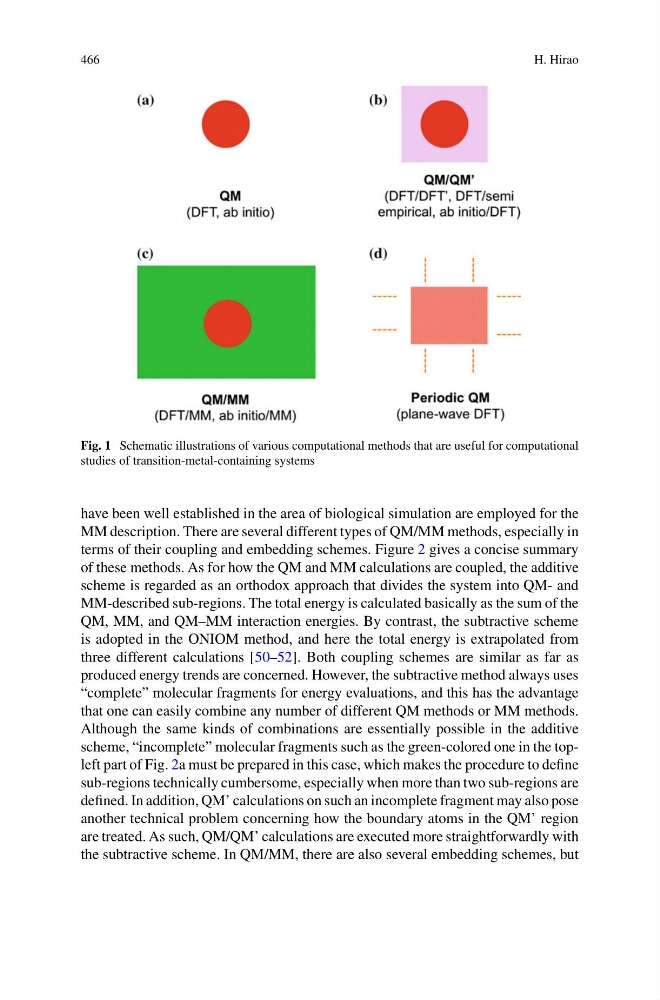
Fig. 1 Schematic illustrations of various computational methods that are useful for computational
studies of transition-metal-containing systems
have been well established in the area of biological simulation are employed for the
MM description. There are several different types of QM/MM methods, especially in
terms of their coupling and embedding schemes. Figure 2 gives a concise summary
of these methods. As for how the QM and MM calculations are coupled, the additive
scheme is regarded as an orthodox approach that divides the system into QM- and
MM-described sub-regions. The total energy is calculated basically as the sum of the
QM, MM, and QM–MM interaction energies. By contrast, the subtractive scheme
is adopted in the ONIOM method, and here the total energy is extrapolated from
three different calculations [50–52]. Both coupling schemes are similar as far as
produced energy trends are concerned. However, the subtractive method always uses
“complete” molecular fragments for energy evaluations, and this has the advantage
that one can easily combine any number of different QM methods or MM methods.
Although the same kinds of combinations are essentially possible in the additive
scheme, “incomplete” molecular fragments such as the green-colored one in the topleft part of Fig. 2a must be prepared in this case, which makes the procedure to define
sub-regions technically cumbersome, especially when more than two sub-regions are
defined. In addition, QM’ calculations on such an incomplete fragment may also pose
another technical problem concerning how the boundary atoms in the QM’ region
are treated. As such, QM/QM’ calculations are executed more straightforwardly with
the subtractive scheme. In QM/MM, there are also several embedding schemes, but
H. Hirao
Fig. 1 Schematic illustrations of various computational methods that are useful for computational
studies of transition-metal-containing systems
have been well established in the area of biological simulation are employed for the
MM description. There are several different types of QM/MM methods, especially in
terms of their coupling and embedding schemes. Figure 2 gives a concise summary
of these methods. As for how the QM and MM calculations are coupled, the additive
scheme is regarded as an orthodox approach that divides the system into QM- and
MM-described sub-regions. The total energy is calculated basically as the sum of the
QM, MM, and QM–MM interaction energies. By contrast, the subtractive scheme
is adopted in the ONIOM method, and here the total energy is extrapolated from
three different calculations [50–52]. Both coupling schemes are similar as far as
produced energy trends are concerned. However, the subtractive method always uses
“complete” molecular fragments for energy evaluations, and this has the advantage
that one can easily combine any number of different QM methods or MM methods.
Although the same kinds of combinations are essentially possible in the additive
scheme, “incomplete” molecular fragments such as the green-colored one in the topleft part of Fig. 2a must be prepared in this case, which makes the procedure to define
sub-regions technically cumbersome, especially when more than two sub-regions are
defined. In addition, QM’ calculations on such an incomplete fragment may also pose
another technical problem concerning how the boundary atoms in the QM’ region
are treated. As such, QM/QM’ calculations are executed more straightforwardly with
the subtractive scheme. In QM/MM, there are also several embedding schemes, but