

The Quest for Accurate Theoretical Models of Metalloenzymes …
453
N
N
N
N
NH 2
H 2 C
N
NH
Fe
IV
O
HN
N O O
O O
H
N
N
N
N
NH 2
H 2 C
N
NH
Fe
III
O
HN
N O O
O O
H-Abstraction
H
Rebound
N
N
N
N
NH 2
CH 2
N
H
N
Fe
II
HN
N
O O
O
O
HO
N
N
N
N
H 2 N
H 2 C
N
NH
Fe
III
O
HN
N
O O
O
H
Decarboxylation
O
O
O
R
R
R
R
His
Asp
O
O
His
O
O
His
Asp
His
O
O
His
Asp
His
O
O
His
Asp
His
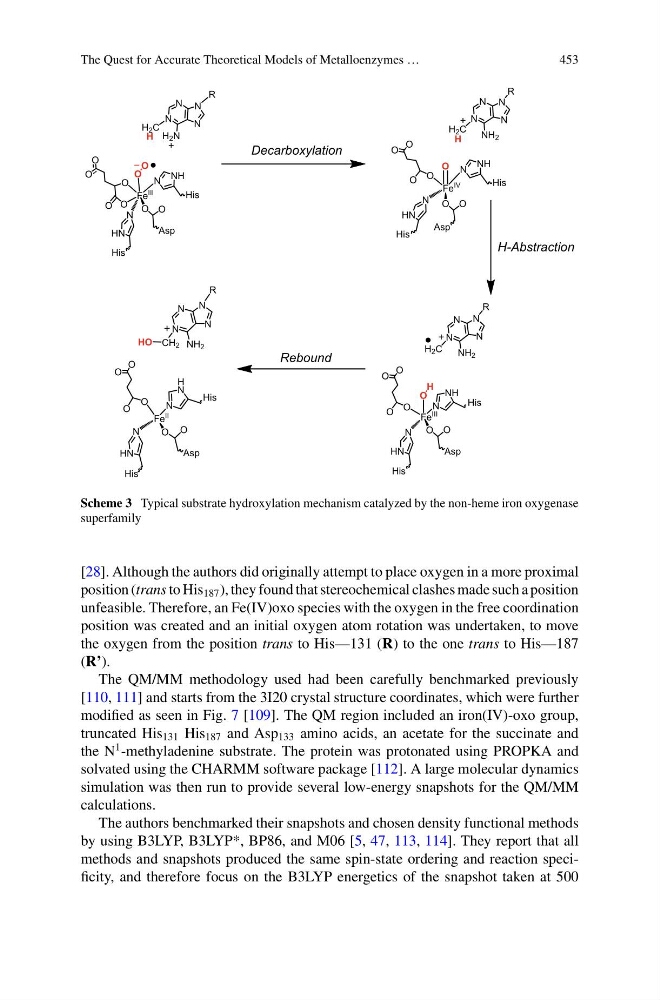
Scheme 3 Typical substrate hydroxylation mechanism catalyzed by the non-heme iron oxygenase
superfamily
[28]. Although the authors did originally attempt to place oxygen in a more proximal
position (trans to His 187 ), they found that stereochemical clashes made such a position
unfeasible. Therefore, an Fe(IV)oxo species with the oxygen in the free coordination
position was created and an initial oxygen atom rotation was undertaken, to move
the oxygen from the position trans to His—131 (R) to the one trans to His—187
(R’).
The QM/MM methodology used had been carefully benchmarked previously
[110, 111] and starts from the 3I20 crystal structure coordinates, which were further
modified as seen in Fig. 7 [109]. The QM region included an iron(IV)-oxo group,
truncated His 131 His 187 and Asp 133 amino acids, an acetate for the succinate and
the N
1 -methyladenine substrate. The protein was protonated using PROPKA and
solvated using the CHARMM software package [112]. A large molecular dynamics
simulation was then run to provide several low-energy snapshots for the QM/MM
calculations.
The authors benchmarked their snapshots and chosen density functional methods
by using B3LYP, B3LYP*, BP86, and M06 [5, 47, 113, 114]. They report that all
methods and snapshots produced the same spin-state ordering and reaction specificity, and therefore focus on the B3LYP energetics of the snapshot taken at 500
453
N
N
N
N
NH 2
H 2 C
N
NH
Fe
IV
O
HN
N O O
O O
H
N
N
N
N
NH 2
H 2 C
N
NH
Fe
III
O
HN
N O O
O O
H-Abstraction
H
Rebound
N
N
N
N
NH 2
CH 2
N
H
N
Fe
II
HN
N
O O
O
O
HO
N
N
N
N
H 2 N
H 2 C
N
NH
Fe
III
O
HN
N
O O
O
H
Decarboxylation
O
O
O
R
R
R
R
His
Asp
O
O
His
O
O
His
Asp
His
O
O
His
Asp
His
O
O
His
Asp
His
Scheme 3 Typical substrate hydroxylation mechanism catalyzed by the non-heme iron oxygenase
superfamily
[28]. Although the authors did originally attempt to place oxygen in a more proximal
position (trans to His 187 ), they found that stereochemical clashes made such a position
unfeasible. Therefore, an Fe(IV)oxo species with the oxygen in the free coordination
position was created and an initial oxygen atom rotation was undertaken, to move
the oxygen from the position trans to His—131 (R) to the one trans to His—187
(R’).
The QM/MM methodology used had been carefully benchmarked previously
[110, 111] and starts from the 3I20 crystal structure coordinates, which were further
modified as seen in Fig. 7 [109]. The QM region included an iron(IV)-oxo group,
truncated His 131 His 187 and Asp 133 amino acids, an acetate for the succinate and
the N
1 -methyladenine substrate. The protein was protonated using PROPKA and
solvated using the CHARMM software package [112]. A large molecular dynamics
simulation was then run to provide several low-energy snapshots for the QM/MM
calculations.
The authors benchmarked their snapshots and chosen density functional methods
by using B3LYP, B3LYP*, BP86, and M06 [5, 47, 113, 114]. They report that all
methods and snapshots produced the same spin-state ordering and reaction specificity, and therefore focus on the B3LYP energetics of the snapshot taken at 500