

304
J. N. Harvey
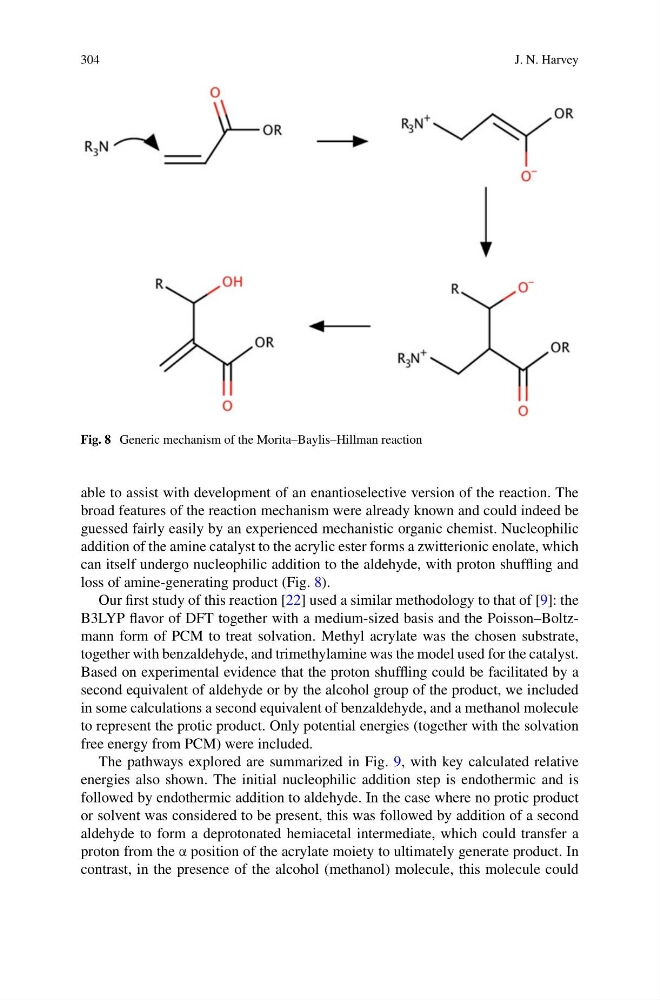
Fig. 8 Generic mechanism of the Morita–Baylis–Hillman reaction
able to assist with development of an enantioselective version of the reaction. The
broad features of the reaction mechanism were already known and could indeed be
guessed fairly easily by an experienced mechanistic organic chemist. Nucleophilic
addition of the amine catalyst to the acrylic ester forms a zwitterionic enolate, which
can itself undergo nucleophilic addition to the aldehyde, with proton shuffling and
loss of amine-generating product (Fig. 8).
Our first study of this reaction [22] used a similar methodology to that of [9]: the
B3LYP flavor of DFT together with a medium-sized basis and the Poisson–Boltzmann form of PCM to treat solvation. Methyl acrylate was the chosen substrate,
together with benzaldehyde, and trimethylamine was the model used for the catalyst.
Based on experimental evidence that the proton shuffling could be facilitated by a
second equivalent of aldehyde or by the alcohol group of the product, we included
in some calculations a second equivalent of benzaldehyde, and a methanol molecule
to represent the protic product. Only potential energies (together with the solvation
free energy from PCM) were included.
The pathways explored are summarized in Fig. 9, with key calculated relative
energies also shown. The initial nucleophilic addition step is endothermic and is
followed by endothermic addition to aldehyde. In the case where no protic product
or solvent was considered to be present, this was followed by addition of a second
aldehyde to form a deprotonated hemiacetal intermediate, which could transfer a
proton from the α position of the acrylate moiety to ultimately generate product. In
contrast, in the presence of the alcohol (methanol) molecule, this molecule could
J. N. Harvey
Fig. 8 Generic mechanism of the Morita–Baylis–Hillman reaction
able to assist with development of an enantioselective version of the reaction. The
broad features of the reaction mechanism were already known and could indeed be
guessed fairly easily by an experienced mechanistic organic chemist. Nucleophilic
addition of the amine catalyst to the acrylic ester forms a zwitterionic enolate, which
can itself undergo nucleophilic addition to the aldehyde, with proton shuffling and
loss of amine-generating product (Fig. 8).
Our first study of this reaction [22] used a similar methodology to that of [9]: the
B3LYP flavor of DFT together with a medium-sized basis and the Poisson–Boltzmann form of PCM to treat solvation. Methyl acrylate was the chosen substrate,
together with benzaldehyde, and trimethylamine was the model used for the catalyst.
Based on experimental evidence that the proton shuffling could be facilitated by a
second equivalent of aldehyde or by the alcohol group of the product, we included
in some calculations a second equivalent of benzaldehyde, and a methanol molecule
to represent the protic product. Only potential energies (together with the solvation
free energy from PCM) were included.
The pathways explored are summarized in Fig. 9, with key calculated relative
energies also shown. The initial nucleophilic addition step is endothermic and is
followed by endothermic addition to aldehyde. In the case where no protic product
or solvent was considered to be present, this was followed by addition of a second
aldehyde to form a deprotonated hemiacetal intermediate, which could transfer a
proton from the α position of the acrylate moiety to ultimately generate product. In
contrast, in the presence of the alcohol (methanol) molecule, this molecule could