

236
M. J. Toda et al.
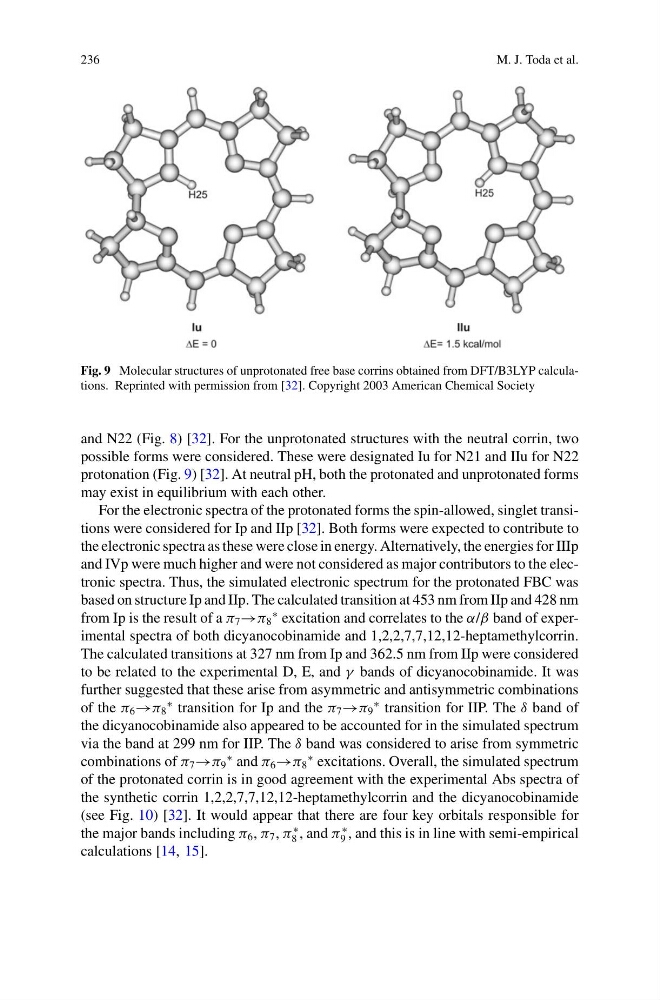
Fig. 9 Molecular structures of unprotonated free base corrins obtained from DFT/B3LYP calculations. Reprinted with permission from [32]. Copyright 2003 American Chemical Society
and N22 (Fig. 8) [32]. For the unprotonated structures with the neutral corrin, two
possible forms were considered. These were designated Iu for N21 and IIu for N22
protonation (Fig. 9) [32]. At neutral pH, both the protonated and unprotonated forms
may exist in equilibrium with each other.
For the electronic spectra of the protonated forms the spin-allowed, singlet transitions were considered for Ip and IIp [32]. Both forms were expected to contribute to
the electronic spectra as these were close in energy. Alternatively, the energies for IIIp
and IVp were much higher and were not considered as major contributors to the electronic spectra. Thus, the simulated electronic spectrum for the protonated FBC was
based on structure Ip and IIp. The calculated transition at 453 nm from IIp and 428 nm
from Ip is the result of a π 7 →π 8
∗ excitation and correlates to the α/β band of experimental spectra of both dicyanocobinamide and 1,2,2,7,7,12,12-heptamethylcorrin.
The calculated transitions at 327 nm from Ip and 362.5 nm from IIp were considered
to be related to the experimental D, E, and γ bands of dicyanocobinamide. It was
further suggested that these arise from asymmetric and antisymmetric combinations
of the π 6 →π 8
∗ transition for Ip and the π 7 →π 9
∗ transition for IIP. The δ band of
the dicyanocobinamide also appeared to be accounted for in the simulated spectrum
via the band at 299 nm for IIP. The δ band was considered to arise from symmetric
combinations of π 7 →π 9
∗ and π 6 →π 8
∗ excitations. Overall, the simulated spectrum
of the protonated corrin is in good agreement with the experimental Abs spectra of
the synthetic corrin 1,2,2,7,7,12,12-heptamethylcorrin and the dicyanocobinamide
(see Fig. 10) [32]. It would appear that there are four key orbitals responsible for
the major bands including π 6 , π 7 , π
∗
8 , and π
∗
9 , and this is in line with semi-empirical
calculations [14, 15].
M. J. Toda et al.
Fig. 9 Molecular structures of unprotonated free base corrins obtained from DFT/B3LYP calculations. Reprinted with permission from [32]. Copyright 2003 American Chemical Society
and N22 (Fig. 8) [32]. For the unprotonated structures with the neutral corrin, two
possible forms were considered. These were designated Iu for N21 and IIu for N22
protonation (Fig. 9) [32]. At neutral pH, both the protonated and unprotonated forms
may exist in equilibrium with each other.
For the electronic spectra of the protonated forms the spin-allowed, singlet transitions were considered for Ip and IIp [32]. Both forms were expected to contribute to
the electronic spectra as these were close in energy. Alternatively, the energies for IIIp
and IVp were much higher and were not considered as major contributors to the electronic spectra. Thus, the simulated electronic spectrum for the protonated FBC was
based on structure Ip and IIp. The calculated transition at 453 nm from IIp and 428 nm
from Ip is the result of a π 7 →π 8
∗ excitation and correlates to the α/β band of experimental spectra of both dicyanocobinamide and 1,2,2,7,7,12,12-heptamethylcorrin.
The calculated transitions at 327 nm from Ip and 362.5 nm from IIp were considered
to be related to the experimental D, E, and γ bands of dicyanocobinamide. It was
further suggested that these arise from asymmetric and antisymmetric combinations
of the π 6 →π 8
∗ transition for Ip and the π 7 →π 9
∗ transition for IIP. The δ band of
the dicyanocobinamide also appeared to be accounted for in the simulated spectrum
via the band at 299 nm for IIP. The δ band was considered to arise from symmetric
combinations of π 7 →π 9
∗ and π 6 →π 8
∗ excitations. Overall, the simulated spectrum
of the protonated corrin is in good agreement with the experimental Abs spectra of
the synthetic corrin 1,2,2,7,7,12,12-heptamethylcorrin and the dicyanocobinamide
(see Fig. 10) [32]. It would appear that there are four key orbitals responsible for
the major bands including π 6 , π 7 , π
∗
8 , and π
∗
9 , and this is in line with semi-empirical
calculations [14, 15].