

Computational Versus Experimental Spectroscopy …
171
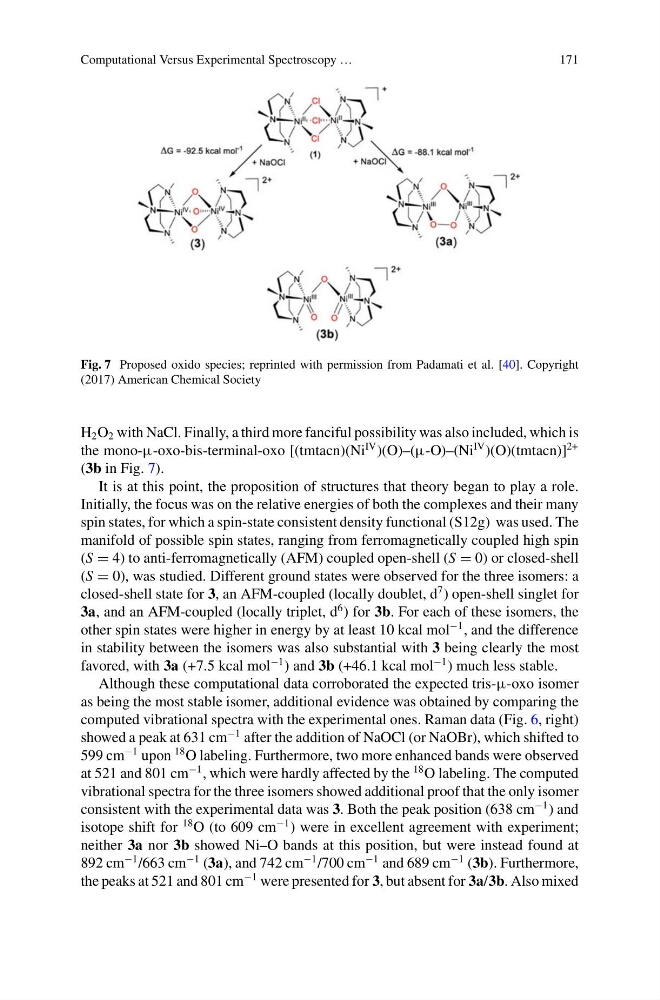
Fig. 7 Proposed oxido species; reprinted with permission from Padamati et al. [40]. Copyright
(2017) American Chemical Society
H 2 O 2 with NaCl. Finally, a third more fanciful possibility was also included, which is
the mono-μ-oxo-bis-terminal-oxo [(tmtacn)(Ni
IV )(O)–(μ-O)–(Ni
IV )(O)(tmtacn)]
2+
(3b in Fig. 7).
It is at this point, the proposition of structures that theory began to play a role.
Initially, the focus was on the relative energies of both the complexes and their many
spin states, for which a spin-state consistent density functional (S12g) was used. The
manifold of possible spin states, ranging from ferromagnetically coupled high spin
(S 4) to anti-ferromagnetically (AFM) coupled open-shell (S 0) or closed-shell
(S 0), was studied. Different ground states were observed for the three isomers: a
closed-shell state for 3, an AFM-coupled (locally doublet, d
7 ) open-shell singlet for
3a, and an AFM-coupled (locally triplet, d
6 ) for 3b. For each of these isomers, the
other spin states were higher in energy by at least 10 kcal mol
−1 , and the difference
in stability between the isomers was also substantial with 3 being clearly the most
favored, with 3a (+7.5 kcal mol
−1 ) and 3b (+46.1 kcal mol
−1 ) much less stable.
Although these computational data corroborated the expected tris-μ-oxo isomer
as being the most stable isomer, additional evidence was obtained by comparing the
computed vibrational spectra with the experimental ones. Raman data (Fig. 6, right)
showed a peak at 631 cm
−1 after the addition of NaOCl (or NaOBr), which shifted to
599 cm
−1 upon
18 O labeling. Furthermore, two more enhanced bands were observed
at 521 and 801 cm
−1 , which were hardly affected by the
18 O labeling. The computed
vibrational spectra for the three isomers showed additional proof that the only isomer
consistent with the experimental data was 3. Both the peak position (638 cm
−1 ) and
isotope shift for
18 O (to 609 cm
−1 ) were in excellent agreement with experiment;
neither 3a nor 3b showed Ni–O bands at this position, but were instead found at
892 cm
−1 /663 cm
−1 (3a), and 742 cm
−1 /700 cm
−1 and 689 cm
−1 (3b). Furthermore,
the peaks at 521 and 801 cm
−1 were presented for 3, but absent for 3a/3b. Also mixed
171
Fig. 7 Proposed oxido species; reprinted with permission from Padamati et al. [40]. Copyright
(2017) American Chemical Society
H 2 O 2 with NaCl. Finally, a third more fanciful possibility was also included, which is
the mono-μ-oxo-bis-terminal-oxo [(tmtacn)(Ni
IV )(O)–(μ-O)–(Ni
IV )(O)(tmtacn)]
2+
(3b in Fig. 7).
It is at this point, the proposition of structures that theory began to play a role.
Initially, the focus was on the relative energies of both the complexes and their many
spin states, for which a spin-state consistent density functional (S12g) was used. The
manifold of possible spin states, ranging from ferromagnetically coupled high spin
(S 4) to anti-ferromagnetically (AFM) coupled open-shell (S 0) or closed-shell
(S 0), was studied. Different ground states were observed for the three isomers: a
closed-shell state for 3, an AFM-coupled (locally doublet, d
7 ) open-shell singlet for
3a, and an AFM-coupled (locally triplet, d
6 ) for 3b. For each of these isomers, the
other spin states were higher in energy by at least 10 kcal mol
−1 , and the difference
in stability between the isomers was also substantial with 3 being clearly the most
favored, with 3a (+7.5 kcal mol
−1 ) and 3b (+46.1 kcal mol
−1 ) much less stable.
Although these computational data corroborated the expected tris-μ-oxo isomer
as being the most stable isomer, additional evidence was obtained by comparing the
computed vibrational spectra with the experimental ones. Raman data (Fig. 6, right)
showed a peak at 631 cm
−1 after the addition of NaOCl (or NaOBr), which shifted to
599 cm
−1 upon
18 O labeling. Furthermore, two more enhanced bands were observed
at 521 and 801 cm
−1 , which were hardly affected by the
18 O labeling. The computed
vibrational spectra for the three isomers showed additional proof that the only isomer
consistent with the experimental data was 3. Both the peak position (638 cm
−1 ) and
isotope shift for
18 O (to 609 cm
−1 ) were in excellent agreement with experiment;
neither 3a nor 3b showed Ni–O bands at this position, but were instead found at
892 cm
−1 /663 cm
−1 (3a), and 742 cm
−1 /700 cm
−1 and 689 cm
−1 (3b). Furthermore,
the peaks at 521 and 801 cm
−1 were presented for 3, but absent for 3a/3b. Also mixed