

170
M. Gruden et al.
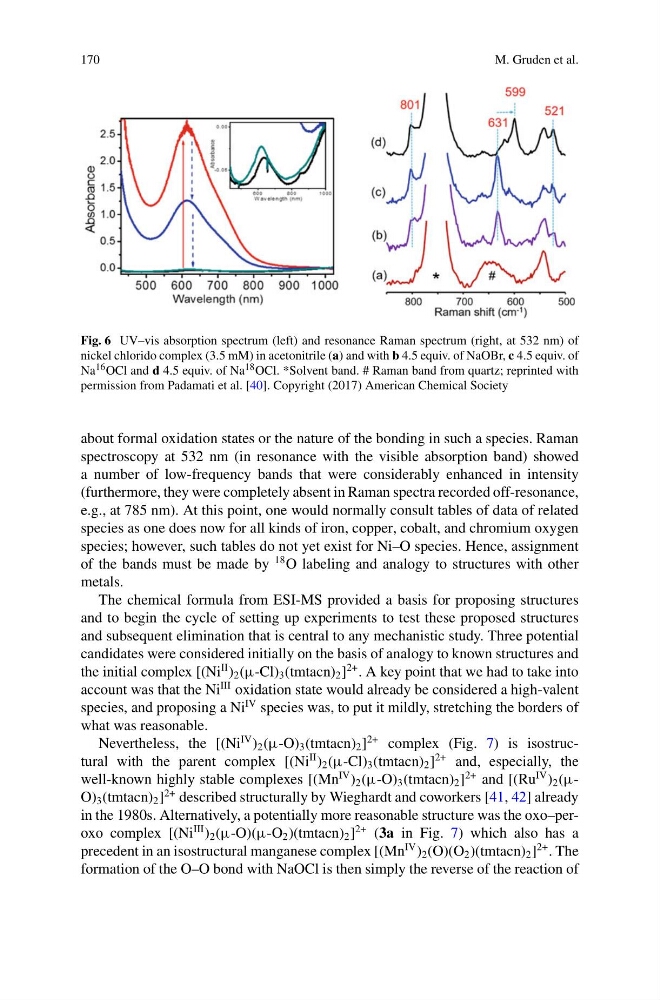
Fig. 6 UV–vis absorption spectrum (left) and resonance Raman spectrum (right, at 532 nm) of
nickel chlorido complex (3.5 mM) in acetonitrile (a) and with b 4.5 equiv. of NaOBr, c 4.5 equiv. of
Na 16 OCl and d 4.5 equiv. of Na 18 OCl. *Solvent band. # Raman band from quartz; reprinted with
permission from Padamati et al. [40]. Copyright (2017) American Chemical Society
about formal oxidation states or the nature of the bonding in such a species. Raman
spectroscopy at 532 nm (in resonance with the visible absorption band) showed
a number of low-frequency bands that were considerably enhanced in intensity
(furthermore, they were completely absent in Raman spectra recorded off-resonance,
e.g., at 785 nm). At this point, one would normally consult tables of data of related
species as one does now for all kinds of iron, copper, cobalt, and chromium oxygen
species; however, such tables do not yet exist for Ni–O species. Hence, assignment
of the bands must be made by
18 O labeling and analogy to structures with other
metals.
The chemical formula from ESI-MS provided a basis for proposing structures
and to begin the cycle of setting up experiments to test these proposed structures
and subsequent elimination that is central to any mechanistic study. Three potential
candidates were considered initially on the basis of analogy to known structures and
the initial complex [(Ni
II ) 2 (μ-Cl) 3 (tmtacn) 2 ]
2+ . A key point that we had to take into
account was that the Ni
III oxidation state would already be considered a high-valent
species, and proposing a Ni
IV species was, to put it mildly, stretching the borders of
what was reasonable.
Nevertheless, the [(Ni
IV ) 2 (μ-O) 3 (tmtacn) 2 ]
2+ complex (Fig. 7) is isostructural with the parent complex [(Ni
II ) 2 (μ-Cl) 3 (tmtacn) 2 ]
2+ and, especially, the
well-known highly stable complexes [(Mn
IV ) 2 (μ-O) 3 (tmtacn) 2 ]
2+ and [(Ru
IV ) 2 (μO) 3 (tmtacn) 2 ]
2+ described structurally by Wieghardt and coworkers [41, 42] already
in the 1980s. Alternatively, a potentially more reasonable structure was the oxo–peroxo complex [(Ni
III ) 2 (μ-O)(μ-O 2 )(tmtacn) 2 ]
2+ (3a in Fig. 7) which also has a
precedent in an isostructural manganese complex [(Mn
IV ) 2 (O)(O 2 )(tmtacn) 2 ]
2+ . The
formation of the O–O bond with NaOCl is then simply the reverse of the reaction of
M. Gruden et al.
Fig. 6 UV–vis absorption spectrum (left) and resonance Raman spectrum (right, at 532 nm) of
nickel chlorido complex (3.5 mM) in acetonitrile (a) and with b 4.5 equiv. of NaOBr, c 4.5 equiv. of
Na 16 OCl and d 4.5 equiv. of Na 18 OCl. *Solvent band. # Raman band from quartz; reprinted with
permission from Padamati et al. [40]. Copyright (2017) American Chemical Society
about formal oxidation states or the nature of the bonding in such a species. Raman
spectroscopy at 532 nm (in resonance with the visible absorption band) showed
a number of low-frequency bands that were considerably enhanced in intensity
(furthermore, they were completely absent in Raman spectra recorded off-resonance,
e.g., at 785 nm). At this point, one would normally consult tables of data of related
species as one does now for all kinds of iron, copper, cobalt, and chromium oxygen
species; however, such tables do not yet exist for Ni–O species. Hence, assignment
of the bands must be made by
18 O labeling and analogy to structures with other
metals.
The chemical formula from ESI-MS provided a basis for proposing structures
and to begin the cycle of setting up experiments to test these proposed structures
and subsequent elimination that is central to any mechanistic study. Three potential
candidates were considered initially on the basis of analogy to known structures and
the initial complex [(Ni
II ) 2 (μ-Cl) 3 (tmtacn) 2 ]
2+ . A key point that we had to take into
account was that the Ni
III oxidation state would already be considered a high-valent
species, and proposing a Ni
IV species was, to put it mildly, stretching the borders of
what was reasonable.
Nevertheless, the [(Ni
IV ) 2 (μ-O) 3 (tmtacn) 2 ]
2+ complex (Fig. 7) is isostructural with the parent complex [(Ni
II ) 2 (μ-Cl) 3 (tmtacn) 2 ]
2+ and, especially, the
well-known highly stable complexes [(Mn
IV ) 2 (μ-O) 3 (tmtacn) 2 ]
2+ and [(Ru
IV ) 2 (μO) 3 (tmtacn) 2 ]
2+ described structurally by Wieghardt and coworkers [41, 42] already
in the 1980s. Alternatively, a potentially more reasonable structure was the oxo–peroxo complex [(Ni
III ) 2 (μ-O)(μ-O 2 )(tmtacn) 2 ]
2+ (3a in Fig. 7) which also has a
precedent in an isostructural manganese complex [(Mn
IV ) 2 (O)(O 2 )(tmtacn) 2 ]
2+ . The
formation of the O–O bond with NaOCl is then simply the reverse of the reaction of