

10
1 Introduction to Metrology
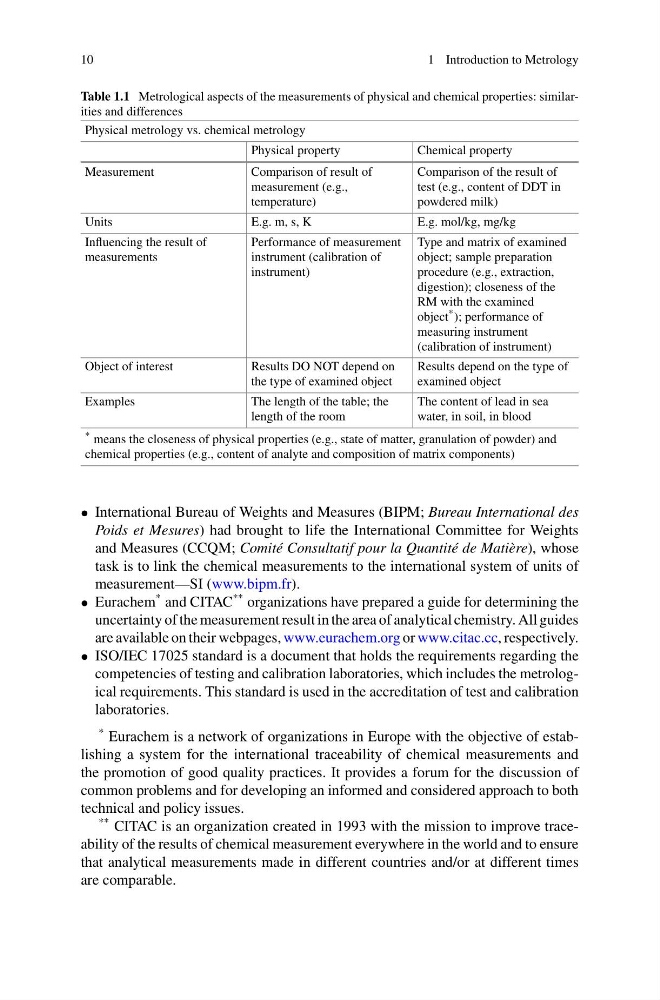
Table 1.1 Metrological aspects of the measurements of physical and chemical properties: similarities and differences
Physical metrology vs. chemical metrology
Physical property
Chemical property
Measurement
Comparison of result of
measurement (e.g.,
temperature)
Comparison of the result of
test (e.g., content of DDT in
powdered milk)
Units
E.g. m, s, K
E.g. mol/kg, mg/kg
Influencing the result of
measurements
Performance of measurement
instrument (calibration of
instrument)
Type and matrix of examined
object; sample preparation
procedure (e.g., extraction,
digestion); closeness of the
RM with the examined
object * ); performance of
measuring instrument
(calibration of instrument)
Object of interest
Results DO NOT depend on
the type of examined object
Results depend on the type of
examined object
Examples
The length of the table; the
length of the room
The content of lead in sea
water, in soil, in blood
* means the closeness of physical properties (e.g., state of matter, granulation of powder) and
chemical properties (e.g., content of analyte and composition of matrix components)
• International Bureau of Weights and Measures (BIPM; Bureau International des
Poids et Mesures) had brought to life the International Committee for Weights
and Measures (CCQM; Comité Consultatif pour la Quantité de Matière), whose
task is to link the chemical measurements to the international system of units of
measurement—SI (www.bipm.fr).
• Eurachem
* and CITAC
** organizations have prepared a guide for determining the
uncertainty of the measurement result in the area of analytical chemistry. All guides
are available on their webpages, www.eurachem.org or www.citac.cc, respectively.
• ISO/IEC 17025 standard is a document that holds the requirements regarding the
competencies of testing and calibration laboratories, which includes the metrological requirements. This standard is used in the accreditation of test and calibration
laboratories.
* Eurachem is a network of organizations in Europe with the objective of establishing a system for the international traceability of chemical measurements and
the promotion of good quality practices. It provides a forum for the discussion of
common problems and for developing an informed and considered approach to both
technical and policy issues.
** CITAC is an organization created in 1993 with the mission to improve traceability of the results of chemical measurement everywhere in the world and to ensure
that analytical measurements made in different countries and/or at different times
are comparable.
1 Introduction to Metrology
Table 1.1 Metrological aspects of the measurements of physical and chemical properties: similarities and differences
Physical metrology vs. chemical metrology
Physical property
Chemical property
Measurement
Comparison of result of
measurement (e.g.,
temperature)
Comparison of the result of
test (e.g., content of DDT in
powdered milk)
Units
E.g. m, s, K
E.g. mol/kg, mg/kg
Influencing the result of
measurements
Performance of measurement
instrument (calibration of
instrument)
Type and matrix of examined
object; sample preparation
procedure (e.g., extraction,
digestion); closeness of the
RM with the examined
object * ); performance of
measuring instrument
(calibration of instrument)
Object of interest
Results DO NOT depend on
the type of examined object
Results depend on the type of
examined object
Examples
The length of the table; the
length of the room
The content of lead in sea
water, in soil, in blood
* means the closeness of physical properties (e.g., state of matter, granulation of powder) and
chemical properties (e.g., content of analyte and composition of matrix components)
• International Bureau of Weights and Measures (BIPM; Bureau International des
Poids et Mesures) had brought to life the International Committee for Weights
and Measures (CCQM; Comité Consultatif pour la Quantité de Matière), whose
task is to link the chemical measurements to the international system of units of
measurement—SI (www.bipm.fr).
• Eurachem
* and CITAC
** organizations have prepared a guide for determining the
uncertainty of the measurement result in the area of analytical chemistry. All guides
are available on their webpages, www.eurachem.org or www.citac.cc, respectively.
• ISO/IEC 17025 standard is a document that holds the requirements regarding the
competencies of testing and calibration laboratories, which includes the metrological requirements. This standard is used in the accreditation of test and calibration
laboratories.
* Eurachem is a network of organizations in Europe with the objective of establishing a system for the international traceability of chemical measurements and
the promotion of good quality practices. It provides a forum for the discussion of
common problems and for developing an informed and considered approach to both
technical and policy issues.
** CITAC is an organization created in 1993 with the mission to improve traceability of the results of chemical measurement everywhere in the world and to ensure
that analytical measurements made in different countries and/or at different times
are comparable.