

The structural and functional versatility of metal–organic coordinated polymer
gels can be further increased by integrating hydrogen-bonding interactions in the
molecular networks. Efforts have been made by Nair and co-workers to functionalize the side chains of polymer backbones with both hydrogen bonding and metal
coordination sites [37]. The reversible cross-linking between the polymer chains is
realized by adding small molecules as linking agents (Fig. 5.9a). By tuning the
molecular species added for the cross-linking, the interactions between the polymer
chains can be manipulated as either one or two of the hydrogen bonding and metal–
organic coordination. In this study, the functional groups for the formation of
hydrogen bonding are cyanuric acid and 2,4-diaminotriazine derivatives
(Fig. 5.9b). The metal–organic interactions are based on the coordination bonds
between bispyridine and palladated SCS pincer derivatives.
An emerging area in the field of metal–organic coordinated polymer gels is the
cross-linking of polymer gelators using metal–organic cages (MOCs). The
MOCs-linked gels, abbreviated as polyMOC gels, contain predesigned polymer gelators bearing suitable cage forming functional moieties [53]. As a result of metal–ligand
interactions, the MOCs are embedded within the gel networks leading to improvements
in mechanical properties and porosity. In some cases, the polymer gels cross-linked by
MOCs can also act as a platform for research on new functional materials.
Nitschke and co-workers reported an example of polymer hydrogels cross-linked
through self-assembled MOCs [54]. As shown in Fig. 5.10a, a series of MOCs
could be synthesized by mixing polyethyleneglycol derivatives functionalized with
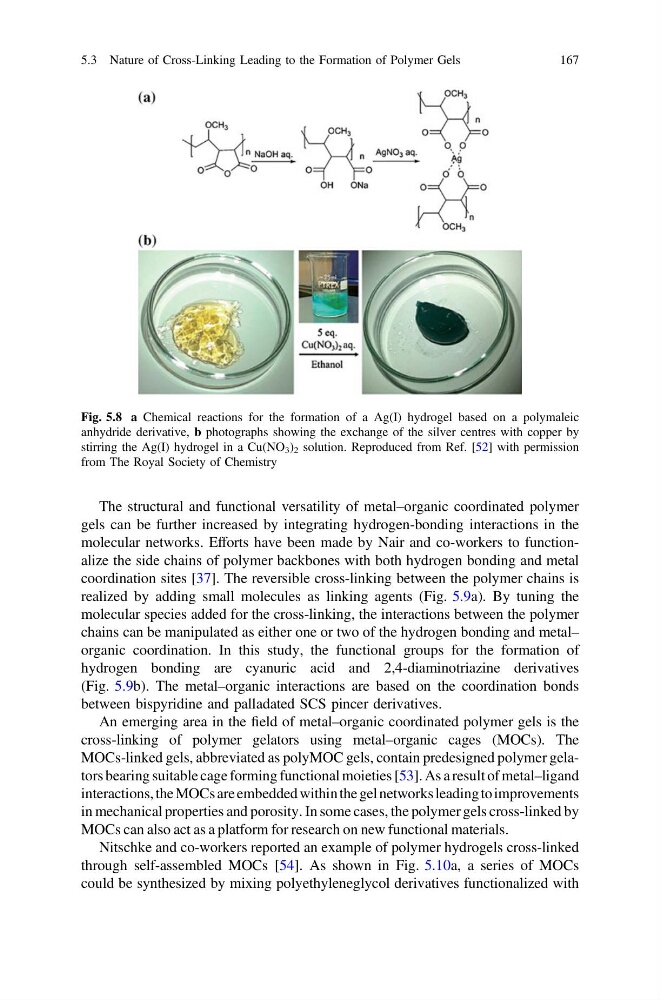
Fig. 5.8 a Chemical reactions for the formation of a Ag(I) hydrogel based on a polymaleic
anhydride derivative, b photographs showing the exchange of the silver centres with copper by
stirring the Ag(I) hydrogel in a Cu(NO 3 ) 2 solution. Reproduced from Ref. [52] with permission
from The Royal Society of Chemistry
5.3 Nature of Cross-Linking Leading to the Formation of Polymer Gels
167
gels can be further increased by integrating hydrogen-bonding interactions in the
molecular networks. Efforts have been made by Nair and co-workers to functionalize the side chains of polymer backbones with both hydrogen bonding and metal
coordination sites [37]. The reversible cross-linking between the polymer chains is
realized by adding small molecules as linking agents (Fig. 5.9a). By tuning the
molecular species added for the cross-linking, the interactions between the polymer
chains can be manipulated as either one or two of the hydrogen bonding and metal–
organic coordination. In this study, the functional groups for the formation of
hydrogen bonding are cyanuric acid and 2,4-diaminotriazine derivatives
(Fig. 5.9b). The metal–organic interactions are based on the coordination bonds
between bispyridine and palladated SCS pincer derivatives.
An emerging area in the field of metal–organic coordinated polymer gels is the
cross-linking of polymer gelators using metal–organic cages (MOCs). The
MOCs-linked gels, abbreviated as polyMOC gels, contain predesigned polymer gelators bearing suitable cage forming functional moieties [53]. As a result of metal–ligand
interactions, the MOCs are embedded within the gel networks leading to improvements
in mechanical properties and porosity. In some cases, the polymer gels cross-linked by
MOCs can also act as a platform for research on new functional materials.
Nitschke and co-workers reported an example of polymer hydrogels cross-linked
through self-assembled MOCs [54]. As shown in Fig. 5.10a, a series of MOCs
could be synthesized by mixing polyethyleneglycol derivatives functionalized with
Fig. 5.8 a Chemical reactions for the formation of a Ag(I) hydrogel based on a polymaleic
anhydride derivative, b photographs showing the exchange of the silver centres with copper by
stirring the Ag(I) hydrogel in a Cu(NO 3 ) 2 solution. Reproduced from Ref. [52] with permission
from The Royal Society of Chemistry
5.3 Nature of Cross-Linking Leading to the Formation of Polymer Gels
167