

Regarding neutral polymer network, DG m can be calculated as:
DG m ¼ DH m À TDS m
ð5:2Þ
In Eq. (5.2), DH m and DS m are enthalpy and entropy values upon mixing,
respectively. DS m represents the entropy change when mixing n 1 solvent molecules
and n 2 polymer chains forming a homogeneous solution. In contrast to low
molecular weight gelators, a significant difference in physical dimension exists
between the solvent and solute molecules in a polymer gel system. Therefore, the
influence of the conformation and configuration of polymer chains on entropy
should not be neglected. Flory lattice model has been widely used for the interpretation of DS m which can be simplified into the following equation:
DS m ¼ Àk B n 1 ln 1 À u
ð
Þþn 2 ln u
½
ð 5:3Þ
In this equation, k B is the Boltzmann constant, and u is the volume fraction of
solute molecules.
Apart from the mixing entropy, Flory lattice model also describes the enthalpy
change associated with the mixing of solvent and polymer chains. Essentially, the
mixing event can be understood as the replacement of the solvent–solvent and
chain–chain homogeneous contact with solvent–chain heterogeneous contact.
When considering the contact replacement, a parameter, e, is introduced to indicate
the change in contact (mixing) energy.
e ¼ l 12 À
l 11 þ l 12
2
ð5:4Þ
In Eq. (5.4), e is the enthalpy change associated with the formation of 1 solvent–
chain contact pair from 1/2 solvent–solvent and 1/2 solvent–chain contact. The
subscripts 1 and 2 correspond to solvent and solute molecules, respectively. When
considering a polymer solution, the mixing of solvent and solute molecules can be
illustrated using the following reaction formula:
A À A þ B À B ! 2A À B
ð5:5Þ
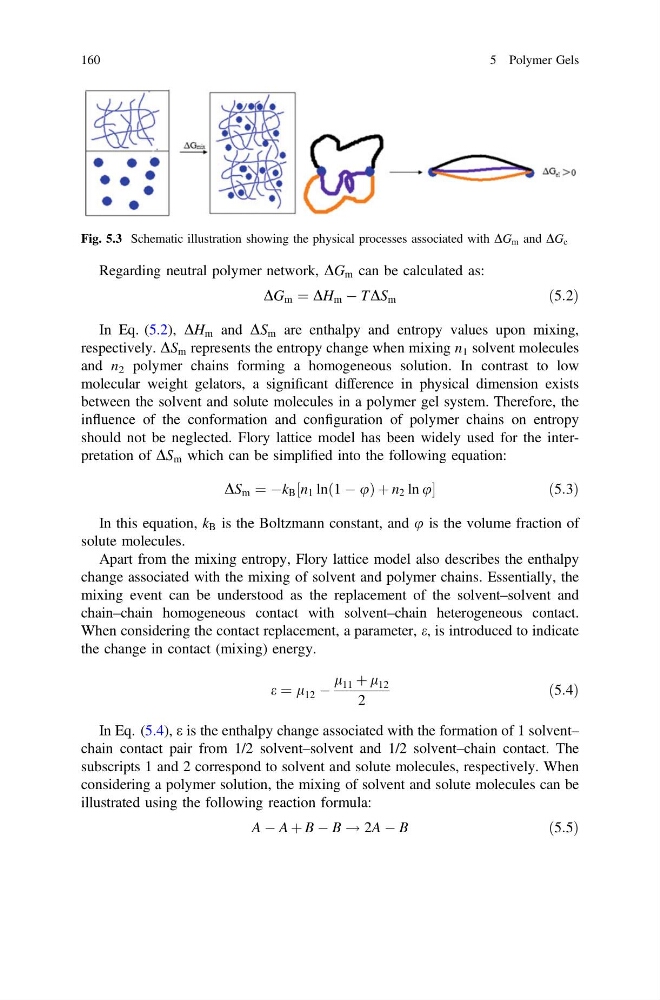
Fig. 5.3 Schematic illustration showing the physical processes associated with DG m and DG e
160
5 Polymer Gels
DG m ¼ DH m À TDS m
ð5:2Þ
In Eq. (5.2), DH m and DS m are enthalpy and entropy values upon mixing,
respectively. DS m represents the entropy change when mixing n 1 solvent molecules
and n 2 polymer chains forming a homogeneous solution. In contrast to low
molecular weight gelators, a significant difference in physical dimension exists
between the solvent and solute molecules in a polymer gel system. Therefore, the
influence of the conformation and configuration of polymer chains on entropy
should not be neglected. Flory lattice model has been widely used for the interpretation of DS m which can be simplified into the following equation:
DS m ¼ Àk B n 1 ln 1 À u
ð
Þþn 2 ln u
½
ð 5:3Þ
In this equation, k B is the Boltzmann constant, and u is the volume fraction of
solute molecules.
Apart from the mixing entropy, Flory lattice model also describes the enthalpy
change associated with the mixing of solvent and polymer chains. Essentially, the
mixing event can be understood as the replacement of the solvent–solvent and
chain–chain homogeneous contact with solvent–chain heterogeneous contact.
When considering the contact replacement, a parameter, e, is introduced to indicate
the change in contact (mixing) energy.
e ¼ l 12 À
l 11 þ l 12
2
ð5:4Þ
In Eq. (5.4), e is the enthalpy change associated with the formation of 1 solvent–
chain contact pair from 1/2 solvent–solvent and 1/2 solvent–chain contact. The
subscripts 1 and 2 correspond to solvent and solute molecules, respectively. When
considering a polymer solution, the mixing of solvent and solute molecules can be
illustrated using the following reaction formula:
A À A þ B À B ! 2A À B
ð5:5Þ
Fig. 5.3 Schematic illustration showing the physical processes associated with DG m and DG e
160
5 Polymer Gels