

Fe-BTC xerogel can be used as an adsorbent for arsenic removal from water
[121]. Fe-BTC xerogel shows high adsorption capacity of 57.7 mg g
−1 to AsO 4
3−
in solution (pH = 4) at 298 K. Kinetic studies show that the adsorption is spontaneous, the adsorption isotherms are well described with the Langmuir equation,
and the kinetic data are well described by the pseudo-second-order kinetic model.
Al-BTC gel provides an excellent ability to accommodate electrolyte ingredients
because the sponge-like porous metal–organic skeleton can hold a considerable
amount of solvent and active species of the electrolyte. It is used as quasi-solid
electrolyte for dye-sensitized solar cell and shows high conversion efficiency of
over 8.60% [122].
3.3.4 Metal–Organic Gels as Template
Metal-carboxylate gel materials are useful for templating porous materials due to their
high-specific surface area and porosity. For example, Fe-BTC gel forms in the
presence of methylmethacrylate, while dissolves in aqueous HCl. So it is easy to get
macrospous organic polymer through Fe-BTC gel as template [47]. The Fe-BTC gel
is also employed as template for synthesis of macroporous poly(glycidyl
methacrylate-co-ethylene glycol dimethacrylate), which was applied in the chromatographic separation of proteins [123]. A macroporous boronate affinity monolithic
column is prepared using Fe-BTC gel as a porogenic template and applied to
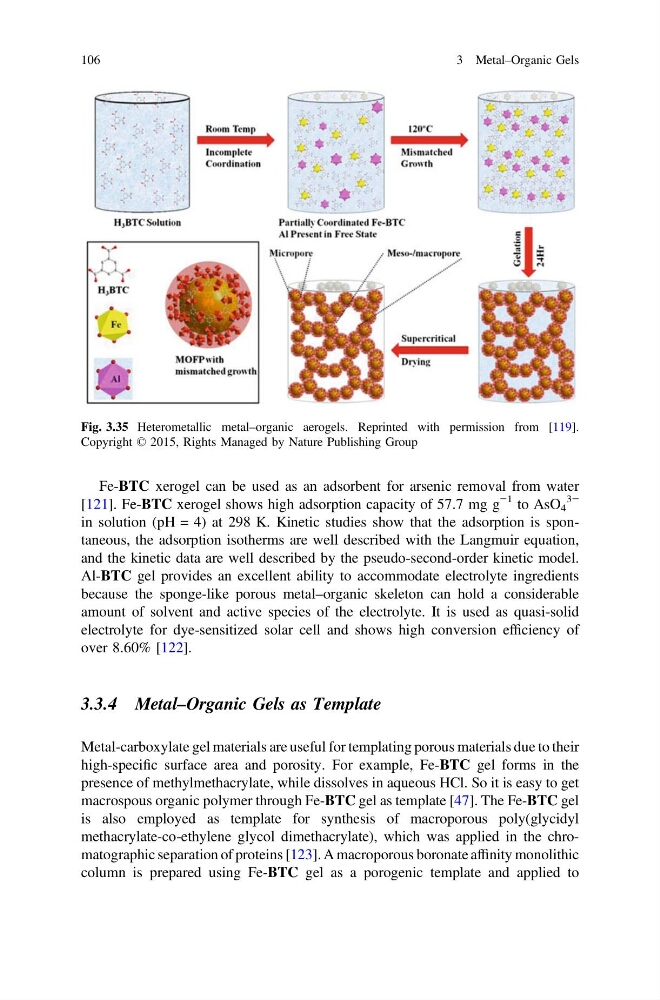
Fig. 3.35 Heterometallic metal–organic aerogels. Reprinted with permission from [119].
Copyright © 2015, Rights Managed by Nature Publishing Group
106
3 Metal–Organic Gels
[121]. Fe-BTC xerogel shows high adsorption capacity of 57.7 mg g
−1 to AsO 4
3−
in solution (pH = 4) at 298 K. Kinetic studies show that the adsorption is spontaneous, the adsorption isotherms are well described with the Langmuir equation,
and the kinetic data are well described by the pseudo-second-order kinetic model.
Al-BTC gel provides an excellent ability to accommodate electrolyte ingredients
because the sponge-like porous metal–organic skeleton can hold a considerable
amount of solvent and active species of the electrolyte. It is used as quasi-solid
electrolyte for dye-sensitized solar cell and shows high conversion efficiency of
over 8.60% [122].
3.3.4 Metal–Organic Gels as Template
Metal-carboxylate gel materials are useful for templating porous materials due to their
high-specific surface area and porosity. For example, Fe-BTC gel forms in the
presence of methylmethacrylate, while dissolves in aqueous HCl. So it is easy to get
macrospous organic polymer through Fe-BTC gel as template [47]. The Fe-BTC gel
is also employed as template for synthesis of macroporous poly(glycidyl
methacrylate-co-ethylene glycol dimethacrylate), which was applied in the chromatographic separation of proteins [123]. A macroporous boronate affinity monolithic
column is prepared using Fe-BTC gel as a porogenic template and applied to
Fig. 3.35 Heterometallic metal–organic aerogels. Reprinted with permission from [119].
Copyright © 2015, Rights Managed by Nature Publishing Group
106
3 Metal–Organic Gels