

4.4 Applications of TiO 2–x Photocatalysts
Based on its extended solar light absorption, narrowed bandgap, and improved
photogenerated electron and hole pairs, TiO 2–x shows enhanced photocatalytic
performance compared to pure TiO 2 materials. It is reported that TiO 2–x is wellsuited for the photodegradation of organic pollutants, such as phenol [28, 96],
bisphenol A [97], formic acid [87], rhodamine B [19, 98], methyl orange [23, 47],
methylene blue [99], reactive black 5 [46], 4-chlorophenol [100], etc. The performance of photocatalytic hydrogen production from water splitting improves after the
doping of Ti
3+ or hydrogenation of TiO 2 (Fig. 4.10a) [101–103]. TiO 2–x materials
show photocatalytic H 2 evolution activities under visible light, while pure TiO 2
catalysts do not show any visible light-driven activities (Fig. 4.10b) [15]. Besides,
TiO 2–x shows high activities for photocatalytic reduction of CO 2 to CH 4 [78, 104,
105], because oxygen vacancies promote the trapping of CO 2 molecules [106] and
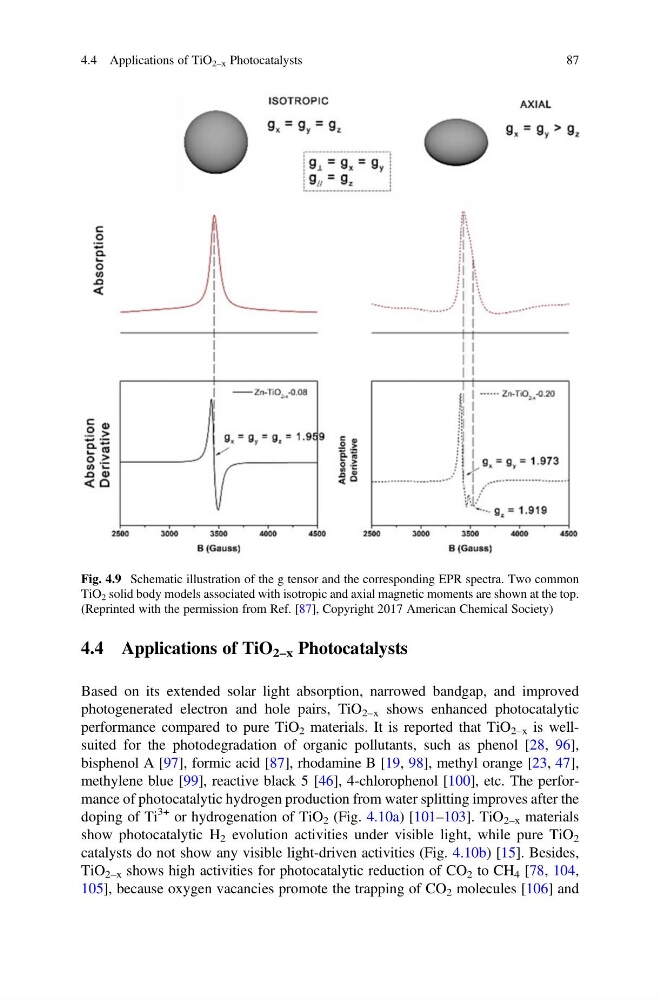
Fig. 4.9 Schematic illustration of the g tensor and the corresponding EPR spectra. Two common
TiO 2 solid body models associated with isotropic and axial magnetic moments are shown at the top.
(Reprinted with the permission from Ref. [87], Copyright 2017 American Chemical Society)
4.4 Applications of TiO 2–x Photocatalysts
87
Based on its extended solar light absorption, narrowed bandgap, and improved
photogenerated electron and hole pairs, TiO 2–x shows enhanced photocatalytic
performance compared to pure TiO 2 materials. It is reported that TiO 2–x is wellsuited for the photodegradation of organic pollutants, such as phenol [28, 96],
bisphenol A [97], formic acid [87], rhodamine B [19, 98], methyl orange [23, 47],
methylene blue [99], reactive black 5 [46], 4-chlorophenol [100], etc. The performance of photocatalytic hydrogen production from water splitting improves after the
doping of Ti
3+ or hydrogenation of TiO 2 (Fig. 4.10a) [101–103]. TiO 2–x materials
show photocatalytic H 2 evolution activities under visible light, while pure TiO 2
catalysts do not show any visible light-driven activities (Fig. 4.10b) [15]. Besides,
TiO 2–x shows high activities for photocatalytic reduction of CO 2 to CH 4 [78, 104,
105], because oxygen vacancies promote the trapping of CO 2 molecules [106] and
Fig. 4.9 Schematic illustration of the g tensor and the corresponding EPR spectra. Two common
TiO 2 solid body models associated with isotropic and axial magnetic moments are shown at the top.
(Reprinted with the permission from Ref. [87], Copyright 2017 American Chemical Society)
4.4 Applications of TiO 2–x Photocatalysts
87