

TiO 2–x thermally treated by H 2 gas, the H atoms would like to occupy the vacancies
which were left by the oxygen, and then the H atoms became negatively charged
[56]. However, Chen et al. demonstrated that the gas hydrogenation contributed to
the formation of disordered layers outside the crystallized TiO 2 core, rather than Ti
3+
generation [12]. The obtained disordered layers after hydrogenation lead to its
enhanced hydrogen mobility and electronic structural changes in TiO 2–x [81].
It was reported that hydrogenation through thermal treatment under H 2 gas leads
to the formation of midgap states above the VBM [15, 81, 82]. Besides, the
formation of impurity states below the conduction band minimum (CBM) is also
observed in TiO 2–x catalysts [32, 51]. In general, the tail below CBM is attributed to
the formation of Ti
3+ species and oxygen vacancies, while the uplift of VBM
contributed from the TiO 2–x disordered layers [21, 83].
However, Liu et al. considered that the introduction of Ti
3+ resulted into the
generation of isolated states between the forbidden gap, and the bandgap did not
change although the solar light absorption enhanced after Ti
3+ doping [77]. This
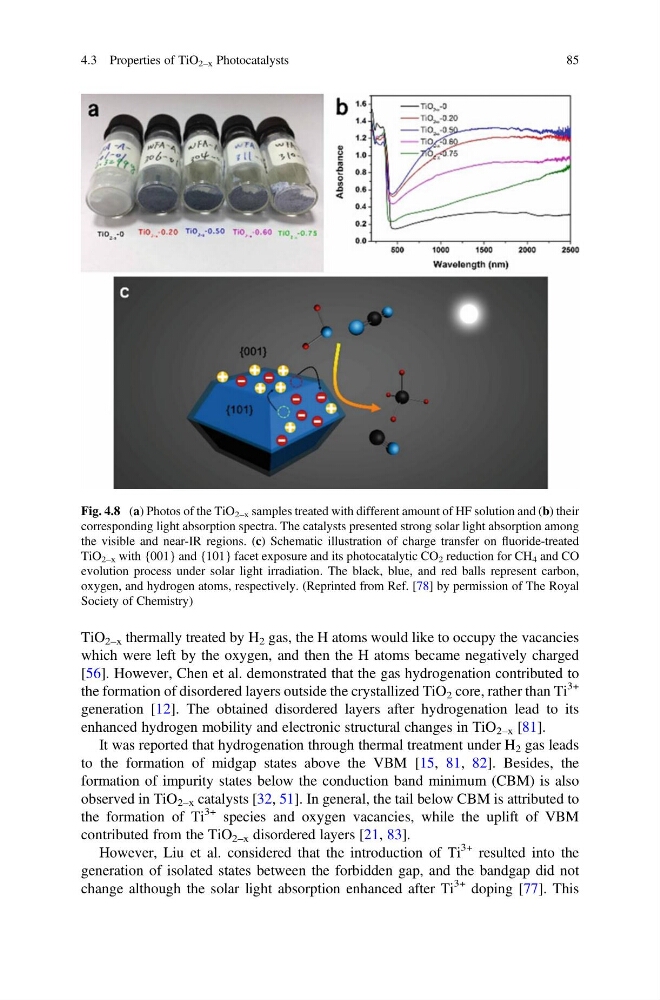
Fig. 4.8 (a) Photos of the TiO 2–x samples treated with different amount of HF solution and (b) their
corresponding light absorption spectra. The catalysts presented strong solar light absorption among
the visible and near-IR regions. (c) Schematic illustration of charge transfer on fluoride-treated
TiO 2–x with {001} and {101} facet exposure and its photocatalytic CO 2 reduction for CH 4 and CO
evolution process under solar light irradiation. The black, blue, and red balls represent carbon,
oxygen, and hydrogen atoms, respectively. (Reprinted from Ref. [78] by permission of The Royal
Society of Chemistry)
4.3 Properties of TiO 2–x Photocatalysts
85
which were left by the oxygen, and then the H atoms became negatively charged
[56]. However, Chen et al. demonstrated that the gas hydrogenation contributed to
the formation of disordered layers outside the crystallized TiO 2 core, rather than Ti
3+
generation [12]. The obtained disordered layers after hydrogenation lead to its
enhanced hydrogen mobility and electronic structural changes in TiO 2–x [81].
It was reported that hydrogenation through thermal treatment under H 2 gas leads
to the formation of midgap states above the VBM [15, 81, 82]. Besides, the
formation of impurity states below the conduction band minimum (CBM) is also
observed in TiO 2–x catalysts [32, 51]. In general, the tail below CBM is attributed to
the formation of Ti
3+ species and oxygen vacancies, while the uplift of VBM
contributed from the TiO 2–x disordered layers [21, 83].
However, Liu et al. considered that the introduction of Ti
3+ resulted into the
generation of isolated states between the forbidden gap, and the bandgap did not
change although the solar light absorption enhanced after Ti
3+ doping [77]. This
Fig. 4.8 (a) Photos of the TiO 2–x samples treated with different amount of HF solution and (b) their
corresponding light absorption spectra. The catalysts presented strong solar light absorption among
the visible and near-IR regions. (c) Schematic illustration of charge transfer on fluoride-treated
TiO 2–x with {001} and {101} facet exposure and its photocatalytic CO 2 reduction for CH 4 and CO
evolution process under solar light irradiation. The black, blue, and red balls represent carbon,
oxygen, and hydrogen atoms, respectively. (Reprinted from Ref. [78] by permission of The Royal
Society of Chemistry)
4.3 Properties of TiO 2–x Photocatalysts
85