

[14]. Hu et al. demonstrated that no Ti
3+ species was observed on the surface of the
hydrogenated TiO 2 catalysts but with the formation of Ti-OH species on the TiO 2
surface after hydrogenation by H 2 –gas thermal treatment [15]. The formation of
hydroxyl group on TiO 2 surface after hydrogen treatment was also confirmed by
other literatures [13]. The generated Ti–H or O–H species lead to the formation of
surface disorder structure, which introduce midgap states above the valance band
maximum (VBM) and cause the bandgap narrowing of TiO 2 photocatalyst [15]. It
seems that high-temperature hydrogenation is likely to introduce disordered layers
outside the crystalline TiO 2 core and Ti
3+ species in the bulk of TiO 2 catalysts
[15]. However, it is possible that TiO 2 is hydrogenated at room temperature. Lu et al.
treated commercial Evonik P25 under 35 bar hydrogen gas at room temperature for
20 days, and a similar crystalline-disordered core-shell structure was also
obtained [16].
Thermal treatment under hydrogen atmosphere is an efficient way to introduce
disordered structure and bandgap narrowing of TiO 2 . However, there are also
concerns about the potential safety impacts of the using of hydrogen gas in practical
applications. In order to avoid the direct usage of hydrogen gas, Xing et al. developed a new approach for the synthesis of TiO 2 using NaBH 4 as the reductant, which
would release hydrogen during the preparation process [17]. During the hydrothermal process, NaBH 4 is likely to hydrolyze and release the hydrogen gas and active
atomic hydrogen in the solution. Ti
3+ was introduced into the lattice of TiO 2 without
changing the unit cell [18]. However, by-products especially boron oxide species
were generated, while Ti
4+ was reduced by NaBH 4 . In order to eliminate the negative
effect of carbon and boron impurities which were generated during the synthesis,
Fang et al. developed the NaBH 4 reduction method with calcination treatment and
post-washing with HCl aqueous solution [19]. Except for in situ reaction starting
from titanium precursors and NaBH 4 , solid-state reaction of NaBH 4 with TiO 2
nanoparticles also promotes the surface defect implantation of TiO 2 [20]. This
solid-state reaction leads to the generation of oxygen vacancies and the subsequent
formation of disordered TiO 2–x shell on the surface of TiO 2 nanocrystals [21]. The
introduction of Ti
3+ using NaBH 4 as the reductant was also applied in the fabrication
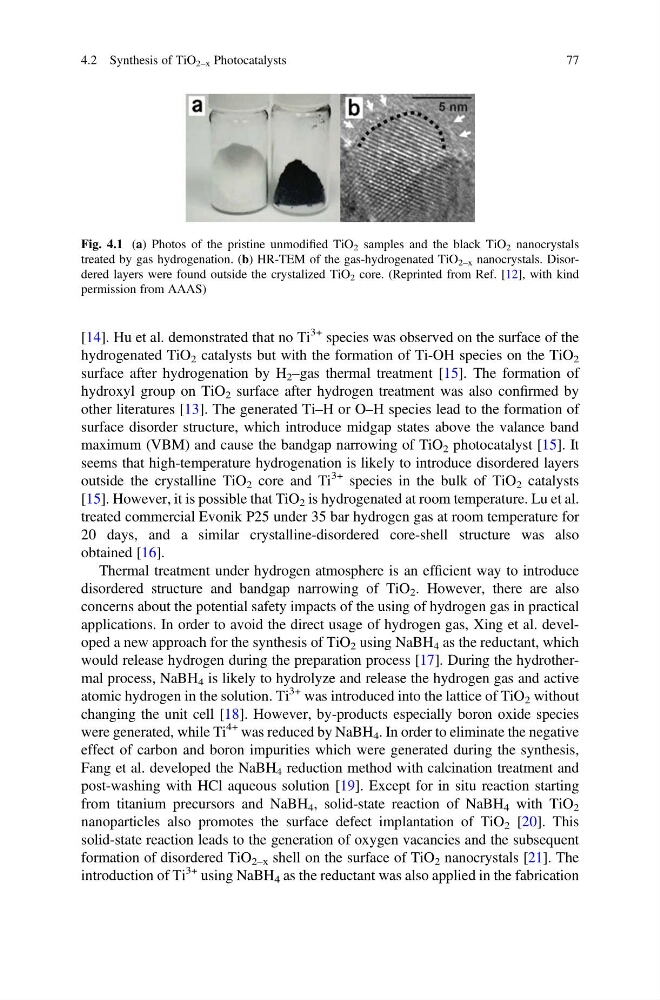
Fig. 4.1 (a) Photos of the pristine unmodified TiO 2 samples and the black TiO 2 nanocrystals
treated by gas hydrogenation. (b) HR-TEM of the gas-hydrogenated TiO 2–x nanocrystals. Disordered layers were found outside the crystalized TiO 2 core. (Reprinted from Ref. [12], with kind
permission from AAAS)
4.2 Synthesis of TiO 2–x Photocatalysts
77
3+ species was observed on the surface of the
hydrogenated TiO 2 catalysts but with the formation of Ti-OH species on the TiO 2
surface after hydrogenation by H 2 –gas thermal treatment [15]. The formation of
hydroxyl group on TiO 2 surface after hydrogen treatment was also confirmed by
other literatures [13]. The generated Ti–H or O–H species lead to the formation of
surface disorder structure, which introduce midgap states above the valance band
maximum (VBM) and cause the bandgap narrowing of TiO 2 photocatalyst [15]. It
seems that high-temperature hydrogenation is likely to introduce disordered layers
outside the crystalline TiO 2 core and Ti
3+ species in the bulk of TiO 2 catalysts
[15]. However, it is possible that TiO 2 is hydrogenated at room temperature. Lu et al.
treated commercial Evonik P25 under 35 bar hydrogen gas at room temperature for
20 days, and a similar crystalline-disordered core-shell structure was also
obtained [16].
Thermal treatment under hydrogen atmosphere is an efficient way to introduce
disordered structure and bandgap narrowing of TiO 2 . However, there are also
concerns about the potential safety impacts of the using of hydrogen gas in practical
applications. In order to avoid the direct usage of hydrogen gas, Xing et al. developed a new approach for the synthesis of TiO 2 using NaBH 4 as the reductant, which
would release hydrogen during the preparation process [17]. During the hydrothermal process, NaBH 4 is likely to hydrolyze and release the hydrogen gas and active
atomic hydrogen in the solution. Ti
3+ was introduced into the lattice of TiO 2 without
changing the unit cell [18]. However, by-products especially boron oxide species
were generated, while Ti
4+ was reduced by NaBH 4 . In order to eliminate the negative
effect of carbon and boron impurities which were generated during the synthesis,
Fang et al. developed the NaBH 4 reduction method with calcination treatment and
post-washing with HCl aqueous solution [19]. Except for in situ reaction starting
from titanium precursors and NaBH 4 , solid-state reaction of NaBH 4 with TiO 2
nanoparticles also promotes the surface defect implantation of TiO 2 [20]. This
solid-state reaction leads to the generation of oxygen vacancies and the subsequent
formation of disordered TiO 2–x shell on the surface of TiO 2 nanocrystals [21]. The
introduction of Ti
3+ using NaBH 4 as the reductant was also applied in the fabrication
Fig. 4.1 (a) Photos of the pristine unmodified TiO 2 samples and the black TiO 2 nanocrystals
treated by gas hydrogenation. (b) HR-TEM of the gas-hydrogenated TiO 2–x nanocrystals. Disordered layers were found outside the crystalized TiO 2 core. (Reprinted from Ref. [12], with kind
permission from AAAS)
4.2 Synthesis of TiO 2–x Photocatalysts
77