

3.6 Conclusion
Herein, to sum up, we have reviewed plenty of representative literatures about recent
advances in photocatalysts over the highly dispersed TiO 2 in mesoporous materials.
Although TiO 2 possesses specific properties, it is limited in photocatalysis because
of its narrow bandgap. Thus, the doping modification on mesoporous TiO 2 materials
proves to be an effective way to enhance its photocatalytic performance. Meanwhile,
synthesizing mesoporous TiO 2 –SiO 2 , Ti–MOFs, and Ti–SiO 2 materials is another
feasible way to achieve this goal. Based on the analysis of mechanism of these
systems, it gives the researchers a promising future. The achieved progress in this
field indicates that researchers can either be able to extend the photoresponse to the
visible region or apply them to practical application, such as water splitting, degradation of pollutants and decomposition of greenhouse gas (CO 2 , NO, NO 2 ).
References
1. Yuan S, Chen Y, Shi L, Fang J, Zhang J, Zhang J, Yamashita H (2007) Synthesis and
characterization of Ce-doped mesoporous anatase with long-range ordered mesostructure.
Mater Lett 61(21):4283–4286
2. Beck JS, Vartuli JC, Roth WJ, Leonowicz ME, Kresge CT, Schmitt KD, Chu CTW, Olson DH,
Sheppard EW (1992) A new family of mesoporous molecular sieves prepared with liquid crystal
templates. J Am Chem Soc 114(27):10834–10843
3. Ryoo R, Jun S (1997) Improvement of hydrothermal stability of MCM-41 using salt effects
during the crystallization process. J Phys Chem B 101(3):317–320
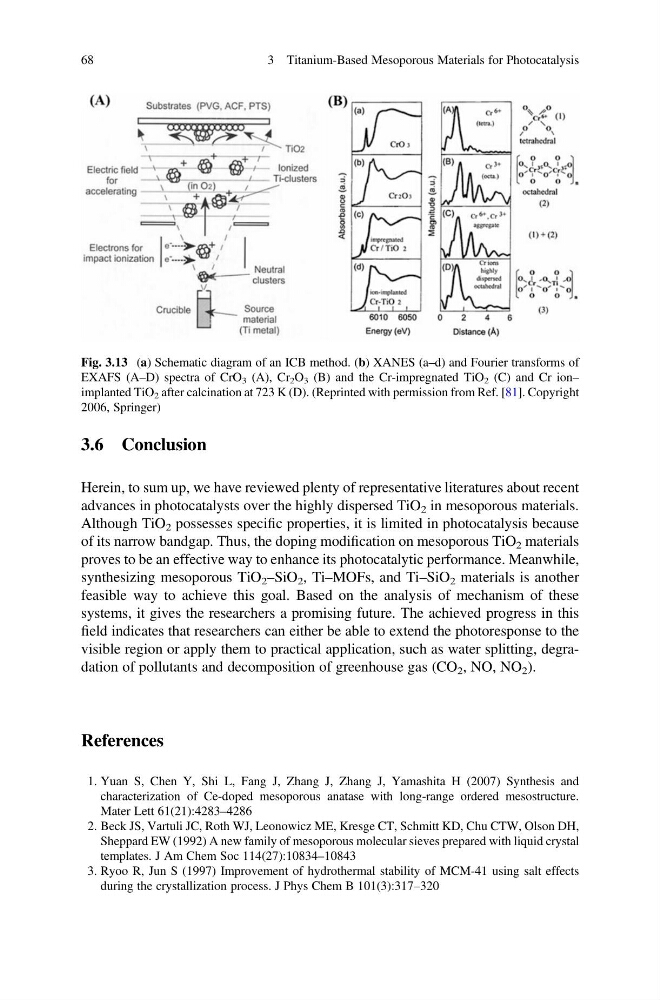
Fig. 3.13 (a) Schematic diagram of an ICB method. (b) XANES (a–d) and Fourier transforms of
EXAFS (A–D) spectra of CrO 3 (A), Cr 2 O 3 (B) and the Cr-impregnated TiO 2 (C) and Cr ion–
implanted TiO 2 after calcination at 723 K (D). (Reprinted with permission from Ref. [81]. Copyright
2006, Springer)
68
3 Titanium-Based Mesoporous Materials for Photocatalysis
Herein, to sum up, we have reviewed plenty of representative literatures about recent
advances in photocatalysts over the highly dispersed TiO 2 in mesoporous materials.
Although TiO 2 possesses specific properties, it is limited in photocatalysis because
of its narrow bandgap. Thus, the doping modification on mesoporous TiO 2 materials
proves to be an effective way to enhance its photocatalytic performance. Meanwhile,
synthesizing mesoporous TiO 2 –SiO 2 , Ti–MOFs, and Ti–SiO 2 materials is another
feasible way to achieve this goal. Based on the analysis of mechanism of these
systems, it gives the researchers a promising future. The achieved progress in this
field indicates that researchers can either be able to extend the photoresponse to the
visible region or apply them to practical application, such as water splitting, degradation of pollutants and decomposition of greenhouse gas (CO 2 , NO, NO 2 ).
References
1. Yuan S, Chen Y, Shi L, Fang J, Zhang J, Zhang J, Yamashita H (2007) Synthesis and
characterization of Ce-doped mesoporous anatase with long-range ordered mesostructure.
Mater Lett 61(21):4283–4286
2. Beck JS, Vartuli JC, Roth WJ, Leonowicz ME, Kresge CT, Schmitt KD, Chu CTW, Olson DH,
Sheppard EW (1992) A new family of mesoporous molecular sieves prepared with liquid crystal
templates. J Am Chem Soc 114(27):10834–10843
3. Ryoo R, Jun S (1997) Improvement of hydrothermal stability of MCM-41 using salt effects
during the crystallization process. J Phys Chem B 101(3):317–320
Fig. 3.13 (a) Schematic diagram of an ICB method. (b) XANES (a–d) and Fourier transforms of
EXAFS (A–D) spectra of CrO 3 (A), Cr 2 O 3 (B) and the Cr-impregnated TiO 2 (C) and Cr ion–
implanted TiO 2 after calcination at 723 K (D). (Reprinted with permission from Ref. [81]. Copyright
2006, Springer)
68
3 Titanium-Based Mesoporous Materials for Photocatalysis