

3.3.2 The Application of TiO 2 –SiO 2 Mesoporous Materials
in Photocatalysis
3.3.2.1 Photodegradation of Organic Pollutants
We have briefly introduced the preparation methods of TiO 2 –SiO 2 mesoporous
materials. Next, we will explore its applications. As we all know, human’s demand
of energy will be much greater by the year of 2050. This increase poses an undue
burden to our environment and the length of human’s life. Besides that, with the
prosperity of industrialization, the disposal of industrial waste poses a great threat to
the environment, which is becoming the biggest concern for the sustainable development of human society. As previously mentioned, TiO 2 was considered as a
catalyst for degradation lots of pollutants. However, its rapid recombination of
photo-generated electron–hole pairs limits its application. According to previous
reports, TiO 2 –SiO 2 mesoporous materials are found to be effective in environmental
remediation. Figure 3.4 briefly demonstrates the photocatalytic process of degradation of organic pollutants and dyes under visible light [52].
Aguado et al. [53] prepared titania-supported sample on different types of silica
through a sol–gel method followed by hydrothermal processing. Afterward, the
catalysts were tested by the degradation of iron (III) cyano complexes. In all cases,
photoinduced CN
À released from the composite which happened by a homogeneous
process. He et al. [59] applied cubic mesoporous titania–silica binary oxides to
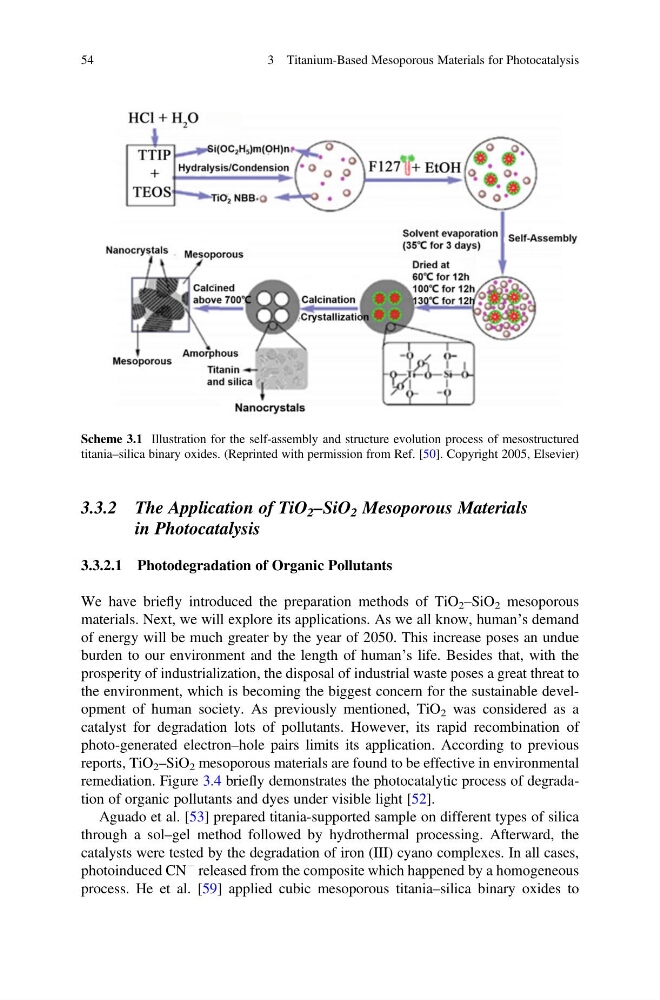
Scheme 3.1 Illustration for the self-assembly and structure evolution process of mesostructured
titania–silica binary oxides. (Reprinted with permission from Ref. [50]. Copyright 2005, Elsevier)
54
3 Titanium-Based Mesoporous Materials for Photocatalysis
in Photocatalysis
3.3.2.1 Photodegradation of Organic Pollutants
We have briefly introduced the preparation methods of TiO 2 –SiO 2 mesoporous
materials. Next, we will explore its applications. As we all know, human’s demand
of energy will be much greater by the year of 2050. This increase poses an undue
burden to our environment and the length of human’s life. Besides that, with the
prosperity of industrialization, the disposal of industrial waste poses a great threat to
the environment, which is becoming the biggest concern for the sustainable development of human society. As previously mentioned, TiO 2 was considered as a
catalyst for degradation lots of pollutants. However, its rapid recombination of
photo-generated electron–hole pairs limits its application. According to previous
reports, TiO 2 –SiO 2 mesoporous materials are found to be effective in environmental
remediation. Figure 3.4 briefly demonstrates the photocatalytic process of degradation of organic pollutants and dyes under visible light [52].
Aguado et al. [53] prepared titania-supported sample on different types of silica
through a sol–gel method followed by hydrothermal processing. Afterward, the
catalysts were tested by the degradation of iron (III) cyano complexes. In all cases,
photoinduced CN
À released from the composite which happened by a homogeneous
process. He et al. [59] applied cubic mesoporous titania–silica binary oxides to
Scheme 3.1 Illustration for the self-assembly and structure evolution process of mesostructured
titania–silica binary oxides. (Reprinted with permission from Ref. [50]. Copyright 2005, Elsevier)
54
3 Titanium-Based Mesoporous Materials for Photocatalysis