

840 cm
À1 within the same 300 ms pulse. The widely different photocatalytic
efficiency of the two types of sites is attributed to the presence/absence of adjacent
Co(III)OH groups coupled via an oxygen bridge. Improvement of the sensitivity of
the ATR method should allow time-resolved FTIR monitoring with shorter photolysis pulses, which, in turn, will enable detection and kinetic analysis of the early
(one- and two-electron) surface intermediates of the fast site [21].
Despite of the successful determination of surface intermediates by IR technique,
the role of the surface intermediate species in the photocatalytic water-oxidation
reaction was rarely established definitively. α-Fe 2 O 3 with excellent stability and
elemental abundance has emerged as one of the most promising materials to carry
out the light-driven water-oxidation half reaction for photoelectrochemical (PEC)
water splitting. The combination of suitable optical and electrochemical properties
enables the possibility of sustainable hydrogen production in a hematite-based PEC
cell. However, so far the efficiencies measured with hematite have fallen well short
of the theoretical maximum. For example, state-of-the-art systems produce only 30%
of the maximum photocurrent that can be generated under water splitting with
hematite. The cause of this poor performance has been the focus of extensive studies
during the past decade. Bulk recombination and surface recombination have both
been found to limit the quantum efficiency of photogenerated charge-carrier separation and the output power. Bulk recombination results in a near-zero minority
carrier (hole) diffusion length, which limits the charge-collection length to the spacecharge layer in the hematite–electrolyte interface. Surface recombination is in
competition with the forward water-oxidation hole-transfer reactions and accounts
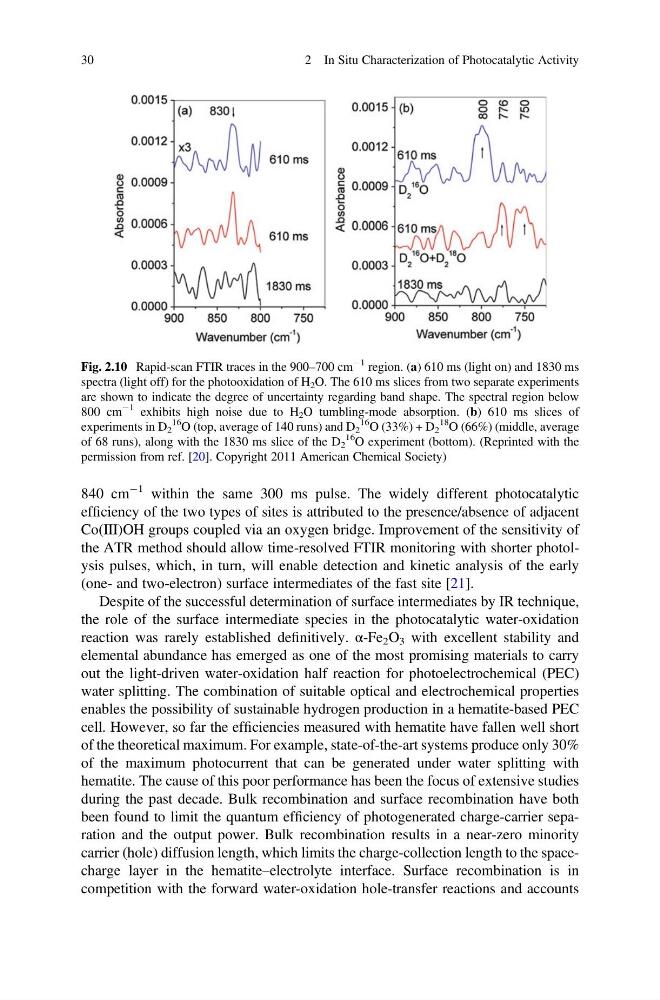
Fig. 2.10 Rapid-scan FTIR traces in the 900–700 cm
À1 region. (a) 610 ms (light on) and 1830 ms
spectra (light off) for the photooxidation of H 2 O. The 610 ms slices from two separate experiments
are shown to indicate the degree of uncertainty regarding band shape. The spectral region below
800 cm
À1 exhibits high noise due to H 2 O tumbling-mode absorption. (b) 610 ms slices of
experiments in D 2
16
O (top, average of 140 runs) and D 2
16
O (33%) + D 2
18
O (66%) (middle, average
of 68 runs), along with the 1830 ms slice of the D 2
16
O experiment (bottom). (Reprinted with the
permission from ref. [20]. Copyright 2011 American Chemical Society)
30
2 In Situ Characterization of Photocatalytic Activity
À1 within the same 300 ms pulse. The widely different photocatalytic
efficiency of the two types of sites is attributed to the presence/absence of adjacent
Co(III)OH groups coupled via an oxygen bridge. Improvement of the sensitivity of
the ATR method should allow time-resolved FTIR monitoring with shorter photolysis pulses, which, in turn, will enable detection and kinetic analysis of the early
(one- and two-electron) surface intermediates of the fast site [21].
Despite of the successful determination of surface intermediates by IR technique,
the role of the surface intermediate species in the photocatalytic water-oxidation
reaction was rarely established definitively. α-Fe 2 O 3 with excellent stability and
elemental abundance has emerged as one of the most promising materials to carry
out the light-driven water-oxidation half reaction for photoelectrochemical (PEC)
water splitting. The combination of suitable optical and electrochemical properties
enables the possibility of sustainable hydrogen production in a hematite-based PEC
cell. However, so far the efficiencies measured with hematite have fallen well short
of the theoretical maximum. For example, state-of-the-art systems produce only 30%
of the maximum photocurrent that can be generated under water splitting with
hematite. The cause of this poor performance has been the focus of extensive studies
during the past decade. Bulk recombination and surface recombination have both
been found to limit the quantum efficiency of photogenerated charge-carrier separation and the output power. Bulk recombination results in a near-zero minority
carrier (hole) diffusion length, which limits the charge-collection length to the spacecharge layer in the hematite–electrolyte interface. Surface recombination is in
competition with the forward water-oxidation hole-transfer reactions and accounts
Fig. 2.10 Rapid-scan FTIR traces in the 900–700 cm
À1 region. (a) 610 ms (light on) and 1830 ms
spectra (light off) for the photooxidation of H 2 O. The 610 ms slices from two separate experiments
are shown to indicate the degree of uncertainty regarding band shape. The spectral region below
800 cm
À1 exhibits high noise due to H 2 O tumbling-mode absorption. (b) 610 ms slices of
experiments in D 2
16
O (top, average of 140 runs) and D 2
16
O (33%) + D 2
18
O (66%) (middle, average
of 68 runs), along with the 1830 ms slice of the D 2
16
O experiment (bottom). (Reprinted with the
permission from ref. [20]. Copyright 2011 American Chemical Society)
30
2 In Situ Characterization of Photocatalytic Activity