

noted that negatively charged P atoms can trap the positively charged hydrogen
proton, thus achieving highly efficient water reduction.
16.3.2 The Effect of P Content
The atomic percentage of P in TMPs is a crucial factor in hydrogen evolution
reactions. It is reported that with the increment of atomic percentage of P in
TMPs, the hydrogen evolution activity rises accordingly. Liu et al. [57] prepared
phase-controlled monodispersed nickel phosphide via the thermal decomposition
method using nickel acetylacetonate as nickel source, trioctylphosphine as phosphorus source, and oleylamine as reductive reagent. The different morphologies are
realized by changing the molar ratio of P/Ni precursor. The result demonstrated that
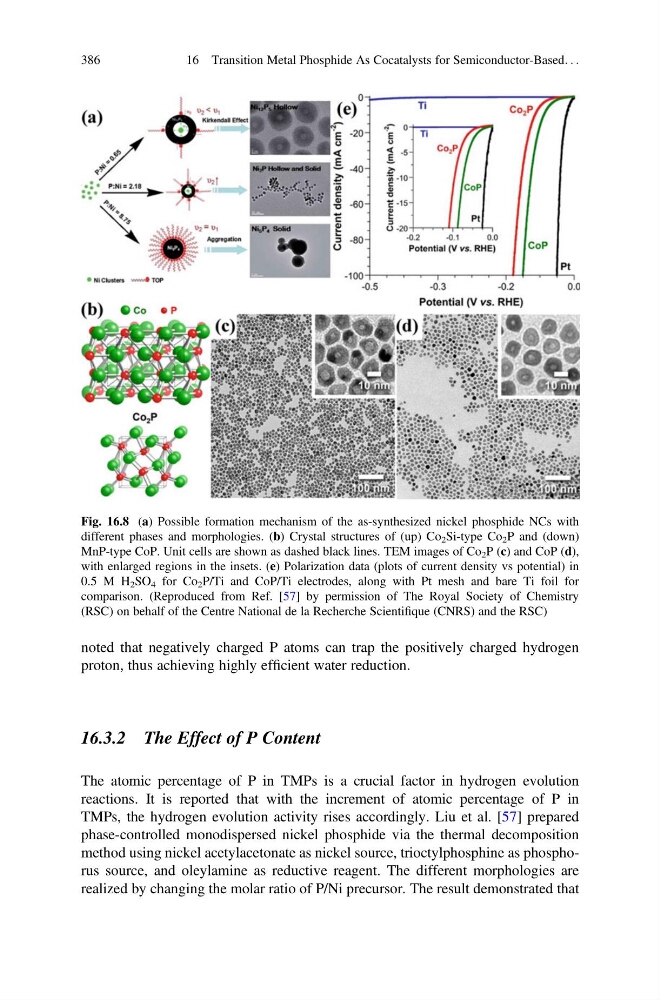
Fig. 16.8 (a) Possible formation mechanism of the as-synthesized nickel phosphide NCs with
different phases and morphologies. (b) Crystal structures of (up) Co 2 Si-type Co 2 P and (down)
MnP-type CoP. Unit cells are shown as dashed black lines. TEM images of Co 2 P (c) and CoP (d),
with enlarged regions in the insets. (e) Polarization data (plots of current density vs potential) in
0.5 M H 2 SO 4 for Co 2 P/Ti and CoP/Ti electrodes, along with Pt mesh and bare Ti foil for
comparison. (Reproduced from Ref. [57] by permission of The Royal Society of Chemistry
(RSC) on behalf of the Centre National de la Recherche Scientifique (CNRS) and the RSC)
386
16 Transition Metal Phosphide As Cocatalysts for Semiconductor-Based. . .
proton, thus achieving highly efficient water reduction.
16.3.2 The Effect of P Content
The atomic percentage of P in TMPs is a crucial factor in hydrogen evolution
reactions. It is reported that with the increment of atomic percentage of P in
TMPs, the hydrogen evolution activity rises accordingly. Liu et al. [57] prepared
phase-controlled monodispersed nickel phosphide via the thermal decomposition
method using nickel acetylacetonate as nickel source, trioctylphosphine as phosphorus source, and oleylamine as reductive reagent. The different morphologies are
realized by changing the molar ratio of P/Ni precursor. The result demonstrated that
Fig. 16.8 (a) Possible formation mechanism of the as-synthesized nickel phosphide NCs with
different phases and morphologies. (b) Crystal structures of (up) Co 2 Si-type Co 2 P and (down)
MnP-type CoP. Unit cells are shown as dashed black lines. TEM images of Co 2 P (c) and CoP (d),
with enlarged regions in the insets. (e) Polarization data (plots of current density vs potential) in
0.5 M H 2 SO 4 for Co 2 P/Ti and CoP/Ti electrodes, along with Pt mesh and bare Ti foil for
comparison. (Reproduced from Ref. [57] by permission of The Royal Society of Chemistry
(RSC) on behalf of the Centre National de la Recherche Scientifique (CNRS) and the RSC)
386
16 Transition Metal Phosphide As Cocatalysts for Semiconductor-Based. . .