

and ethylenediamine. Their results showed that the pore diameter of the MCN
materials can be easily controlled from 4.2 to 6.4 nm without affecting their
structural order. Moreover, they also tuned the nitrogen content of the MCN
materials by simply adjusting the weight ratio of ethylenediamine (EDA) to carbon
tetrachloride (CTC) [34]. With the increase of EDA to CTC weight ratio from 0.3 to
0.9, the carbon to nitrogen ratio of the MCN decreased from 4.3 to 3.3. The results
showed that the pore diameter of the MCN materials could be easily tuned from 4.2
to 6.4 nm without impairing their structural order.
In addition to SBA-15, other kinds of mesoporous silica materials have also been
used as template for the synthesis of MCN. Ajayan Vimu et al. synthesized MCN
with cage-type mesopores through a straight forward polymerization of carbon
tetrachloride and ethylenediamine inside the pore channels of the mesoporous silica
material FDU-12. The obtained MCN materials, which were used as adsorbents,
were applied to capture CO 2 molecules under different high pressures and temperatures. The MCN materials exhibited excellent affinity toward CO 2 molecules due to
the strong acid–base interactions [35]. Sang-Eon Park used disk-type mesoporous
silica (INC-2) as hard template and melamine as precursor to synthesize MCN
material with hexagonal platelet morphology. This material possessed high nitrogen
content in the framework as well as the surface, which provided potential Lewis base
sites for Knoevenagel condensation [36]. By using a mesoporous silica KIT-6 as the
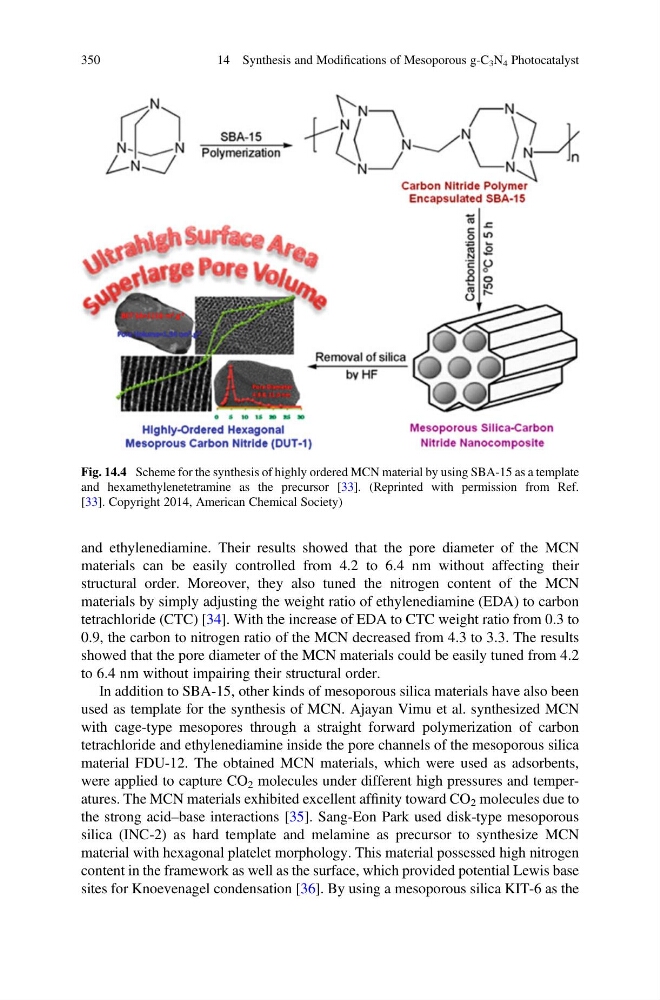
Fig. 14.4 Scheme for the synthesis of highly ordered MCN material by using SBA-15 as a template
and hexamethylenetetramine as the precursor [33]. (Reprinted with permission from Ref.
[33]. Copyright 2014, American Chemical Society)
350
14 Synthesis and Modifications of Mesoporous g-C 3 N 4 Photocatalyst
materials can be easily controlled from 4.2 to 6.4 nm without affecting their
structural order. Moreover, they also tuned the nitrogen content of the MCN
materials by simply adjusting the weight ratio of ethylenediamine (EDA) to carbon
tetrachloride (CTC) [34]. With the increase of EDA to CTC weight ratio from 0.3 to
0.9, the carbon to nitrogen ratio of the MCN decreased from 4.3 to 3.3. The results
showed that the pore diameter of the MCN materials could be easily tuned from 4.2
to 6.4 nm without impairing their structural order.
In addition to SBA-15, other kinds of mesoporous silica materials have also been
used as template for the synthesis of MCN. Ajayan Vimu et al. synthesized MCN
with cage-type mesopores through a straight forward polymerization of carbon
tetrachloride and ethylenediamine inside the pore channels of the mesoporous silica
material FDU-12. The obtained MCN materials, which were used as adsorbents,
were applied to capture CO 2 molecules under different high pressures and temperatures. The MCN materials exhibited excellent affinity toward CO 2 molecules due to
the strong acid–base interactions [35]. Sang-Eon Park used disk-type mesoporous
silica (INC-2) as hard template and melamine as precursor to synthesize MCN
material with hexagonal platelet morphology. This material possessed high nitrogen
content in the framework as well as the surface, which provided potential Lewis base
sites for Knoevenagel condensation [36]. By using a mesoporous silica KIT-6 as the
Fig. 14.4 Scheme for the synthesis of highly ordered MCN material by using SBA-15 as a template
and hexamethylenetetramine as the precursor [33]. (Reprinted with permission from Ref.
[33]. Copyright 2014, American Chemical Society)
350
14 Synthesis and Modifications of Mesoporous g-C 3 N 4 Photocatalyst