

12.3.1.3 Dual Cocatalysts
Considering the precise construct of the configuration of photocatalyst with synergistic dual cocatalysts will enhance the CO2PR efficiency greatly. Recently, more
and more researches have focused on the dual cocatalysts deposition with advanced
structures. Generally, compared with sole cocatalyst composites, the synthesis of
dual cocatalysts is more complicated, which need involve with stepwise deposition
of dual units. The spatial locations of dual cocatalysts should depend on the
functions of these two species which are either separated or combined with each
other.
The construction of spatial separated electron trapping agents and hole collectors
could greatly promote the charge separation efficiency of the photocatalyst. Dong
et al. [8] developed a 3D hierarchical structured TiO 2 –SiO 2 with CoO x and Pt
growing inside and outside of the skeleton. Firstly, the Co(AC) 2 .4H 2 O and Ti–Si
sol were mixed together and underwent a synchronizing self-assemble process; after
the 500
C calcination, the hydrolyzed Co(OH) x transformed into CoO x NPs
embedded under the hierarchical TiO 2 –SiO 2 skeleton homogenerously (denoted as
the HCTSO). Subsequently, the Pt NPs were growing in situ on the outer surface of
the HCTSO via alcohol reduction of H 2 PtCl 6 . In order to improve the CO 2
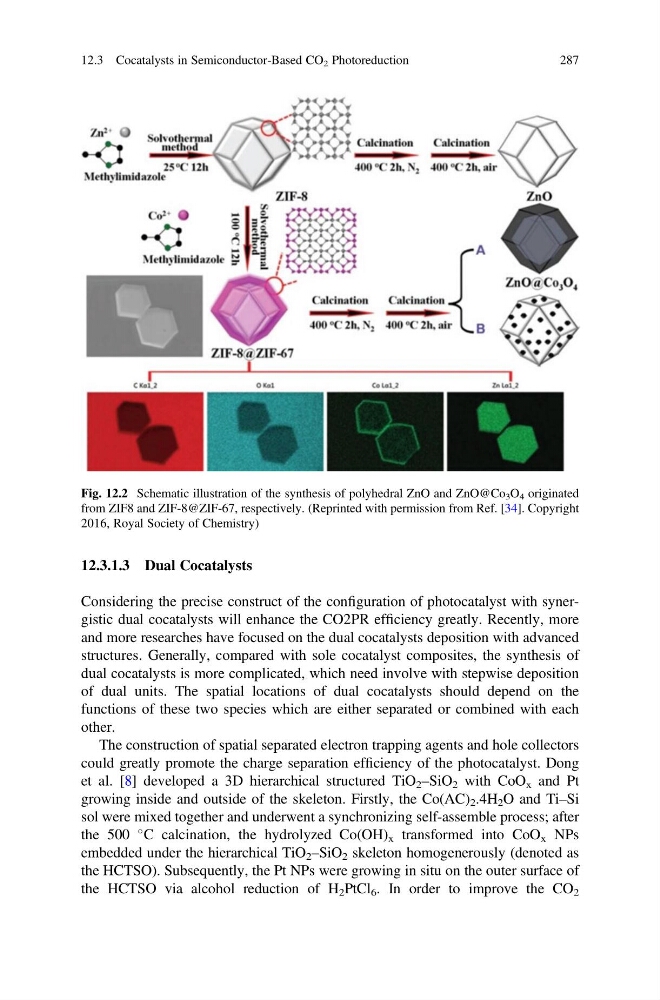
Fig. 12.2 Schematic illustration of the synthesis of polyhedral ZnO and ZnO@Co 3 O 4 originated
from ZIF8 and ZIF-8@ZIF-67, respectively. (Reprinted with permission from Ref. [34]. Copyright
2016, Royal Society of Chemistry)
12.3 Cocatalysts in Semiconductor-Based CO 2 Photoreduction
287
Considering the precise construct of the configuration of photocatalyst with synergistic dual cocatalysts will enhance the CO2PR efficiency greatly. Recently, more
and more researches have focused on the dual cocatalysts deposition with advanced
structures. Generally, compared with sole cocatalyst composites, the synthesis of
dual cocatalysts is more complicated, which need involve with stepwise deposition
of dual units. The spatial locations of dual cocatalysts should depend on the
functions of these two species which are either separated or combined with each
other.
The construction of spatial separated electron trapping agents and hole collectors
could greatly promote the charge separation efficiency of the photocatalyst. Dong
et al. [8] developed a 3D hierarchical structured TiO 2 –SiO 2 with CoO x and Pt
growing inside and outside of the skeleton. Firstly, the Co(AC) 2 .4H 2 O and Ti–Si
sol were mixed together and underwent a synchronizing self-assemble process; after
the 500
C calcination, the hydrolyzed Co(OH) x transformed into CoO x NPs
embedded under the hierarchical TiO 2 –SiO 2 skeleton homogenerously (denoted as
the HCTSO). Subsequently, the Pt NPs were growing in situ on the outer surface of
the HCTSO via alcohol reduction of H 2 PtCl 6 . In order to improve the CO 2
Fig. 12.2 Schematic illustration of the synthesis of polyhedral ZnO and ZnO@Co 3 O 4 originated
from ZIF8 and ZIF-8@ZIF-67, respectively. (Reprinted with permission from Ref. [34]. Copyright
2016, Royal Society of Chemistry)
12.3 Cocatalysts in Semiconductor-Based CO 2 Photoreduction
287