

visible light irradiation. Xing et al. [21] prepared the highly dispersed carbon and
lanthanum co-doped TiO 2 crystals with exposed (001) facets by using glucose as the
carbon-doping source and (001)-facet-controlling agent through a simple one-step
hydrothermal method. The C doping was responsible for the strong absorption in the
visible light region, and the La doping acted as the electron capture center. The
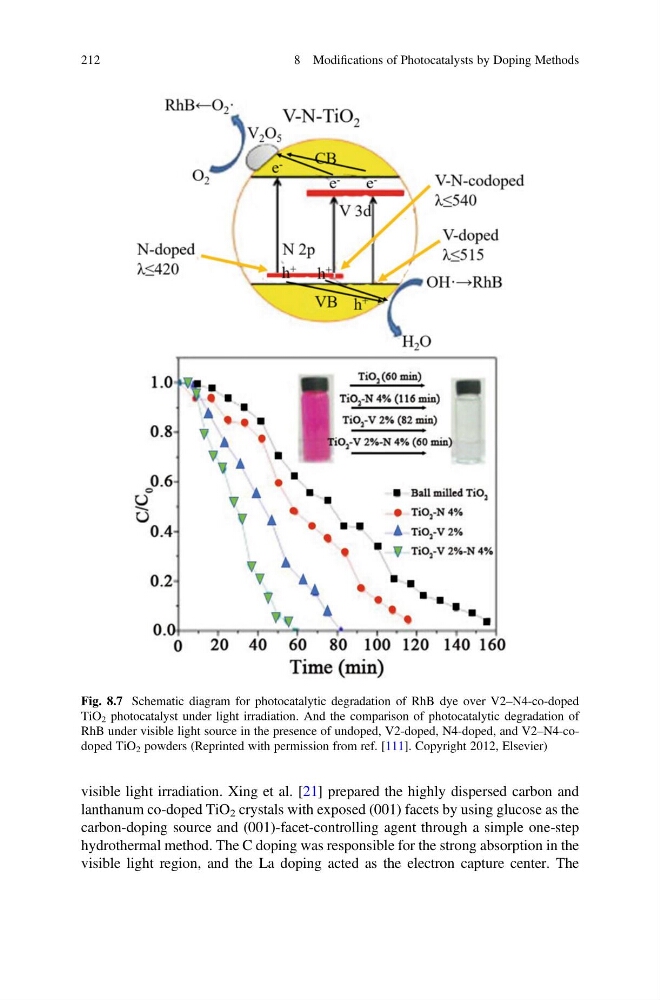
Fig. 8.7 Schematic diagram for photocatalytic degradation of RhB dye over V2–N4-co-doped
TiO 2 photocatalyst under light irradiation. And the comparison of photocatalytic degradation of
RhB under visible light source in the presence of undoped, V2-doped, N4-doped, and V2–N4-codoped TiO 2 powders (Reprinted with permission from ref. [111]. Copyright 2012, Elsevier)
212
8 Modifications of Photocatalysts by Doping Methods
lanthanum co-doped TiO 2 crystals with exposed (001) facets by using glucose as the
carbon-doping source and (001)-facet-controlling agent through a simple one-step
hydrothermal method. The C doping was responsible for the strong absorption in the
visible light region, and the La doping acted as the electron capture center. The
Fig. 8.7 Schematic diagram for photocatalytic degradation of RhB dye over V2–N4-co-doped
TiO 2 photocatalyst under light irradiation. And the comparison of photocatalytic degradation of
RhB under visible light source in the presence of undoped, V2-doped, N4-doped, and V2–N4-codoped TiO 2 powders (Reprinted with permission from ref. [111]. Copyright 2012, Elsevier)
212
8 Modifications of Photocatalysts by Doping Methods