

References
295
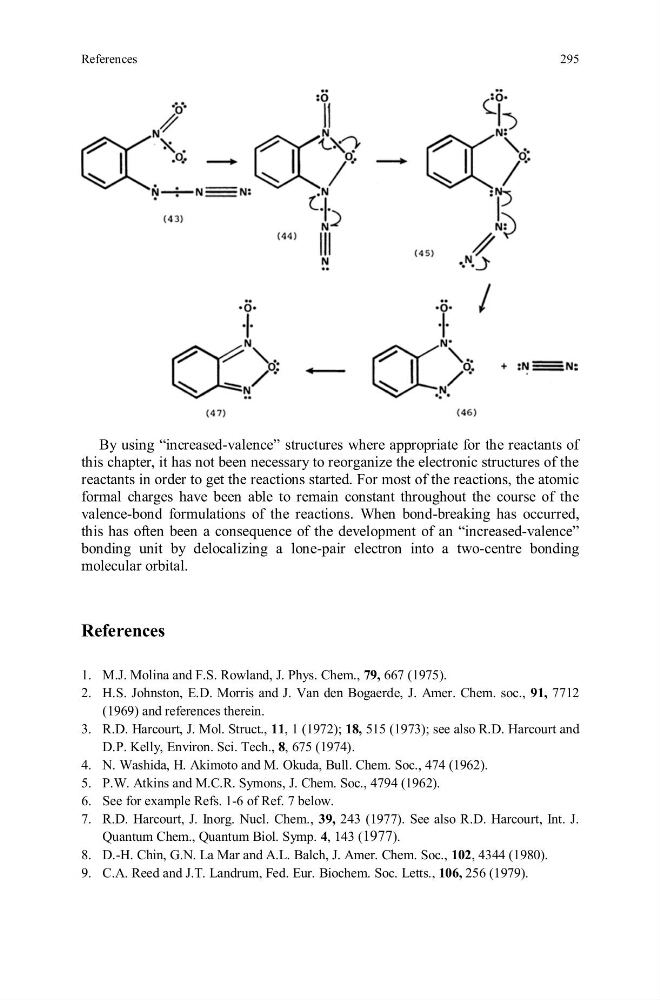
By using “increased-valence” structures where appropriate for the reactants of
this chapter, it has not been necessary to reorganize the electronic structures of the
reactants in order to get the reactions started. For most of the reactions, the atomic
formal charges have been able to remain constant throughout the course of the
valence-bond formulations of the reactions. When bond-breaking has occurred,
this has often been a consequence of the development of an “increased-valence”
bonding unit by delocalizing a lone-pair electron into a two-centre bonding
molecular orbital.
References
1. M.J. Molina and F.S. Rowland, J. Phys. Chem., 79, 667 (1975).
2. H.S. Johnston, E.D. Morris and J. Van den Bogaerde, J. Amer. Chem. soc., 91, 7712
(1969) and references therein.
3. R.D. Harcourt, J. Mol. Struct., 11, 1 (1972); 18, 515 (1973); see also R.D. Harcourt and
D.P. Kelly, Environ. Sci. Tech., 8, 675 (1974).
4. N. Washida, H. Akimoto and M. Okuda, Bull. Chem. Soc., 474 (1962).
5. P.W. Atkins and M.C.R. Symons, J. Chem. Soc., 4794 (1962).
6. See for example Refs. 1-6 of Ref. 7 below.
7. R.D. Harcourt, J. Inorg. Nucl. Chem., 39, 243 (1977). See also R.D. Harcourt, Int. J.
Quantum Chem., Quantum Biol. Symp. 4, 143 (1977).
8. D.-H. Chin, G.N. La Mar and A.L. Balch, J. Amer. Chem. Soc., 102, 4344 (1980).
9. C.A. Reed and J.T. Landrum, Fed. Eur. Biochem. Soc. Letts., 106, 256 (1979).
295
By using “increased-valence” structures where appropriate for the reactants of
this chapter, it has not been necessary to reorganize the electronic structures of the
reactants in order to get the reactions started. For most of the reactions, the atomic
formal charges have been able to remain constant throughout the course of the
valence-bond formulations of the reactions. When bond-breaking has occurred,
this has often been a consequence of the development of an “increased-valence”
bonding unit by delocalizing a lone-pair electron into a two-centre bonding
molecular orbital.
References
1. M.J. Molina and F.S. Rowland, J. Phys. Chem., 79, 667 (1975).
2. H.S. Johnston, E.D. Morris and J. Van den Bogaerde, J. Amer. Chem. soc., 91, 7712
(1969) and references therein.
3. R.D. Harcourt, J. Mol. Struct., 11, 1 (1972); 18, 515 (1973); see also R.D. Harcourt and
D.P. Kelly, Environ. Sci. Tech., 8, 675 (1974).
4. N. Washida, H. Akimoto and M. Okuda, Bull. Chem. Soc., 474 (1962).
5. P.W. Atkins and M.C.R. Symons, J. Chem. Soc., 4794 (1962).
6. See for example Refs. 1-6 of Ref. 7 below.
7. R.D. Harcourt, J. Inorg. Nucl. Chem., 39, 243 (1977). See also R.D. Harcourt, Int. J.
Quantum Chem., Quantum Biol. Symp. 4, 143 (1977).
8. D.-H. Chin, G.N. La Mar and A.L. Balch, J. Amer. Chem. Soc., 102, 4344 (1980).
9. C.A. Reed and J.T. Landrum, Fed. Eur. Biochem. Soc. Letts., 106, 256 (1979).