

14
Chapter 2 Pauling “3-Electron Bonds”, 4-Electron 3-Centre Bonding, and the Need …
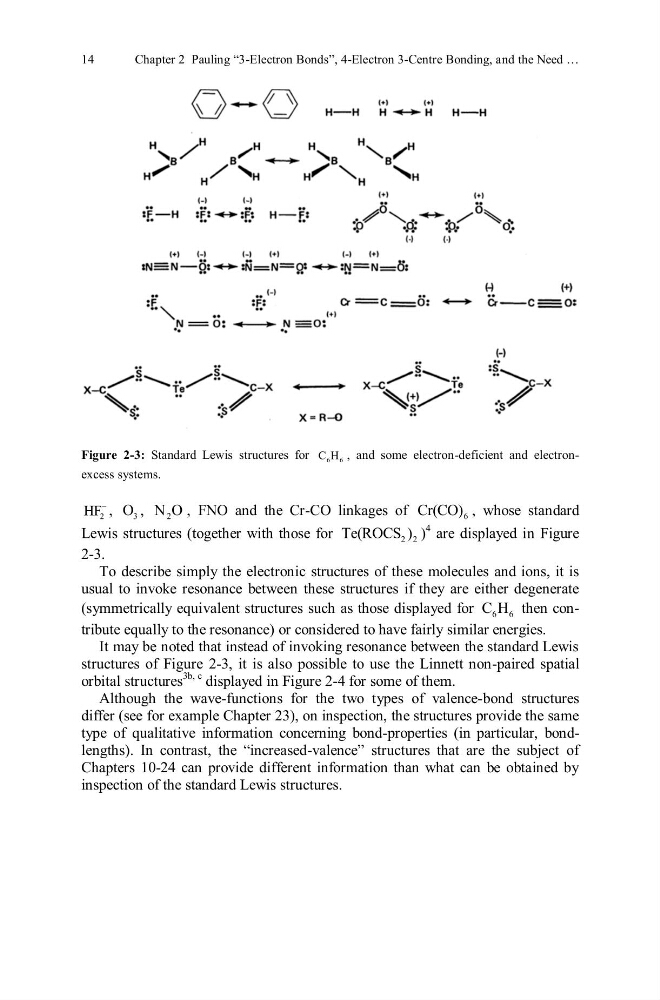
Figure 2-3: Standard Lewis structures for 6 6
C H , and some electron-deficient and electronexcess systems.
2
HF
, 3
O , 2
N O , FNO and the Cr-CO linkages of
6
Cr(CO) , whose standard
Lewis structures (together with those for
2 2
Te(ROCS ) )
4 are displayed in Figure
2-3.
To describe simply the electronic structures of these molecules and ions, it is
usual to invoke resonance between these structures if they are either degenerate
(symmetrically equivalent structures such as those displayed for 6 6
C H then contribute equally to the resonance) or considered to have fairly similar energies.
It may be noted that instead of invoking resonance between the standard Lewis
structures of Figure 2-3, it is also possible to use the Linnett non-paired spatial
orbital structures
3b, c displayed in Figure 2-4 for some of them.
Although the wave-functions for the two types of valence-bond structures
differ (see for example Chapter 23), on inspection, the structures provide the same
type of qualitative information concerning bond-properties (in particular, bondlengths). In contrast, the “increased-valence” structures that are the subject of
Chapters 10-24 can provide different information than what can be obtained by
inspection of the standard Lewis structures.
Chapter 2 Pauling “3-Electron Bonds”, 4-Electron 3-Centre Bonding, and the Need …
Figure 2-3: Standard Lewis structures for 6 6
C H , and some electron-deficient and electronexcess systems.
2
HF
, 3
O , 2
N O , FNO and the Cr-CO linkages of
6
Cr(CO) , whose standard
Lewis structures (together with those for
2 2
Te(ROCS ) )
4 are displayed in Figure
2-3.
To describe simply the electronic structures of these molecules and ions, it is
usual to invoke resonance between these structures if they are either degenerate
(symmetrically equivalent structures such as those displayed for 6 6
C H then contribute equally to the resonance) or considered to have fairly similar energies.
It may be noted that instead of invoking resonance between the standard Lewis
structures of Figure 2-3, it is also possible to use the Linnett non-paired spatial
orbital structures
3b, c displayed in Figure 2-4 for some of them.
Although the wave-functions for the two types of valence-bond structures
differ (see for example Chapter 23), on inspection, the structures provide the same
type of qualitative information concerning bond-properties (in particular, bondlengths). In contrast, the “increased-valence” structures that are the subject of
Chapters 10-24 can provide different information than what can be obtained by
inspection of the standard Lewis structures.