

2-2 Electron Deficient and Electron Excess Bonding Units
13
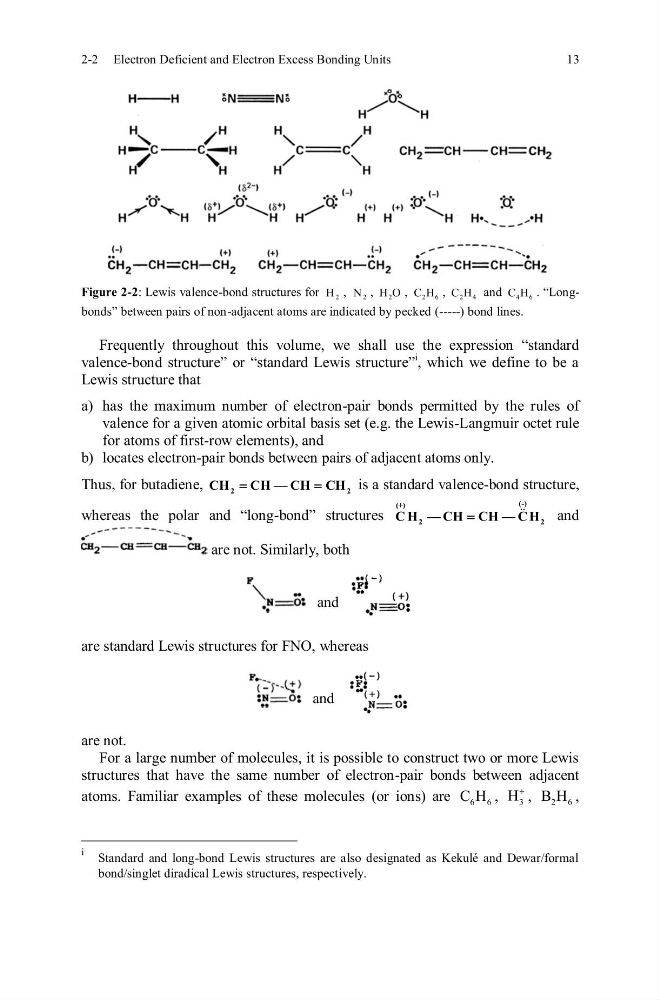
Figure 2-2: Lewis valence-bond structures for 2
, 2
N , 2 O
, 2 6
C H , 2 4
C H and 4 6
C H . “Longbonds” between pairs of non-adjacent atoms are indicated by pecked (-----) bond lines.
Frequently throughout this volume, we shall use the expression “standard
valence-bond structure” or “standard Lewis structure”
i
, which we define to be a
Lewis structure that
a) has the maximum number of electron-pair bonds permitted by the rules of
valence for a given atomic orbital basis set (e.g. the Lewis-Langmuir octet rule
for atoms of first-row elements), and
b) locates electron-pair bonds between pairs of adjacent atoms only.
Thus, for butadiene,
2
2
CH
CH — CH CH
is a standard valence-bond structure,
whereas the polar and “long-bond” structures
(-)
(+)
2
2
C H — CH CH — C H
and
are not. Similarly, both
and
are standard Lewis structures for FNO, whereas
and
are not.
For a large number of molecules, it is possible to construct two or more Lewis
structures that have the same number of electron-pair bonds between adjacent
atoms. Familiar examples of these molecules (or ions) are 6 6
C H , 3
H
, 2 6
B H ,
i Standard and long-bond Lewis structures are also designated as Kekulé and Dewar/formal
bond/singlet diradical Lewis structures, respectively.
13
Figure 2-2: Lewis valence-bond structures for 2
, 2
N , 2 O
, 2 6
C H , 2 4
C H and 4 6
C H . “Longbonds” between pairs of non-adjacent atoms are indicated by pecked (-----) bond lines.
Frequently throughout this volume, we shall use the expression “standard
valence-bond structure” or “standard Lewis structure”
i
, which we define to be a
Lewis structure that
a) has the maximum number of electron-pair bonds permitted by the rules of
valence for a given atomic orbital basis set (e.g. the Lewis-Langmuir octet rule
for atoms of first-row elements), and
b) locates electron-pair bonds between pairs of adjacent atoms only.
Thus, for butadiene,
2
2
CH
CH — CH CH
is a standard valence-bond structure,
whereas the polar and “long-bond” structures
(-)
(+)
2
2
C H — CH CH — C H
and
are not. Similarly, both
and
are standard Lewis structures for FNO, whereas
and
are not.
For a large number of molecules, it is possible to construct two or more Lewis
structures that have the same number of electron-pair bonds between adjacent
atoms. Familiar examples of these molecules (or ions) are 6 6
C H , 3
H
, 2 6
B H ,
i Standard and long-bond Lewis structures are also designated as Kekulé and Dewar/formal
bond/singlet diradical Lewis structures, respectively.