

170
Chapter 13 “Increased-Valence” Structures for N-Centre Bonding Units
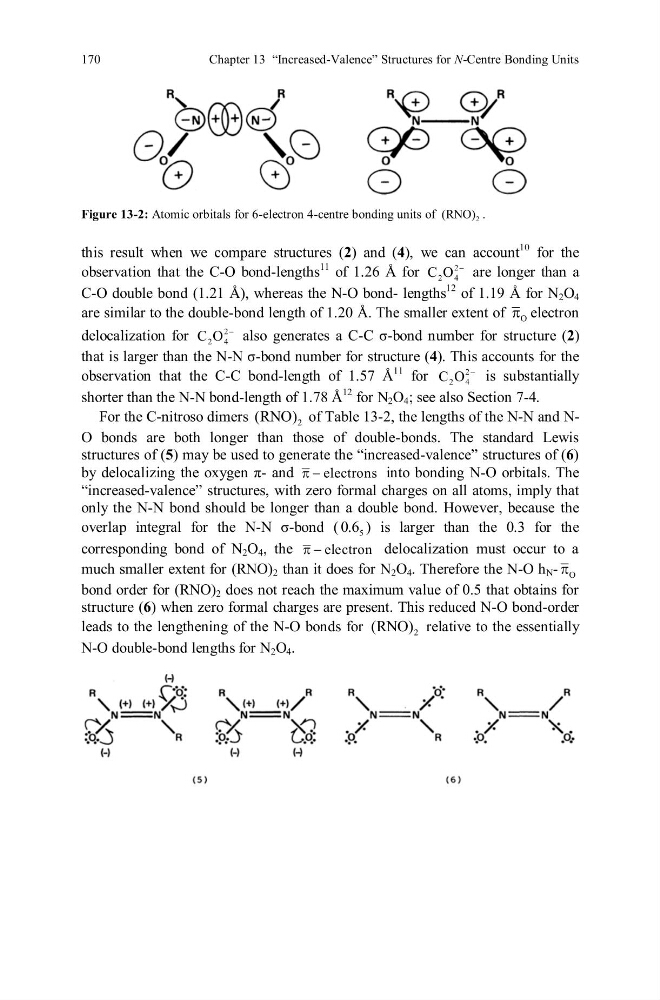
Figure 13-2: Atomic orbitals for 6-electron 4-centre bonding units of
2
(RNO) .
this result when we compare structures (2) and (4), we can account
10 for the
observation that the C-O bond-lengths
11 of 1.26 Å for
2
2 4
C O
are longer than a
C-O double bond (1.21 Å), whereas the N-O bond- lengths
12 of 1.19 Å for N 2 O 4
are similar to the double-bond length of 1.20 Å. The smaller extent of O
electron
delocalization for
2
2 4
C O
also generates a C-C σ-bond number for structure (2)
that is larger than the N-N σ-bond number for structure (4). This accounts for the
observation that the C-C bond-length of 1.57 Å
11 for
2
2 4
C O
is substantially
shorter than the N-N bond-length of 1.78 Å
12 for N 2 O 4 ; see also Section 7-4.
For the C-nitroso dimers
2
(RNO) of Table 13-2, the lengths of the N-N and NO bonds are both longer than those of double-bonds. The standard Lewis
structures of (5) may be used to generate the “increased-valence” structures of (6)
by delocalizing the oxygen π- and
electrons
into bonding N-O orbitals. The
“increased-valence” structures, with zero formal charges on all atoms, imply that
only the N-N bond should be longer than a double bond. However, because the
overlap integral for the N-N σ-bond ( 5
0.6 ) is larger than the 0.3 for the
corresponding bond of N 2 O 4 , the
electron
delocalization must occur to a
much smaller extent for (RNO) 2 than it does for N 2 O 4 . Therefore the N-O h N - O
bond order for (RNO) 2 does not reach the maximum value of 0.5 that obtains for
structure (6) when zero formal charges are present. This reduced N-O bond-order
leads to the lengthening of the N-O bonds for
2
(RNO) relative to the essentially
N-O double-bond lengths for N 2 O 4 .
Chapter 13 “Increased-Valence” Structures for N-Centre Bonding Units
Figure 13-2: Atomic orbitals for 6-electron 4-centre bonding units of
2
(RNO) .
this result when we compare structures (2) and (4), we can account
10 for the
observation that the C-O bond-lengths
11 of 1.26 Å for
2
2 4
C O
are longer than a
C-O double bond (1.21 Å), whereas the N-O bond- lengths
12 of 1.19 Å for N 2 O 4
are similar to the double-bond length of 1.20 Å. The smaller extent of O
electron
delocalization for
2
2 4
C O
also generates a C-C σ-bond number for structure (2)
that is larger than the N-N σ-bond number for structure (4). This accounts for the
observation that the C-C bond-length of 1.57 Å
11 for
2
2 4
C O
is substantially
shorter than the N-N bond-length of 1.78 Å
12 for N 2 O 4 ; see also Section 7-4.
For the C-nitroso dimers
2
(RNO) of Table 13-2, the lengths of the N-N and NO bonds are both longer than those of double-bonds. The standard Lewis
structures of (5) may be used to generate the “increased-valence” structures of (6)
by delocalizing the oxygen π- and
electrons
into bonding N-O orbitals. The
“increased-valence” structures, with zero formal charges on all atoms, imply that
only the N-N bond should be longer than a double bond. However, because the
overlap integral for the N-N σ-bond ( 5
0.6 ) is larger than the 0.3 for the
corresponding bond of N 2 O 4 , the
electron
delocalization must occur to a
much smaller extent for (RNO) 2 than it does for N 2 O 4 . Therefore the N-O h N - O
bond order for (RNO) 2 does not reach the maximum value of 0.5 that obtains for
structure (6) when zero formal charges are present. This reduced N-O bond-order
leads to the lengthening of the N-O bonds for
2
(RNO) relative to the essentially
N-O double-bond lengths for N 2 O 4 .