

11-9 NO2,
-
2
NO , ClO2,
-
2
SO and SO3
157
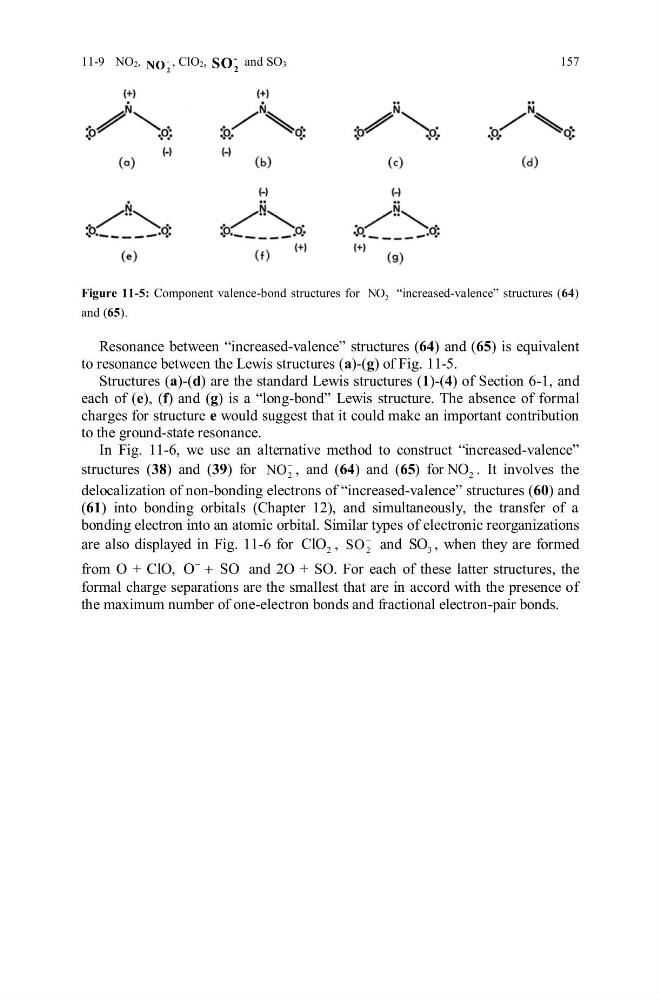
Figure 11-5: Component valence-bond structures for
2
NO “increased-valence” structures (64)
and (65).
Resonance between “increased-valence” structures (64) and (65) is equivalent
to resonance between the Lewis structures (a)-(g) of Fig. 11-5.
Structures (a)-(d) are the standard Lewis structures (1)-(4) of Section 6-1, and
each of (e), (f) and (g) is a “long-bond” Lewis structure. The absence of formal
charges for structure e would suggest that it could make an important contribution
to the ground-state resonance.
In Fig. 11-6, we use an alternative method to construct “increased-valence”
structures (38) and (39) for
2
NO
, and (64) and (65) for
2
NO . It involves the
delocalization of non-bonding electrons of “increased-valence” structures (60) and
(61) into bonding orbitals (Chapter 12), and simultaneously, the transfer of a
bonding electron into an atomic orbital. Similar types of electronic reorganizations
are also displayed in Fig. 11-6 for
2
ClO ,
2
SO
and
3
SO , when they are formed
from O + ClO, O
SO
and 2O + SO. For each of these latter structures, the
formal charge separations are the smallest that are in accord with the presence of
the maximum number of one-electron bonds and fractional electron-pair bonds.
-
2
NO , ClO2,
-
2
SO and SO3
157
Figure 11-5: Component valence-bond structures for
2
NO “increased-valence” structures (64)
and (65).
Resonance between “increased-valence” structures (64) and (65) is equivalent
to resonance between the Lewis structures (a)-(g) of Fig. 11-5.
Structures (a)-(d) are the standard Lewis structures (1)-(4) of Section 6-1, and
each of (e), (f) and (g) is a “long-bond” Lewis structure. The absence of formal
charges for structure e would suggest that it could make an important contribution
to the ground-state resonance.
In Fig. 11-6, we use an alternative method to construct “increased-valence”
structures (38) and (39) for
2
NO
, and (64) and (65) for
2
NO . It involves the
delocalization of non-bonding electrons of “increased-valence” structures (60) and
(61) into bonding orbitals (Chapter 12), and simultaneously, the transfer of a
bonding electron into an atomic orbital. Similar types of electronic reorganizations
are also displayed in Fig. 11-6 for
2
ClO ,
2
SO
and
3
SO , when they are formed
from O + ClO, O
SO
and 2O + SO. For each of these latter structures, the
formal charge separations are the smallest that are in accord with the presence of
the maximum number of one-electron bonds and fractional electron-pair bonds.