

11-3 Nitrosyl Halides
145
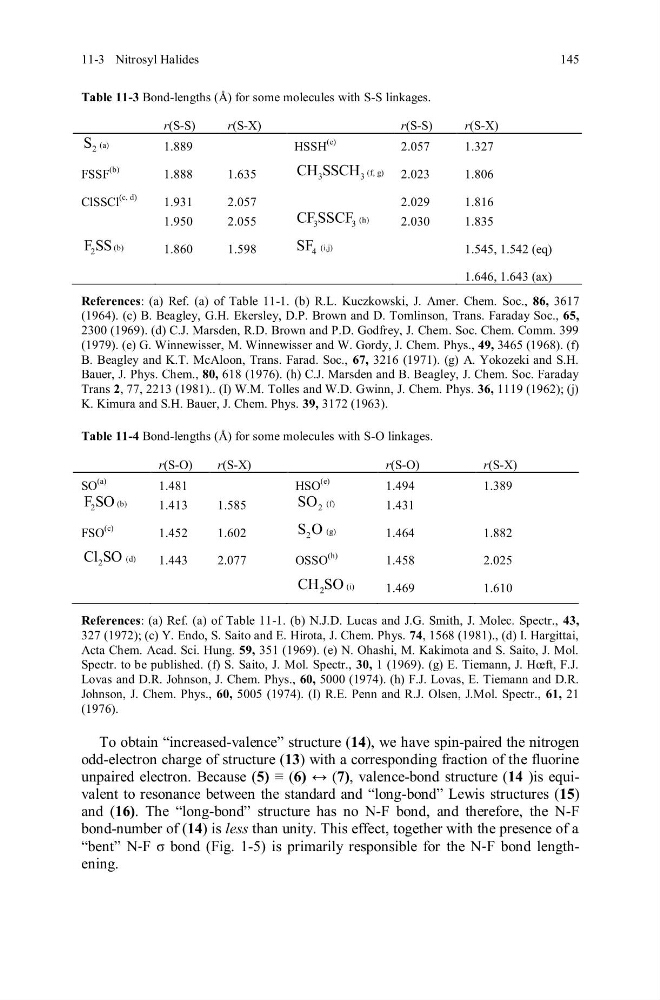
Table 11-3 Bond-lengths (Å) for some molecules with S-S linkages.
r(S-S)
r(S-X)
r(S-S)
r(S-X)
2
S (a)
1.889
HSSH
(e)
2.057
1.327
FSSF
(b)
1.888
1.635
3
3
CH SSCH (f, g) 2.023
1.806
ClSSCl
(c, d)
1.931
2.057
2.029
1.816
1.950
2.055
3
3
CF SSCF (h)
2.030
1.835
2
F SS (b)
1.860
1.598
4
SF (i,j)
1.545, 1.542 (eq)
1.646, 1.643 (ax)
References: (a) Ref. (a) of Table 11-1. (b) R.L. Kuczkowski, J. Amer. Chem. Soc., 86, 3617
(1964). (c) B. Beagley, G.H. Ekersley, D.P. Brown and D. Tomlinson, Trans. Faraday Soc., 65,
2300 (1969). (d) C.J. Marsden, R.D. Brown and P.D. Godfrey, J. Chem. Soc. Chem. Comm. 399
(1979). (e) G. Winnewisser, M. Winnewisser and W. Gordy, J. Chem. Phys., 49, 3465 (1968). (f)
B. Beagley and K.T. McAloon, Trans. Farad. Soc., 67, 3216 (1971). (g) A. Yokozeki and S.H.
Bauer, J. Phys. Chem., 80, 618 (1976). (h) C.J. Marsden and B. Beagley, J. Chem. Soc. Faraday
Trans 2, 77, 2213 (1981).. (I) W.M. Tolles and W.D. Gwinn, J. Chem. Phys. 36, 1119 (1962); (j)
K. Kimura and S.H. Bauer, J. Chem. Phys. 39, 3172 (1963).
Table 11-4 Bond-lengths (Å) for some molecules with S-O linkages.
r(S-O)
r(S-X)
r(S-O)
r(S-X)
SO
(a)
1.481
HSO
(e)
1.494
1.389
2
F SO (b)
1.413
1.585
2
SO (f)
1.431
FSO
(c)
1.452
1.602
2
S O (g)
1.464
1.882
2
Cl SO (d) 1.443
2.077
OSSO
(h)
1.458
2.025
2
CH SO (i)
1.469
1.610
References: (a) Ref. (a) of Table 11-1. (b) N.J.D. Lucas and J.G. Smith, J. Molec. Spectr., 43,
327 (1972); (c) Y. Endo, S. Saito and E. Hirota, J. Chem. Phys. 74, 1568 (1981)., (d) I. Hargittai,
Acta Chem. Acad. Sci. Hung. 59, 351 (1969). (e) N. Ohashi, M. Kakimota and S. Saito, J. Mol.
Spectr. to be published. (f) S. Saito, J. Mol. Spectr., 30, 1 (1969). (g) E. Tiemann, J. Hœft, F.J.
Lovas and D.R. Johnson, J. Chem. Phys., 60, 5000 (1974). (h) F.J. Lovas, E. Tiemann and D.R.
Johnson, J. Chem. Phys., 60, 5005 (1974). (I) R.E. Penn and R.J. Olsen, J.Mol. Spectr., 61, 21
(1976).
To obtain “increased-valence” structure (14), we have spin-paired the nitrogen
odd-electron charge of structure (13) with a corresponding fraction of the fluorine
unpaired electron. Because (5) ≡ (6) ↔ (7), valence-bond structure (14 )is equivalent to resonance between the standard and “long-bond” Lewis structures (15)
and (16). The “long-bond” structure has no N-F bond, and therefore, the N-F
bond-number of (14) is less than unity. This effect, together with the presence of a
“bent” N-F σ bond (Fig. 1-5) is primarily responsible for the N-F bond lengthening.
145
Table 11-3 Bond-lengths (Å) for some molecules with S-S linkages.
r(S-S)
r(S-X)
r(S-S)
r(S-X)
2
S (a)
1.889
HSSH
(e)
2.057
1.327
FSSF
(b)
1.888
1.635
3
3
CH SSCH (f, g) 2.023
1.806
ClSSCl
(c, d)
1.931
2.057
2.029
1.816
1.950
2.055
3
3
CF SSCF (h)
2.030
1.835
2
F SS (b)
1.860
1.598
4
SF (i,j)
1.545, 1.542 (eq)
1.646, 1.643 (ax)
References: (a) Ref. (a) of Table 11-1. (b) R.L. Kuczkowski, J. Amer. Chem. Soc., 86, 3617
(1964). (c) B. Beagley, G.H. Ekersley, D.P. Brown and D. Tomlinson, Trans. Faraday Soc., 65,
2300 (1969). (d) C.J. Marsden, R.D. Brown and P.D. Godfrey, J. Chem. Soc. Chem. Comm. 399
(1979). (e) G. Winnewisser, M. Winnewisser and W. Gordy, J. Chem. Phys., 49, 3465 (1968). (f)
B. Beagley and K.T. McAloon, Trans. Farad. Soc., 67, 3216 (1971). (g) A. Yokozeki and S.H.
Bauer, J. Phys. Chem., 80, 618 (1976). (h) C.J. Marsden and B. Beagley, J. Chem. Soc. Faraday
Trans 2, 77, 2213 (1981).. (I) W.M. Tolles and W.D. Gwinn, J. Chem. Phys. 36, 1119 (1962); (j)
K. Kimura and S.H. Bauer, J. Chem. Phys. 39, 3172 (1963).
Table 11-4 Bond-lengths (Å) for some molecules with S-O linkages.
r(S-O)
r(S-X)
r(S-O)
r(S-X)
SO
(a)
1.481
HSO
(e)
1.494
1.389
2
F SO (b)
1.413
1.585
2
SO (f)
1.431
FSO
(c)
1.452
1.602
2
S O (g)
1.464
1.882
2
Cl SO (d) 1.443
2.077
OSSO
(h)
1.458
2.025
2
CH SO (i)
1.469
1.610
References: (a) Ref. (a) of Table 11-1. (b) N.J.D. Lucas and J.G. Smith, J. Molec. Spectr., 43,
327 (1972); (c) Y. Endo, S. Saito and E. Hirota, J. Chem. Phys. 74, 1568 (1981)., (d) I. Hargittai,
Acta Chem. Acad. Sci. Hung. 59, 351 (1969). (e) N. Ohashi, M. Kakimota and S. Saito, J. Mol.
Spectr. to be published. (f) S. Saito, J. Mol. Spectr., 30, 1 (1969). (g) E. Tiemann, J. Hœft, F.J.
Lovas and D.R. Johnson, J. Chem. Phys., 60, 5000 (1974). (h) F.J. Lovas, E. Tiemann and D.R.
Johnson, J. Chem. Phys., 60, 5005 (1974). (I) R.E. Penn and R.J. Olsen, J.Mol. Spectr., 61, 21
(1976).
To obtain “increased-valence” structure (14), we have spin-paired the nitrogen
odd-electron charge of structure (13) with a corresponding fraction of the fluorine
unpaired electron. Because (5) ≡ (6) ↔ (7), valence-bond structure (14 )is equivalent to resonance between the standard and “long-bond” Lewis structures (15)
and (16). The “long-bond” structure has no N-F bond, and therefore, the N-F
bond-number of (14) is less than unity. This effect, together with the presence of a
“bent” N-F σ bond (Fig. 1-5) is primarily responsible for the N-F bond lengthening.