

(CH 3 ) 2 N). In order to ensure consistency of results, the wave functions approximation for all studied molecules was performed using the DFT(B2PLYP) method
[37]. Only for the (CF 3 ) 2 NONO and (CH 3 ) 2 NONO molecules previously published
the DFT(B3LYP) results [27] were used.
19.2 Computational Details
Full geometry optimisations have been performed using the Gaussian 09 program
[38]. The minima on the potential energy surface have been confirmed by
non-imaginary vibrational frequencies. The DFT(B2PLYP) functional [37] has
been used as implemented in G09 programme. Unless otherwise stated, calculations
have been carried out using aug-cc-pVTZ basis sets as proposed by Dunning et al.
[39, 40]. For the RbONO molecule, the geometrical structure has been optimised
using def2-TZVPPD basis set [41] on the O, N atoms and respective pseudopotential (ecp-28) and valence orbitals for the rubidium atom [42] has been applied.
The molecular orbitals, necessary for the ELF calculations have been obtained
using single-point DFT(B2PLYP) calculations and all-electron TZVall basis set
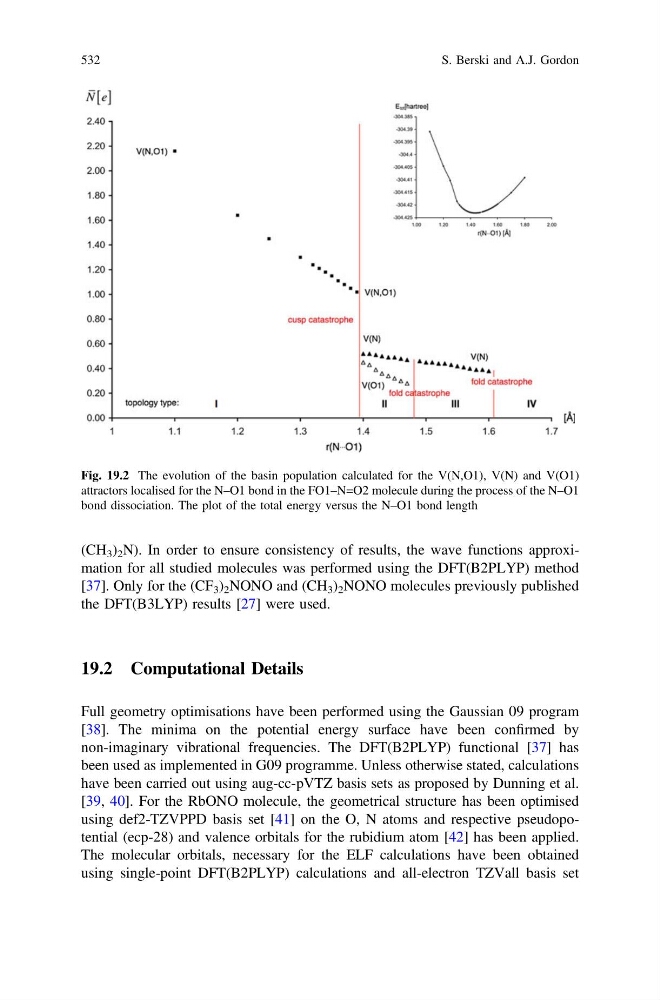
Fig. 19.2 The evolution of the basin population calculated for the V(N,O1), V(N) and V(O1)
attractors localised for the N–O1 bond in the FO1–N=O2 molecule during the process of the N–O1
bond dissociation. The plot of the total energy versus the N–O1 bond length
532
S. Berski and A.J. Gordon
[37]. Only for the (CF 3 ) 2 NONO and (CH 3 ) 2 NONO molecules previously published
the DFT(B3LYP) results [27] were used.
19.2 Computational Details
Full geometry optimisations have been performed using the Gaussian 09 program
[38]. The minima on the potential energy surface have been confirmed by
non-imaginary vibrational frequencies. The DFT(B2PLYP) functional [37] has
been used as implemented in G09 programme. Unless otherwise stated, calculations
have been carried out using aug-cc-pVTZ basis sets as proposed by Dunning et al.
[39, 40]. For the RbONO molecule, the geometrical structure has been optimised
using def2-TZVPPD basis set [41] on the O, N atoms and respective pseudopotential (ecp-28) and valence orbitals for the rubidium atom [42] has been applied.
The molecular orbitals, necessary for the ELF calculations have been obtained
using single-point DFT(B2PLYP) calculations and all-electron TZVall basis set
Fig. 19.2 The evolution of the basin population calculated for the V(N,O1), V(N) and V(O1)
attractors localised for the N–O1 bond in the FO1–N=O2 molecule during the process of the N–O1
bond dissociation. The plot of the total energy versus the N–O1 bond length
532
S. Berski and A.J. Gordon