

16.3.2 Electron Density Topology
The same topology is observed at any distance for the three systems: a (3, −1) CP is
present between the two moieties.
2 This is actually expected from the PoincaréHopf (PH) relationship, as derived in Ref. [105]. Indeed, the two fragments keep
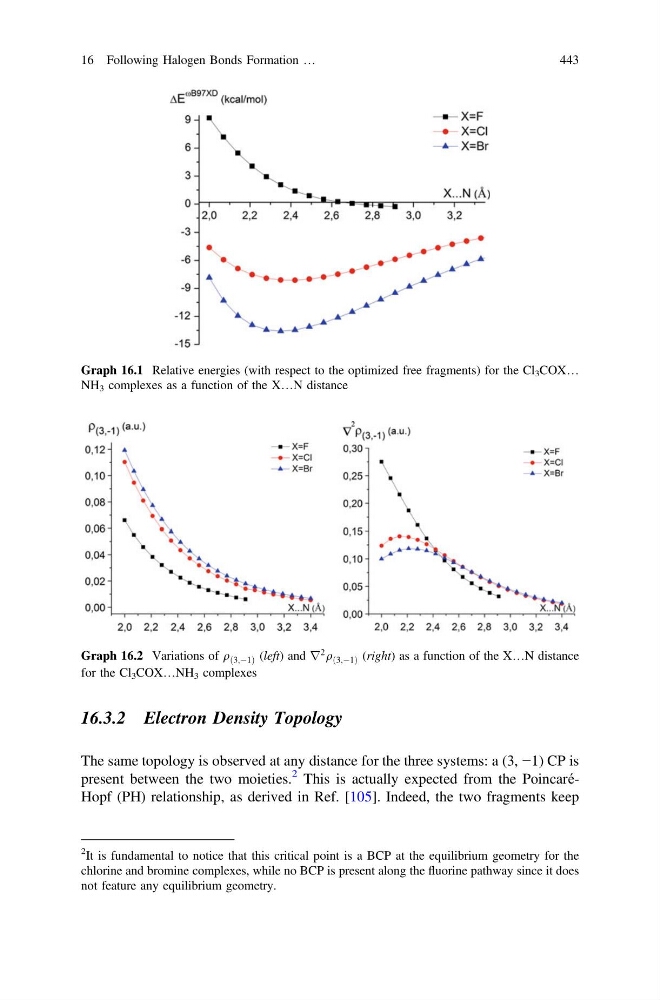
Graph 16.1 Relative energies (with respect to the optimized free fragments) for the Cl 3 COX…
NH 3 complexes as a function of the X…N distance
Graph 16.2 Variations of q ð3;À1Þ (left) and r
2 q ð3;À1Þ (right) as a function of the X…N distance
for the Cl 3 COX…NH 3 complexes
2
It is fundamental to notice that this critical point is a BCP at the equilibrium geometry for the
chlorine and bromine complexes, while no BCP is present along the fluorine pathway since it does
not feature any equilibrium geometry.
16 Following Halogen Bonds Formation …
443
The same topology is observed at any distance for the three systems: a (3, −1) CP is
present between the two moieties.
2 This is actually expected from the PoincaréHopf (PH) relationship, as derived in Ref. [105]. Indeed, the two fragments keep
Graph 16.1 Relative energies (with respect to the optimized free fragments) for the Cl 3 COX…
NH 3 complexes as a function of the X…N distance
Graph 16.2 Variations of q ð3;À1Þ (left) and r
2 q ð3;À1Þ (right) as a function of the X…N distance
for the Cl 3 COX…NH 3 complexes
2
It is fundamental to notice that this critical point is a BCP at the equilibrium geometry for the
chlorine and bromine complexes, while no BCP is present along the fluorine pathway since it does
not feature any equilibrium geometry.
16 Following Halogen Bonds Formation …
443