

In view of those results one may say that the positive EP at hydrogen atom is
enhanced owing to the electron density shift and that the links of H-atom with
Lewis base centers, i.e. hydrogen bonds, may be classified as the σ-hole bonds. An
example of the complex connected through two hydrogen bonds, O–H…F and C–
H…O, was considered in the introduction (see Fig. 15.1). These are the classical
examples of 3c-4e (3 center—4 electron) A–H…B hydrogen bonds since there are
A, H and B centers, 2 electrons of the A–H σ-bond and the lone electron pair of the
proton acceptor (B). However the A–H…π interactions, where it is difficult to
indicate the single B-center, are also classified as hydrogen bonds. It is commonly
accepted that for those interactions π-electrons play the role of the Lewis base.
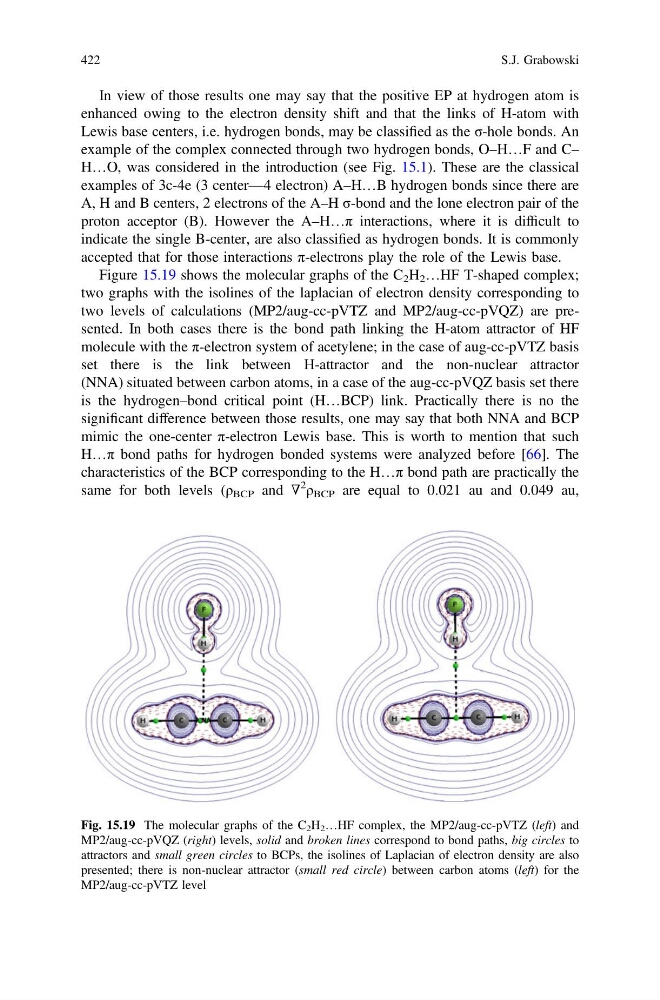
Figure 15.19 shows the molecular graphs of the C 2 H 2 …HF T-shaped complex;
two graphs with the isolines of the laplacian of electron density corresponding to
two levels of calculations (MP2/aug-cc-pVTZ and MP2/aug-cc-pVQZ) are presented. In both cases there is the bond path linking the H-atom attractor of HF
molecule with the π-electron system of acetylene; in the case of aug-cc-pVTZ basis
set there is the link between H-attractor and the non-nuclear attractor
(NNA) situated between carbon atoms, in a case of the aug-cc-pVQZ basis set there
is the hydrogen–bond critical point (H…BCP) link. Practically there is no the
significant difference between those results, one may say that both NNA and BCP
mimic the one-center π-electron Lewis base. This is worth to mention that such
H…π bond paths for hydrogen bonded systems were analyzed before [66]. The
characteristics of the BCP corresponding to the H…π bond path are practically the
same for both levels (ρ BCP and ∇
2
ρ BCP are equal to 0.021 au and 0.049 au,
Fig. 15.19 The molecular graphs of the C 2 H 2 …HF complex, the MP2/aug-cc-pVTZ (left) and
MP2/aug-cc-pVQZ (right) levels, solid and broken lines correspond to bond paths, big circles to
attractors and small green circles to BCPs, the isolines of Laplacian of electron density are also
presented; there is non-nuclear attractor (small red circle) between carbon atoms (left) for the
MP2/aug-cc-pVTZ level
422
S.J. Grabowski
enhanced owing to the electron density shift and that the links of H-atom with
Lewis base centers, i.e. hydrogen bonds, may be classified as the σ-hole bonds. An
example of the complex connected through two hydrogen bonds, O–H…F and C–
H…O, was considered in the introduction (see Fig. 15.1). These are the classical
examples of 3c-4e (3 center—4 electron) A–H…B hydrogen bonds since there are
A, H and B centers, 2 electrons of the A–H σ-bond and the lone electron pair of the
proton acceptor (B). However the A–H…π interactions, where it is difficult to
indicate the single B-center, are also classified as hydrogen bonds. It is commonly
accepted that for those interactions π-electrons play the role of the Lewis base.
Figure 15.19 shows the molecular graphs of the C 2 H 2 …HF T-shaped complex;
two graphs with the isolines of the laplacian of electron density corresponding to
two levels of calculations (MP2/aug-cc-pVTZ and MP2/aug-cc-pVQZ) are presented. In both cases there is the bond path linking the H-atom attractor of HF
molecule with the π-electron system of acetylene; in the case of aug-cc-pVTZ basis
set there is the link between H-attractor and the non-nuclear attractor
(NNA) situated between carbon atoms, in a case of the aug-cc-pVQZ basis set there
is the hydrogen–bond critical point (H…BCP) link. Practically there is no the
significant difference between those results, one may say that both NNA and BCP
mimic the one-center π-electron Lewis base. This is worth to mention that such
H…π bond paths for hydrogen bonded systems were analyzed before [66]. The
characteristics of the BCP corresponding to the H…π bond path are practically the
same for both levels (ρ BCP and ∇
2
ρ BCP are equal to 0.021 au and 0.049 au,
Fig. 15.19 The molecular graphs of the C 2 H 2 …HF complex, the MP2/aug-cc-pVTZ (left) and
MP2/aug-cc-pVQZ (right) levels, solid and broken lines correspond to bond paths, big circles to
attractors and small green circles to BCPs, the isolines of Laplacian of electron density are also
presented; there is non-nuclear attractor (small red circle) between carbon atoms (left) for the
MP2/aug-cc-pVTZ level
422
S.J. Grabowski