

(see Table 12.1). The opposite effect is observed when adding two electrons to
C 6 H 6 to reach C 6 H 6
2−
, that is, meta increases whereas ortho and para components
decrease. This alternation is also captured by Δ
2 which takes positive values for δ π
1,2
and δ π
1,4 components, i.e. 0.181 and 0.078 respectively, while gives negative values
for δ π
1,3 contribution, i.e. −0.096. For antiaromatic C 8 H 8 , δ π
1,2 and δ π
1,4 increase and
δ π
1,3 and δ π
1,5 decrease when going from N ± 2 to N, which corresponds to positive
Δ
2 for δ π
1,2 and δ π
1,4 components and negative Δ
2 for δ π
1,3 and δ π
1,5 . In general, we
observed that the Δ
2 value of the crossed term corresponding to the two farthest
atoms in the ring (i.e. δ π
1,4 in C 6 H 6 or δ π
1,5 in C 8 H 8 ) gives positive values when two
electrons are added or removed from an aromatic system, whereas the opposite is
true for antiaromatic species (see Table 12.1). Interestingly, the crossed terms
represent a kind of electronic footprints that clearly capture the differences between
aromatic and antiaromatic species. To sum up, we have shown the differences of
electronic delocalization patterns between systems that are catalogued as aromatic
and antiaromatic according to the Hückel 4n + 2 rule.
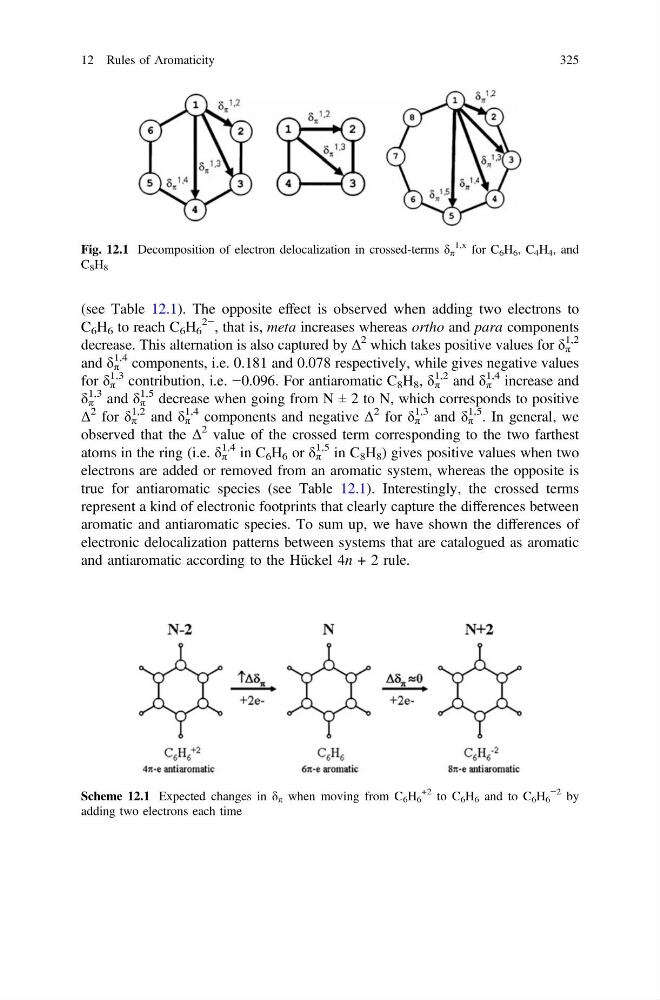
Fig. 12.1 Decomposition of electron delocalization in crossed-terms δ π
1,x for C 6 H 6 , C 4 H 4 , and
C 8 H 8
Scheme 12.1 Expected changes in δ π when moving from C 6 H 6
+2 to C 6 H 6 and to C 6 H 6
−2 by
adding two electrons each time
12 Rules of Aromaticity
325
C 6 H 6 to reach C 6 H 6
2−
, that is, meta increases whereas ortho and para components
decrease. This alternation is also captured by Δ
2 which takes positive values for δ π
1,2
and δ π
1,4 components, i.e. 0.181 and 0.078 respectively, while gives negative values
for δ π
1,3 contribution, i.e. −0.096. For antiaromatic C 8 H 8 , δ π
1,2 and δ π
1,4 increase and
δ π
1,3 and δ π
1,5 decrease when going from N ± 2 to N, which corresponds to positive
Δ
2 for δ π
1,2 and δ π
1,4 components and negative Δ
2 for δ π
1,3 and δ π
1,5 . In general, we
observed that the Δ
2 value of the crossed term corresponding to the two farthest
atoms in the ring (i.e. δ π
1,4 in C 6 H 6 or δ π
1,5 in C 8 H 8 ) gives positive values when two
electrons are added or removed from an aromatic system, whereas the opposite is
true for antiaromatic species (see Table 12.1). Interestingly, the crossed terms
represent a kind of electronic footprints that clearly capture the differences between
aromatic and antiaromatic species. To sum up, we have shown the differences of
electronic delocalization patterns between systems that are catalogued as aromatic
and antiaromatic according to the Hückel 4n + 2 rule.
Fig. 12.1 Decomposition of electron delocalization in crossed-terms δ π
1,x for C 6 H 6 , C 4 H 4 , and
C 8 H 8
Scheme 12.1 Expected changes in δ π when moving from C 6 H 6
+2 to C 6 H 6 and to C 6 H 6
−2 by
adding two electrons each time
12 Rules of Aromaticity
325