

the molecule, is now completely enclosed by its own contour lines (not shown). The
value of 0.29 a.u. is special because it is that at the bond critical point between H and
C. While increasing the electron density starting from 0.001 a.u., the value of 0.29 a.
u. is the highest electron density for which the hydrogen is still attached to the rest of
the molecule. For any higher value the contours encompassing the whole molecule
become disconnected. The same disconnection process occurs when ρ increases
above 0.49 a.u., which of course is the electron density at the second bond critical
point. It is then that C and N also become disconnected. Now, all three atoms in
HC ≡ N are fully encircled by their own contours. Overall, this process shows that
bond critical points are “contact points” between certain atoms. A bond critical point
between two given atoms represents the transition point of them being connected or
disconnected. When connected, they are encompassed by the same contours. When
disconnected, the respective atoms have their own “atomic” contours.
It is clear that topological atoms are non-overlapping. This is an important
property that has attractive consequences in the area of intermolecular forces, where
the thinking is dominated by overlapping molecules. The second important feature
of topological atoms is that there are no gaps between the atoms. As a consequence,
every point in space belongs to a topological atom; there is no “empty” (i.e.
unallocated) space. The absence of the void has consequences for how one thinks
about pockets in enzymes, including active sites and allosteric sites. The familiar
ball-and-stick, or even “helix/turn/sheet ribbon” representation of the protein
modelling world, gives the impression that there is empty space. A molecular view
according to topological atoms challenges [14] this impression. Instead, if a ligand
enters an enzymatic pocket, it will have to deform a host of topological atoms, each
of which has an energy cost. Steric hindrance then becomes a more gradual and
continuous concept as opposed to the simple on-off picture that van der Waals radii
give. In other words, whereas traditional atoms act as billiard balls, topological
atoms behave like sponges.
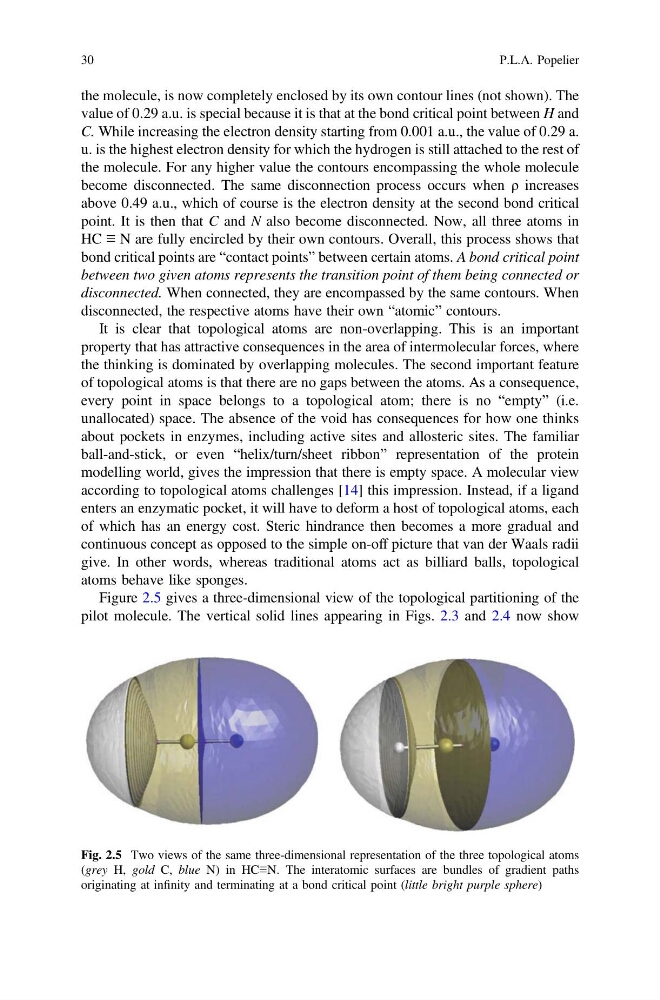
Figure 2.5 gives a three-dimensional view of the topological partitioning of the
pilot molecule. The vertical solid lines appearing in Figs. 2.3 and 2.4 now show
Fig. 2.5 Two views of the same three-dimensional representation of the three topological atoms
(grey H, gold C, blue N) in HC≡N. The interatomic surfaces are bundles of gradient paths
originating at infinity and terminating at a bond critical point (little bright purple sphere)
30
P.L.A. Popelier
value of 0.29 a.u. is special because it is that at the bond critical point between H and
C. While increasing the electron density starting from 0.001 a.u., the value of 0.29 a.
u. is the highest electron density for which the hydrogen is still attached to the rest of
the molecule. For any higher value the contours encompassing the whole molecule
become disconnected. The same disconnection process occurs when ρ increases
above 0.49 a.u., which of course is the electron density at the second bond critical
point. It is then that C and N also become disconnected. Now, all three atoms in
HC ≡ N are fully encircled by their own contours. Overall, this process shows that
bond critical points are “contact points” between certain atoms. A bond critical point
between two given atoms represents the transition point of them being connected or
disconnected. When connected, they are encompassed by the same contours. When
disconnected, the respective atoms have their own “atomic” contours.
It is clear that topological atoms are non-overlapping. This is an important
property that has attractive consequences in the area of intermolecular forces, where
the thinking is dominated by overlapping molecules. The second important feature
of topological atoms is that there are no gaps between the atoms. As a consequence,
every point in space belongs to a topological atom; there is no “empty” (i.e.
unallocated) space. The absence of the void has consequences for how one thinks
about pockets in enzymes, including active sites and allosteric sites. The familiar
ball-and-stick, or even “helix/turn/sheet ribbon” representation of the protein
modelling world, gives the impression that there is empty space. A molecular view
according to topological atoms challenges [14] this impression. Instead, if a ligand
enters an enzymatic pocket, it will have to deform a host of topological atoms, each
of which has an energy cost. Steric hindrance then becomes a more gradual and
continuous concept as opposed to the simple on-off picture that van der Waals radii
give. In other words, whereas traditional atoms act as billiard balls, topological
atoms behave like sponges.
Figure 2.5 gives a three-dimensional view of the topological partitioning of the
pilot molecule. The vertical solid lines appearing in Figs. 2.3 and 2.4 now show
Fig. 2.5 Two views of the same three-dimensional representation of the three topological atoms
(grey H, gold C, blue N) in HC≡N. The interatomic surfaces are bundles of gradient paths
originating at infinity and terminating at a bond critical point (little bright purple sphere)
30
P.L.A. Popelier