

401
12 Consensus Drug Design Using IT Microcosm
and the nonstandard mechanisms of action of highly active compounds. The conservative strategy yielded 3 optimum regularities (13 %), and the normal strategy
yielded 5 (23 %).
12.3.3 Chiral Compounds
Different streoisomers of the same medicinal substance differ in the range of pharmacological effects and the extent of their manifestation.
Three training sets demonstrated the possibility of predicting the pharmacological activity of chiral compounds [82].
1. The data for the structure and activity of 26 structurally diverse dopamine D 2
receptor agonists (7 diastereomers, 15 enantiomers, 4 achiral compounds) [87]
were clustered into three activity classes: “high,” “moderate,” and “low.”
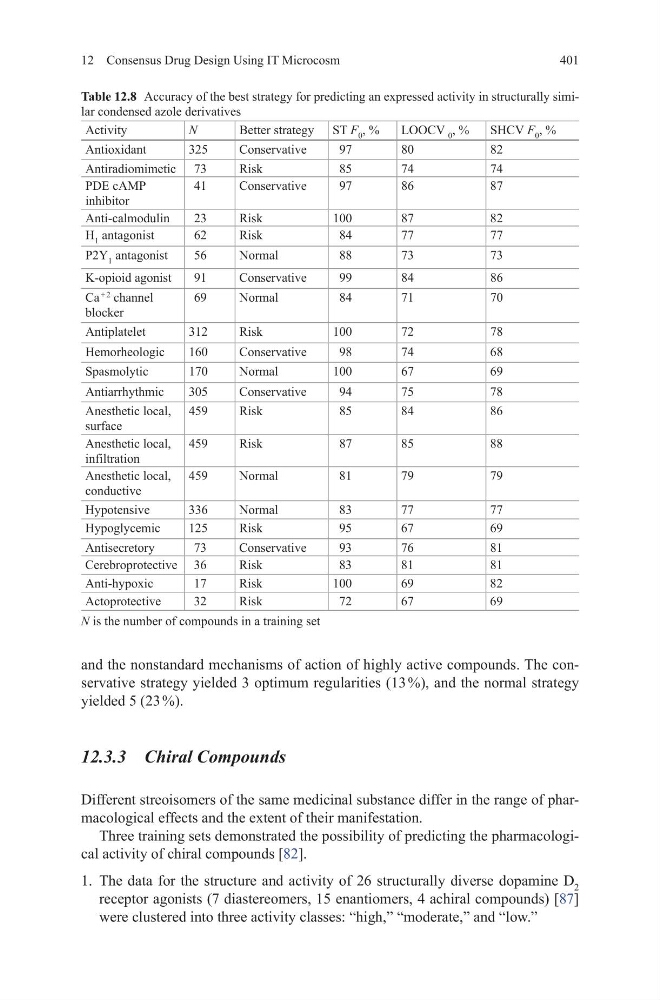
Table 12.8 Accuracy of the best strategy for predicting an expressed activity in structurally similar condensed azole derivatives
Activity
N
Better strategy ST F 0 , %
LOOCV 0 , %
SHCV F 0 , %
Antioxidant
325
Conservative
97
80
82
Antiradiomimetic 73
Risk
85
74
74
PDE cAMP
inhibitor
41
Conservative
97
86
87
Anti-calmodulin
23
Risk
100
87
82
H 1 antagonist
62
Risk
84
77
77
P2Y 1 antagonist
56
Normal
88
73
73
Κ-opioid agonist
91
Conservative
99
84
86
Ca
+ 2
channel
blocker
69
Normal
84
71
70
Antiplatelet
312
Risk
100
72
78
Hemorheologic
160
Conservative
98
74
68
Spasmolytic
170
Normal
100
67
69
Antiarrhythmic
305
Conservative
94
75
78
Anesthetic local,
surface
459
Risk
85
84
86
Anesthetic local,
infiltration
459
Risk
87
85
88
Anesthetic local,
conductive
459
Normal
81
79
79
Hypotensive
336
Normal
83
77
77
Hypoglycemic
125
Risk
95
67
69
Antisecretory
73
Conservative
93
76
81
Cerebroprotective 36
Risk
83
81
81
Anti-hypoxic
17
Risk
100
69
82
Actoprotective
32
Risk
72
67
69
N is the number of compounds in a training set
12 Consensus Drug Design Using IT Microcosm
and the nonstandard mechanisms of action of highly active compounds. The conservative strategy yielded 3 optimum regularities (13 %), and the normal strategy
yielded 5 (23 %).
12.3.3 Chiral Compounds
Different streoisomers of the same medicinal substance differ in the range of pharmacological effects and the extent of their manifestation.
Three training sets demonstrated the possibility of predicting the pharmacological activity of chiral compounds [82].
1. The data for the structure and activity of 26 structurally diverse dopamine D 2
receptor agonists (7 diastereomers, 15 enantiomers, 4 achiral compounds) [87]
were clustered into three activity classes: “high,” “moderate,” and “low.”
Table 12.8 Accuracy of the best strategy for predicting an expressed activity in structurally similar condensed azole derivatives
Activity
N
Better strategy ST F 0 , %
LOOCV 0 , %
SHCV F 0 , %
Antioxidant
325
Conservative
97
80
82
Antiradiomimetic 73
Risk
85
74
74
PDE cAMP
inhibitor
41
Conservative
97
86
87
Anti-calmodulin
23
Risk
100
87
82
H 1 antagonist
62
Risk
84
77
77
P2Y 1 antagonist
56
Normal
88
73
73
Κ-opioid agonist
91
Conservative
99
84
86
Ca
+ 2
channel
blocker
69
Normal
84
71
70
Antiplatelet
312
Risk
100
72
78
Hemorheologic
160
Conservative
98
74
68
Spasmolytic
170
Normal
100
67
69
Antiarrhythmic
305
Conservative
94
75
78
Anesthetic local,
surface
459
Risk
85
84
86
Anesthetic local,
infiltration
459
Risk
87
85
88
Anesthetic local,
conductive
459
Normal
81
79
79
Hypotensive
336
Normal
83
77
77
Hypoglycemic
125
Risk
95
67
69
Antisecretory
73
Conservative
93
76
81
Cerebroprotective 36
Risk
83
81
81
Anti-hypoxic
17
Risk
100
69
82
Actoprotective
32
Risk
72
67
69
N is the number of compounds in a training set