

105
One should remark that the most discovered nucleoside/nucleotide inhibitors are compounds decreasing the activity of viral DNA-dependent DNA polymerases. Consequently, a lot of them are used as antiviral drugs [33]. In addition
to the substances mentioned above, among them one finds acyclovir which is a
synthetic guanosine analogue used for treating herpes simplex virus (HSV) and
varicella zoster virus (VZV) infections [45, 46], brivudin which is a 5′-halogenated
thymidine nucleoside analogue highly active against HSV-1 and VZV [47, 48],
ganciclovir—an acyclic 2′-deoxyguanosine analogue for the management of CMV
[49], penciclovir—an acyclic guanine analogue chemically similar to acyclovir that
is efficient against HSV-1, HSV-2, and VZV, and, to less extent, against EBV [50],
farmcyclovir—a diacetyl 6-deoxy analogue of penciclovir with the same antiviral
activity, valacyclovir, the l-valyl ester prodrug of acyclovir [51] approved for VZV
treatment [33]. Structures of these compounds are shown on Fig. 4.4.
In contrast to DNA pol substrate analogs, non-nucleotide inhibitors (NNI) of
DNA-dependent DNA polymerases are potentially able to specifically interact with
different regions on DNA pol surface. They can be competitive in relation to the
dNTP binding site (in this case we can talk about nucleotide mimics), bind to DNA
template binding area and directly prevent initial DNA interaction, have allosteric
binding site and, thus, exhibit non-competitive type of inhibition.
Non-nucleotide pol inhibitors have been discovered among different classes of
natural and synthetic chemical compounds. The main of them are long-chain fatty
acids, fatty acid derivatives, bile acid derivatives, steroid derivatives, triterpenoids,
cerebrosides, alkaloids, flavonoids, anthocyanins, glycolipids, catechins, coenzyme
Qs, isosteviols, dipeptide alcohols, vitamins, etc. [52, 53]. The most well-studied
non-nucleotide inhibitors are presented in Table 4.2.
As opposed to nucleotide ones, the lion’s share of known non-nucleotides inhibitors are inhibitors of eukaryotic DNA polymerases. In turn, most of them are
inhibitors of animal pol β. Discovered non-nucleotide inhibitors are characterized
by different selectivity with respect to different polymerases. Selectivity can reveal
4 DNA Dependent DNA Polymerases as Targets for Low-Weight …
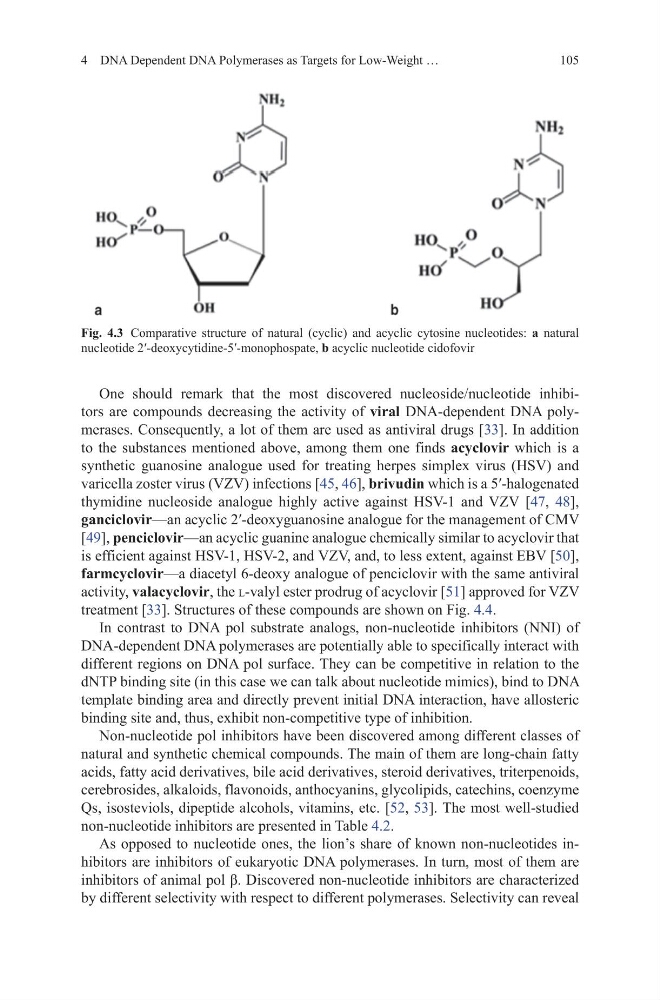
Fig. 4.3 Comparative structure of natural (cyclic) and acyclic cytosine nucleotides: a natural
nucleotide 2′-deoxycytidine-5′-monophospate, b acyclic nucleotide cidofovir
One should remark that the most discovered nucleoside/nucleotide inhibitors are compounds decreasing the activity of viral DNA-dependent DNA polymerases. Consequently, a lot of them are used as antiviral drugs [33]. In addition
to the substances mentioned above, among them one finds acyclovir which is a
synthetic guanosine analogue used for treating herpes simplex virus (HSV) and
varicella zoster virus (VZV) infections [45, 46], brivudin which is a 5′-halogenated
thymidine nucleoside analogue highly active against HSV-1 and VZV [47, 48],
ganciclovir—an acyclic 2′-deoxyguanosine analogue for the management of CMV
[49], penciclovir—an acyclic guanine analogue chemically similar to acyclovir that
is efficient against HSV-1, HSV-2, and VZV, and, to less extent, against EBV [50],
farmcyclovir—a diacetyl 6-deoxy analogue of penciclovir with the same antiviral
activity, valacyclovir, the l-valyl ester prodrug of acyclovir [51] approved for VZV
treatment [33]. Structures of these compounds are shown on Fig. 4.4.
In contrast to DNA pol substrate analogs, non-nucleotide inhibitors (NNI) of
DNA-dependent DNA polymerases are potentially able to specifically interact with
different regions on DNA pol surface. They can be competitive in relation to the
dNTP binding site (in this case we can talk about nucleotide mimics), bind to DNA
template binding area and directly prevent initial DNA interaction, have allosteric
binding site and, thus, exhibit non-competitive type of inhibition.
Non-nucleotide pol inhibitors have been discovered among different classes of
natural and synthetic chemical compounds. The main of them are long-chain fatty
acids, fatty acid derivatives, bile acid derivatives, steroid derivatives, triterpenoids,
cerebrosides, alkaloids, flavonoids, anthocyanins, glycolipids, catechins, coenzyme
Qs, isosteviols, dipeptide alcohols, vitamins, etc. [52, 53]. The most well-studied
non-nucleotide inhibitors are presented in Table 4.2.
As opposed to nucleotide ones, the lion’s share of known non-nucleotides inhibitors are inhibitors of eukaryotic DNA polymerases. In turn, most of them are
inhibitors of animal pol β. Discovered non-nucleotide inhibitors are characterized
by different selectivity with respect to different polymerases. Selectivity can reveal
4 DNA Dependent DNA Polymerases as Targets for Low-Weight …
Fig. 4.3 Comparative structure of natural (cyclic) and acyclic cytosine nucleotides: a natural
nucleotide 2′-deoxycytidine-5′-monophospate, b acyclic nucleotide cidofovir