

97
4 DNA Dependent DNA Polymerases as Targets for Low-Weight …
Family
Kingdom
Members
Main functions
A
Virus
T3, T5 and T7 DNA pol(s) Replication
Bacteria
DNA pol(s) I ( E. coli, T.
aquaticus, etc.)
Replication, repair
Eukaryotes
DNA pol γ
Mitochondrial DNA
replication
DNA pol θ
Replication of cross links,
base excision repair
B
Virus
T4, T6, RB69, Adeno,
HSV-1, Vaccinia, Phi29
DNA pol(s)
Replication
Archaea
DNA pol(s) BI, BII
Replication, repair(?)
DNA pol BIII
Repair, replication(?)
Bacteria
DNA pol II
Repair, replication(?)
Eukaryotes
DNA pol α
Replication (priming)
DNA pol δ
Replication (lagging
strand), repair
DNA pol ε
Replication (leading
strand), repair
DNA pol ζ/Rev3
Translesion synthesis
(extension)
C
Bacteria
DNA pol(s) III ( E. coli, T.
aquaticus, B. subtilis, etc.),
DNA pol E ( B. subtilis)
Replication
D
Archaea
DNA pol D
Replication
X
Virus
ASFV DNA pol
Repair
Archaea
DNA pol(s) × (various
species)
Repair
Bacteria
DNA pol(s) × (various
species)
Repair
Eukaryotes
DNA pol β (pol IV in S.
cerevisiae)
Base excision repair
DNA pol λ (pol LSP in S.
pombe)
Base excision repair,
double-strand break
repair, immunoglobulin
recombinational repair,
translesion synthesis
DNA pol μ
Immunoglobulin recombinational repair
DNA pol σ a
Sister chromatid cohesion
TdT
Antigen receptor diversity
Y
Archaea
Dpo4 DNA pol, Dbh DNA
pol
Translesion synthesis
Bacteria
DNA pol IV, DNA pol V
( E. coli)
Translesion synthesis
Eukaryotes
DNA pol η, DNA pol κ,
DNA pol ι, Rev1
Translesion synthesis
(incorporation)
a
DNA pol σwas later shown to be a poly (A) RNA polymerase [4]
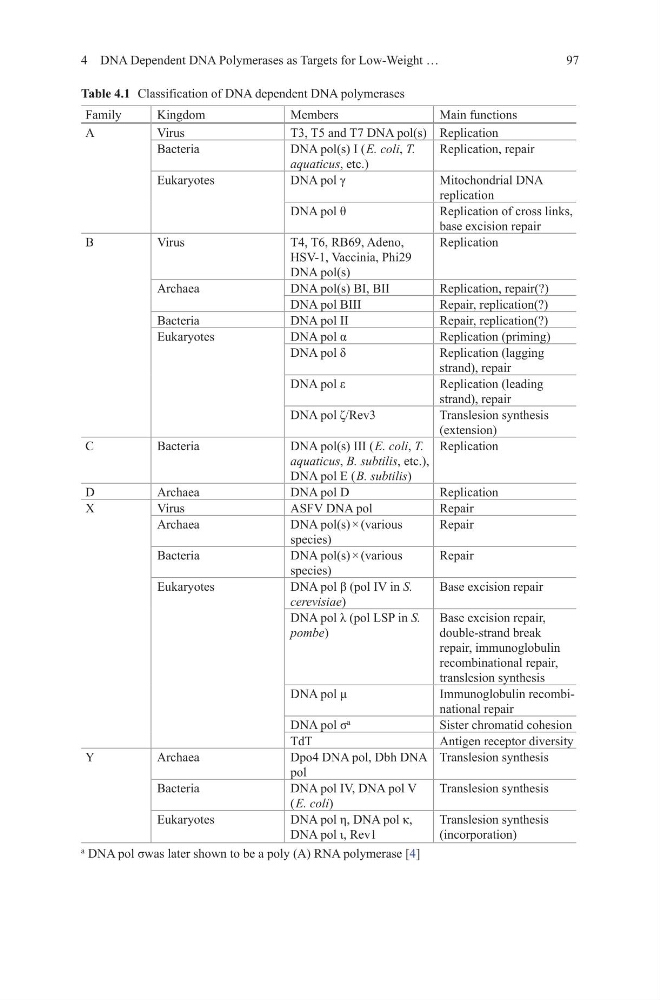
Table 4.1 Classification of DNA dependent DNA polymerases
4 DNA Dependent DNA Polymerases as Targets for Low-Weight …
Family
Kingdom
Members
Main functions
A
Virus
T3, T5 and T7 DNA pol(s) Replication
Bacteria
DNA pol(s) I ( E. coli, T.
aquaticus, etc.)
Replication, repair
Eukaryotes
DNA pol γ
Mitochondrial DNA
replication
DNA pol θ
Replication of cross links,
base excision repair
B
Virus
T4, T6, RB69, Adeno,
HSV-1, Vaccinia, Phi29
DNA pol(s)
Replication
Archaea
DNA pol(s) BI, BII
Replication, repair(?)
DNA pol BIII
Repair, replication(?)
Bacteria
DNA pol II
Repair, replication(?)
Eukaryotes
DNA pol α
Replication (priming)
DNA pol δ
Replication (lagging
strand), repair
DNA pol ε
Replication (leading
strand), repair
DNA pol ζ/Rev3
Translesion synthesis
(extension)
C
Bacteria
DNA pol(s) III ( E. coli, T.
aquaticus, B. subtilis, etc.),
DNA pol E ( B. subtilis)
Replication
D
Archaea
DNA pol D
Replication
X
Virus
ASFV DNA pol
Repair
Archaea
DNA pol(s) × (various
species)
Repair
Bacteria
DNA pol(s) × (various
species)
Repair
Eukaryotes
DNA pol β (pol IV in S.
cerevisiae)
Base excision repair
DNA pol λ (pol LSP in S.
pombe)
Base excision repair,
double-strand break
repair, immunoglobulin
recombinational repair,
translesion synthesis
DNA pol μ
Immunoglobulin recombinational repair
DNA pol σ a
Sister chromatid cohesion
TdT
Antigen receptor diversity
Y
Archaea
Dpo4 DNA pol, Dbh DNA
pol
Translesion synthesis
Bacteria
DNA pol IV, DNA pol V
( E. coli)
Translesion synthesis
Eukaryotes
DNA pol η, DNA pol κ,
DNA pol ι, Rev1
Translesion synthesis
(incorporation)
a
DNA pol σwas later shown to be a poly (A) RNA polymerase [4]
Table 4.1 Classification of DNA dependent DNA polymerases