

3. Estimate the volume of the diatom culture corresponding to
1.8 Â 10
8 cells for 6 samples (see Note 6).
4. Collect the cultured cells by centrifugation at 700 Â g for 4 min
(see Note 7).
5. Remove the supernatant carefully. Centrifuge again at 700 Â g
for 2 min to remove the supernatant as much as possible.
6. Add 50 mL of Resuspension buffer and resuspend the cells
gently.
7. Collect the washed cells by centrifugation at 700 Â g for
4 min and remove the spernatant carefully.
8. Repeat the washing step from the steps 6–7.
9. Resuspend the washed cells with 0.9 mL of Resuspension
buffer.
10. Dispense 0.15 mL aliquots of the washed cells into the 6 microcentrifuge tubes.
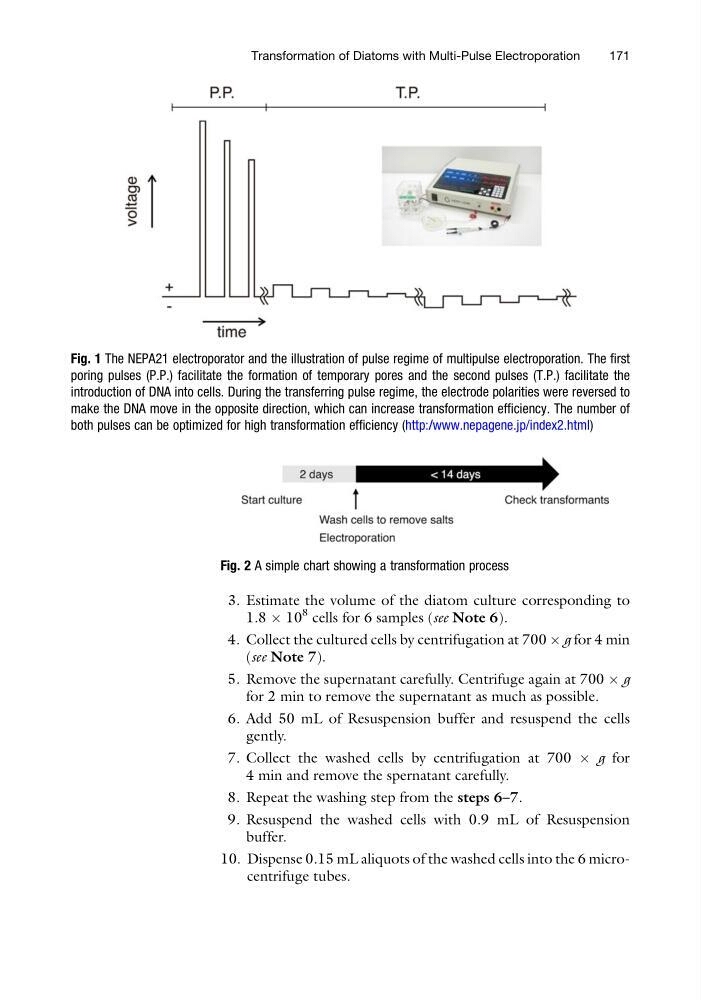
Fig. 1 The NEPA21 electroporator and the illustration of pulse regime of multipulse electroporation. The first
poring pulses (P.P.) facilitate the formation of temporary pores and the second pulses (T.P.) facilitate the
introduction of DNA into cells. During the transferring pulse regime, the electrode polarities were reversed to
make the DNA move in the opposite direction, which can increase transformation efficiency. The number of
both pulses can be optimized for high transformation efficiency (http:/ /www.nepagene.jp/index2.html)
Fig. 2 A simple chart showing a transformation process
Transformation of Diatoms with Multi-Pulse Electroporation
171
1.8 Â 10
8 cells for 6 samples (see Note 6).
4. Collect the cultured cells by centrifugation at 700 Â g for 4 min
(see Note 7).
5. Remove the supernatant carefully. Centrifuge again at 700 Â g
for 2 min to remove the supernatant as much as possible.
6. Add 50 mL of Resuspension buffer and resuspend the cells
gently.
7. Collect the washed cells by centrifugation at 700 Â g for
4 min and remove the spernatant carefully.
8. Repeat the washing step from the steps 6–7.
9. Resuspend the washed cells with 0.9 mL of Resuspension
buffer.
10. Dispense 0.15 mL aliquots of the washed cells into the 6 microcentrifuge tubes.
Fig. 1 The NEPA21 electroporator and the illustration of pulse regime of multipulse electroporation. The first
poring pulses (P.P.) facilitate the formation of temporary pores and the second pulses (T.P.) facilitate the
introduction of DNA into cells. During the transferring pulse regime, the electrode polarities were reversed to
make the DNA move in the opposite direction, which can increase transformation efficiency. The number of
both pulses can be optimized for high transformation efficiency (http:/ /www.nepagene.jp/index2.html)
Fig. 2 A simple chart showing a transformation process
Transformation of Diatoms with Multi-Pulse Electroporation
171