

3.9 Positive
and Negative Controls
for Recombineering
and Counterselection
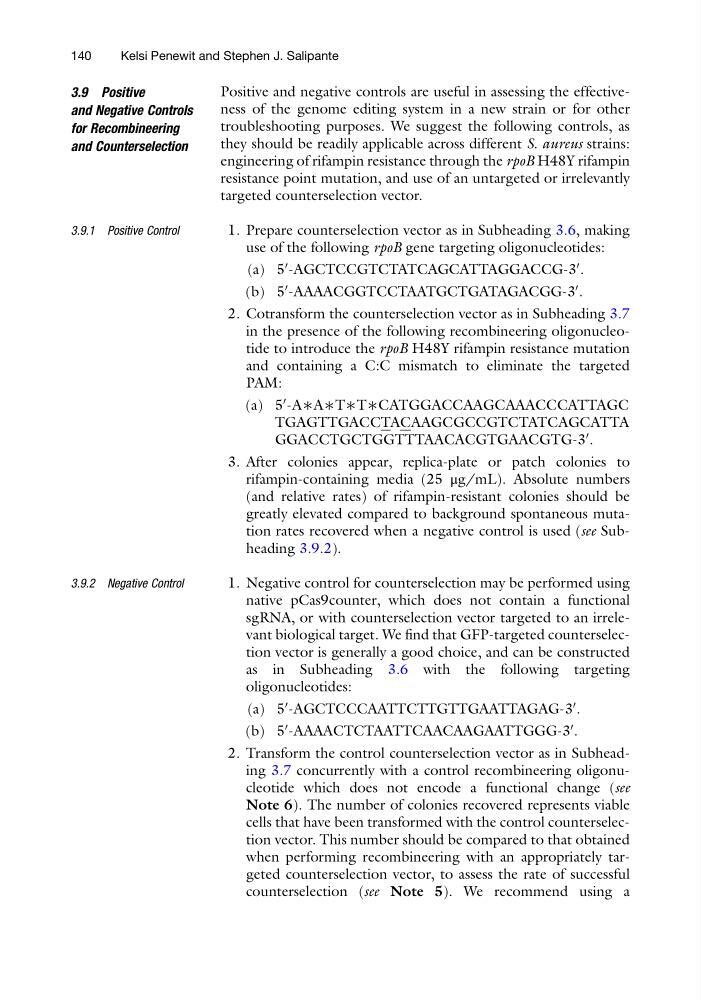
Positive and negative controls are useful in assessing the effectiveness of the genome editing system in a new strain or for other
troubleshooting purposes. We suggest the following controls, as
they should be readily applicable across different S. aureus strains:
engineering of rifampin resistance through the rpoB H48Y rifampin
resistance point mutation, and use of an untargeted or irrelevantly
targeted counterselection vector.
3.9.1 Positive Control
1. Prepare counterselection vector as in Subheading 3.6, making
use of the following rpoB gene targeting oligonucleotides:
(a) 5
0 -AGCTCCGTCTATCAGCATTAGGACCG-3
0 .
(b) 5
0 -AAAACGGTCCTAATGCTGATAGACGG-3
0 .
2. Cotransform the counterselection vector as in Subheading 3.7
in the presence of the following recombineering oligonucleotide to introduce the rpoB H48Y rifampin resistance mutation
and containing a C:C mismatch to eliminate the targeted
PAM:
(a) 5
0 -A∗A∗T∗T∗CATGGACCAAGCAAACCCATTAGC
TGAGTTGACCTACAAGCGCCGTCTATCAGCATTA
GGACCTGCTGGTTTAACACGTGAACGTG-3
0 .
3. After colonies appear, replica-plate or patch colonies to
rifampin-containing media (25 μg/mL). Absolute numbers
(and relative rates) of rifampin-resistant colonies should be
greatly elevated compared to background spontaneous mutation rates recovered when a negative control is used (see Subheading 3.9.2).
3.9.2 Negative Control
1. Negative control for counterselection may be performed using
native pCas9counter, which does not contain a functional
sgRNA, or with counterselection vector targeted to an irrelevant biological target. We find that GFP-targeted counterselection vector is generally a good choice, and can be constructed
as in Subheading 3.6 with the following targeting
oligonucleotides:
(a) 5
0 -AGCTCCCAATTCTTGTTGAATTAGAG-3
0 .
(b) 5
0 -AAAACTCTAATTCAACAAGAATTGGG-3
0 .
2. Transform the control counterselection vector as in Subheading 3.7 concurrently with a control recombineering oligonucleotide which does not encode a functional change (see
Note 6). The number of colonies recovered represents viable
cells that have been transformed with the control counterselection vector. This number should be compared to that obtained
when performing recombineering with an appropriately targeted counterselection vector, to assess the rate of successful
counterselection (see Note 5). We recommend using a
140
Kelsi Penewit and Stephen J. Salipante
and Negative Controls
for Recombineering
and Counterselection
Positive and negative controls are useful in assessing the effectiveness of the genome editing system in a new strain or for other
troubleshooting purposes. We suggest the following controls, as
they should be readily applicable across different S. aureus strains:
engineering of rifampin resistance through the rpoB H48Y rifampin
resistance point mutation, and use of an untargeted or irrelevantly
targeted counterselection vector.
3.9.1 Positive Control
1. Prepare counterselection vector as in Subheading 3.6, making
use of the following rpoB gene targeting oligonucleotides:
(a) 5
0 -AGCTCCGTCTATCAGCATTAGGACCG-3
0 .
(b) 5
0 -AAAACGGTCCTAATGCTGATAGACGG-3
0 .
2. Cotransform the counterselection vector as in Subheading 3.7
in the presence of the following recombineering oligonucleotide to introduce the rpoB H48Y rifampin resistance mutation
and containing a C:C mismatch to eliminate the targeted
PAM:
(a) 5
0 -A∗A∗T∗T∗CATGGACCAAGCAAACCCATTAGC
TGAGTTGACCTACAAGCGCCGTCTATCAGCATTA
GGACCTGCTGGTTTAACACGTGAACGTG-3
0 .
3. After colonies appear, replica-plate or patch colonies to
rifampin-containing media (25 μg/mL). Absolute numbers
(and relative rates) of rifampin-resistant colonies should be
greatly elevated compared to background spontaneous mutation rates recovered when a negative control is used (see Subheading 3.9.2).
3.9.2 Negative Control
1. Negative control for counterselection may be performed using
native pCas9counter, which does not contain a functional
sgRNA, or with counterselection vector targeted to an irrelevant biological target. We find that GFP-targeted counterselection vector is generally a good choice, and can be constructed
as in Subheading 3.6 with the following targeting
oligonucleotides:
(a) 5
0 -AGCTCCCAATTCTTGTTGAATTAGAG-3
0 .
(b) 5
0 -AAAACTCTAATTCAACAAGAATTGGG-3
0 .
2. Transform the control counterselection vector as in Subheading 3.7 concurrently with a control recombineering oligonucleotide which does not encode a functional change (see
Note 6). The number of colonies recovered represents viable
cells that have been transformed with the control counterselection vector. This number should be compared to that obtained
when performing recombineering with an appropriately targeted counterselection vector, to assess the rate of successful
counterselection (see Note 5). We recommend using a
140
Kelsi Penewit and Stephen J. Salipante