

6.2 Encounters in Solution
183
R, ˚
A
N
X ,arbitrary units
R int
P bim = 0.4
P bim = 1
N X ( )
25
20
15
10
5
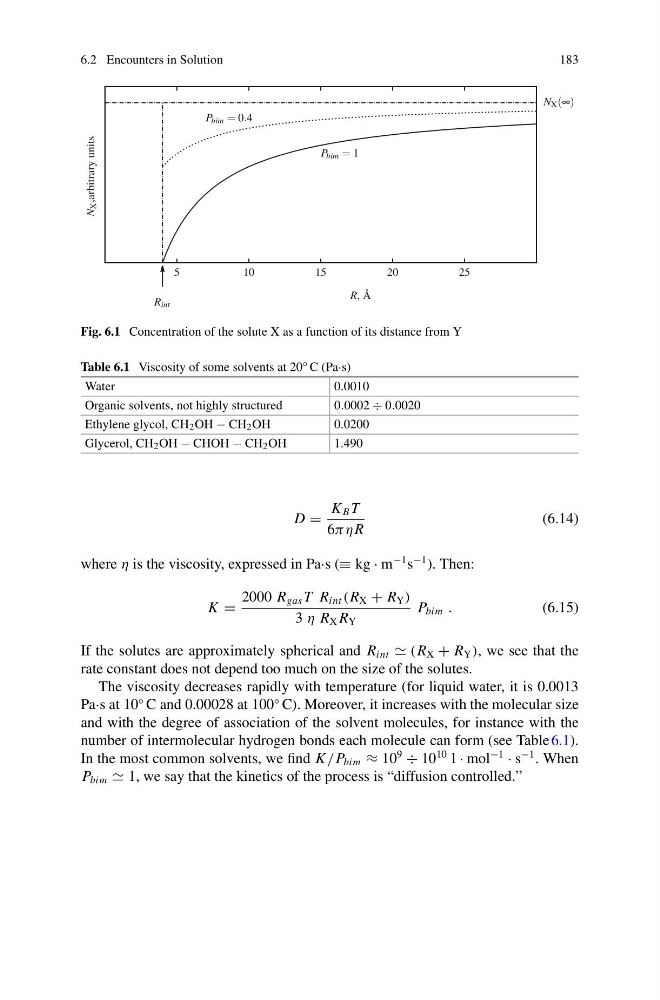
Fig. 6.1 Concentration of the solute X as a function of its distance from Y
Table 6.1 Viscosity of some solvents at 20 ◦ C (Pa·s)
Water
0.0010
Organic solvents, not highly structured
0.0002 ÷ 0.0020
Ethylene glycol, CH 2 OH − CH 2 OH
0.0200
Glycerol, CH 2 OH − CHOH − CH 2 OH
1.490
D =
K B T
6πηR
(6.14)
where η is the viscosity, expressed in Pa·s (≡ kg · m
−1 s
−1 ). Then:
K =
2000 R gas T R int (R X + R Y )
3 η R X R Y
P bim .
(6.15)
If the solutes are approximately spherical and R int (R X + R Y ), we see that the
rate constant does not depend too much on the size of the solutes.
The viscosity decreases rapidly with temperature (for liquid water, it is 0.0013
Pa·s at 10
◦ C and 0.00028 at 100
◦ C). Moreover, it increases with the molecular size
and with the degree of association of the solvent molecules, for instance with the
number of intermolecular hydrogen bonds each molecule can form (see Table 6.1).
In the most common solvents, we find K /P bim ≈ 10
9
÷ 10
10 l · mol
−1
· s
−1 . When
P bim 1, we say that the kinetics of the process is “diffusion controlled.”
183
R, ˚
A
N
X ,arbitrary units
R int
P bim = 0.4
P bim = 1
N X ( )
25
20
15
10
5
Fig. 6.1 Concentration of the solute X as a function of its distance from Y
Table 6.1 Viscosity of some solvents at 20 ◦ C (Pa·s)
Water
0.0010
Organic solvents, not highly structured
0.0002 ÷ 0.0020
Ethylene glycol, CH 2 OH − CH 2 OH
0.0200
Glycerol, CH 2 OH − CHOH − CH 2 OH
1.490
D =
K B T
6πηR
(6.14)
where η is the viscosity, expressed in Pa·s (≡ kg · m
−1 s
−1 ). Then:
K =
2000 R gas T R int (R X + R Y )
3 η R X R Y
P bim .
(6.15)
If the solutes are approximately spherical and R int (R X + R Y ), we see that the
rate constant does not depend too much on the size of the solutes.
The viscosity decreases rapidly with temperature (for liquid water, it is 0.0013
Pa·s at 10
◦ C and 0.00028 at 100
◦ C). Moreover, it increases with the molecular size
and with the degree of association of the solvent molecules, for instance with the
number of intermolecular hydrogen bonds each molecule can form (see Table 6.1).
In the most common solvents, we find K /P bim ≈ 10
9
÷ 10
10 l · mol
−1
· s
−1 . When
P bim 1, we say that the kinetics of the process is “diffusion controlled.”