

1.1 From Kinetics to Bimolecular Collisions
9
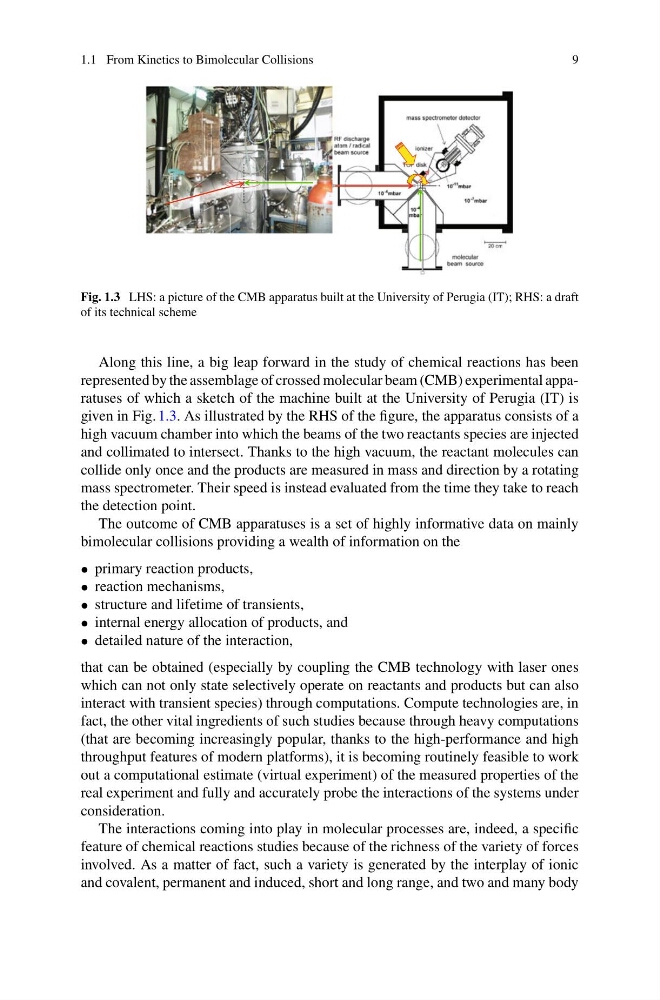
Fig. 1.3 LHS: a picture of the CMB apparatus built at the University of Perugia (IT); RHS: a draft
of its technical scheme
Along this line, a big leap forward in the study of chemical reactions has been
represented by the assemblage of crossed molecular beam (CMB) experimental apparatuses of which a sketch of the machine built at the University of Perugia (IT) is
given in Fig. 1.3. As illustrated by the RHS of the figure, the apparatus consists of a
high vacuum chamber into which the beams of the two reactants species are injected
and collimated to intersect. Thanks to the high vacuum, the reactant molecules can
collide only once and the products are measured in mass and direction by a rotating
mass spectrometer. Their speed is instead evaluated from the time they take to reach
the detection point.
The outcome of CMB apparatuses is a set of highly informative data on mainly
bimolecular collisions providing a wealth of information on the
• primary reaction products,
• reaction mechanisms,
• structure and lifetime of transients,
• internal energy allocation of products, and
• detailed nature of the interaction,
that can be obtained (especially by coupling the CMB technology with laser ones
which can not only state selectively operate on reactants and products but can also
interact with transient species) through computations. Compute technologies are, in
fact, the other vital ingredients of such studies because through heavy computations
(that are becoming increasingly popular, thanks to the high-performance and high
throughput features of modern platforms), it is becoming routinely feasible to work
out a computational estimate (virtual experiment) of the measured properties of the
real experiment and fully and accurately probe the interactions of the systems under
consideration.
The interactions coming into play in molecular processes are, indeed, a specific
feature of chemical reactions studies because of the richness of the variety of forces
involved. As a matter of fact, such a variety is generated by the interplay of ionic
and covalent, permanent and induced, short and long range, and two and many body
9
Fig. 1.3 LHS: a picture of the CMB apparatus built at the University of Perugia (IT); RHS: a draft
of its technical scheme
Along this line, a big leap forward in the study of chemical reactions has been
represented by the assemblage of crossed molecular beam (CMB) experimental apparatuses of which a sketch of the machine built at the University of Perugia (IT) is
given in Fig. 1.3. As illustrated by the RHS of the figure, the apparatus consists of a
high vacuum chamber into which the beams of the two reactants species are injected
and collimated to intersect. Thanks to the high vacuum, the reactant molecules can
collide only once and the products are measured in mass and direction by a rotating
mass spectrometer. Their speed is instead evaluated from the time they take to reach
the detection point.
The outcome of CMB apparatuses is a set of highly informative data on mainly
bimolecular collisions providing a wealth of information on the
• primary reaction products,
• reaction mechanisms,
• structure and lifetime of transients,
• internal energy allocation of products, and
• detailed nature of the interaction,
that can be obtained (especially by coupling the CMB technology with laser ones
which can not only state selectively operate on reactants and products but can also
interact with transient species) through computations. Compute technologies are, in
fact, the other vital ingredients of such studies because through heavy computations
(that are becoming increasingly popular, thanks to the high-performance and high
throughput features of modern platforms), it is becoming routinely feasible to work
out a computational estimate (virtual experiment) of the measured properties of the
real experiment and fully and accurately probe the interactions of the systems under
consideration.
The interactions coming into play in molecular processes are, indeed, a specific
feature of chemical reactions studies because of the richness of the variety of forces
involved. As a matter of fact, such a variety is generated by the interplay of ionic
and covalent, permanent and induced, short and long range, and two and many body