

86
3 Two (or More) Magnetic Centers
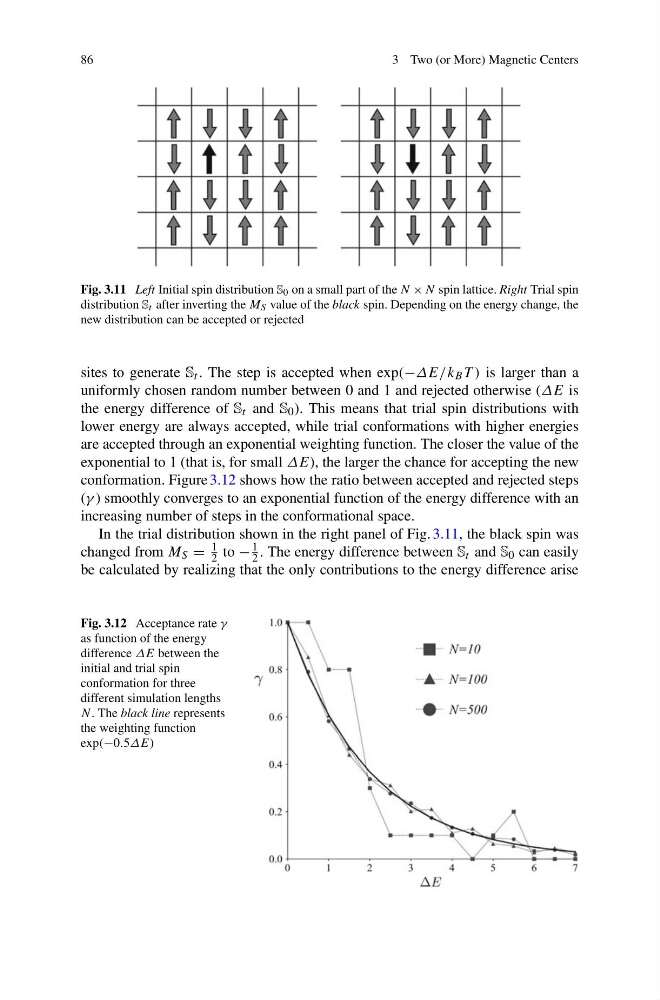
Fig. 3.11 Left Initial spin distribution S 0 on a small part of the N × N spin lattice. Right Trial spin
distribution S t after inverting the M S value of the black spin. Depending on the energy change, the
new distribution can be accepted or rejected
sites to generate S t . The step is accepted when exp(−∆E/k B T ) is larger than a
uniformly chosen random number between 0 and 1 and rejected otherwise (∆E is
the energy difference of S t and S 0 ). This means that trial spin distributions with
lower energy are always accepted, while trial conformations with higher energies
are accepted through an exponential weighting function. The closer the value of the
exponential to 1 (that is, for small ∆E), the larger the chance for accepting the new
conformation. Figure 3.12 shows how the ratio between accepted and rejected steps
(γ ) smoothly converges to an exponential function of the energy difference with an
increasing number of steps in the conformational space.
In the trial distribution shown in the right panel of Fig. 3.11, the black spin was
changed from M S =
1
2 to −
1
2 . The energy difference between S t and S 0 can easily
be calculated by realizing that the only contributions to the energy difference arise
Fig. 3.12 Acceptance rate γ
as function of the energy
difference ∆E between the
initial and trial spin
conformation for three
different simulation lengths
N .Theblack line represents
the weighting function
exp(−0.5∆E)
3 Two (or More) Magnetic Centers
Fig. 3.11 Left Initial spin distribution S 0 on a small part of the N × N spin lattice. Right Trial spin
distribution S t after inverting the M S value of the black spin. Depending on the energy change, the
new distribution can be accepted or rejected
sites to generate S t . The step is accepted when exp(−∆E/k B T ) is larger than a
uniformly chosen random number between 0 and 1 and rejected otherwise (∆E is
the energy difference of S t and S 0 ). This means that trial spin distributions with
lower energy are always accepted, while trial conformations with higher energies
are accepted through an exponential weighting function. The closer the value of the
exponential to 1 (that is, for small ∆E), the larger the chance for accepting the new
conformation. Figure 3.12 shows how the ratio between accepted and rejected steps
(γ ) smoothly converges to an exponential function of the energy difference with an
increasing number of steps in the conformational space.
In the trial distribution shown in the right panel of Fig. 3.11, the black spin was
changed from M S =
1
2 to −
1
2 . The energy difference between S t and S 0 can easily
be calculated by realizing that the only contributions to the energy difference arise
Fig. 3.12 Acceptance rate γ
as function of the energy
difference ∆E between the
initial and trial spin
conformation for three
different simulation lengths
N .Theblack line represents
the weighting function
exp(−0.5∆E)