

200
6 Magnetism and Conduction
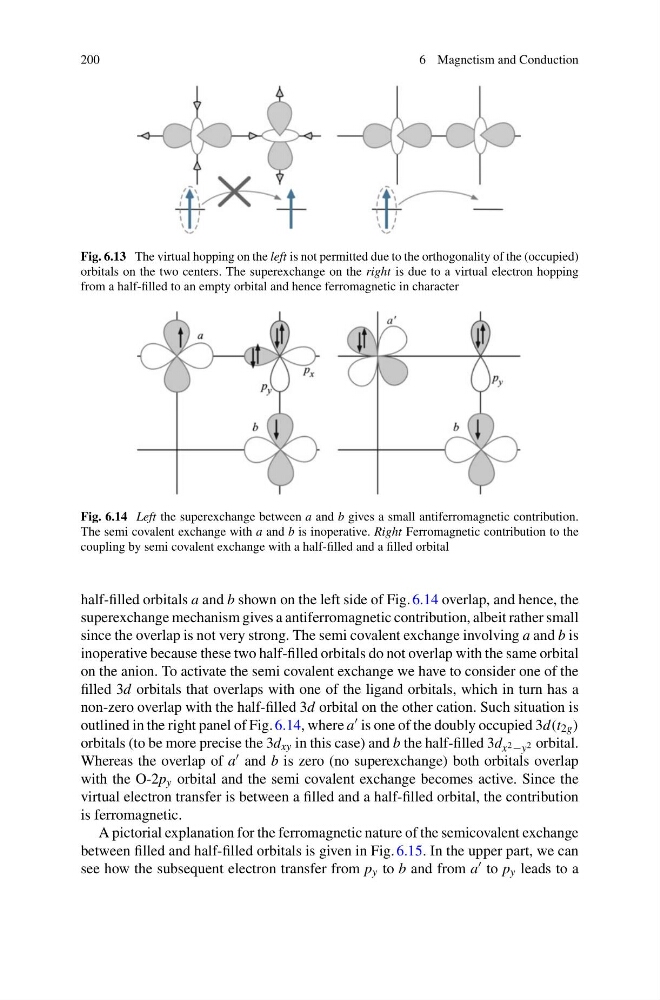
Fig. 6.13 The virtual hopping on the left is not permitted due to the orthogonality of the (occupied)
orbitals on the two centers. The superexchange on the right is due to a virtual electron hopping
from a half-filled to an empty orbital and hence ferromagnetic in character
Fig. 6.14 Left the superexchange between a and b gives a small antiferromagnetic contribution.
The semi covalent exchange with a and b is inoperative. Right Ferromagnetic contribution to the
coupling by semi covalent exchange with a half-filled and a filled orbital
half-filled orbitals a and b shown on the left side of Fig. 6.14 overlap, and hence, the
superexchange mechanism gives a antiferromagnetic contribution, albeit rather small
since the overlap is not very strong. The semi covalent exchange involving a and b is
inoperative because these two half-filled orbitals do not overlap with the same orbital
on the anion. To activate the semi covalent exchange we have to consider one of the
filled 3d orbitals that overlaps with one of the ligand orbitals, which in turn has a
non-zero overlap with the half-filled 3d orbital on the other cation. Such situation is
outlined in the right panel of Fig. 6.14, where a ′ is one of the doubly occupied 3d(t 2g )
orbitals (to be more precise the 3d xy in this case) and b the half-filled 3d x 2 −y 2 orbital.
Whereas the overlap of a ′ and b is zero (no superexchange) both orbitals overlap
with the O-2p y orbital and the semi covalent exchange becomes active. Since the
virtual electron transfer is between a filled and a half-filled orbital, the contribution
is ferromagnetic.
A pictorial explanation for the ferromagnetic nature of the semicovalent exchange
between filled and half-filled orbitals is given in Fig. 6.15. In the upper part, we can
see how the subsequent electron transfer from p y to b and from a ′ to p y leads to a
6 Magnetism and Conduction
Fig. 6.13 The virtual hopping on the left is not permitted due to the orthogonality of the (occupied)
orbitals on the two centers. The superexchange on the right is due to a virtual electron hopping
from a half-filled to an empty orbital and hence ferromagnetic in character
Fig. 6.14 Left the superexchange between a and b gives a small antiferromagnetic contribution.
The semi covalent exchange with a and b is inoperative. Right Ferromagnetic contribution to the
coupling by semi covalent exchange with a half-filled and a filled orbital
half-filled orbitals a and b shown on the left side of Fig. 6.14 overlap, and hence, the
superexchange mechanism gives a antiferromagnetic contribution, albeit rather small
since the overlap is not very strong. The semi covalent exchange involving a and b is
inoperative because these two half-filled orbitals do not overlap with the same orbital
on the anion. To activate the semi covalent exchange we have to consider one of the
filled 3d orbitals that overlaps with one of the ligand orbitals, which in turn has a
non-zero overlap with the half-filled 3d orbital on the other cation. Such situation is
outlined in the right panel of Fig. 6.14, where a ′ is one of the doubly occupied 3d(t 2g )
orbitals (to be more precise the 3d xy in this case) and b the half-filled 3d x 2 −y 2 orbital.
Whereas the overlap of a ′ and b is zero (no superexchange) both orbitals overlap
with the O-2p y orbital and the semi covalent exchange becomes active. Since the
virtual electron transfer is between a filled and a half-filled orbital, the contribution
is ferromagnetic.
A pictorial explanation for the ferromagnetic nature of the semicovalent exchange
between filled and half-filled orbitals is given in Fig. 6.15. In the upper part, we can
see how the subsequent electron transfer from p y to b and from a ′ to p y leads to a