

reactors in series, average molecular mass and comonomer content can again be
varied in all three reactors together with the mass fraction in two polymerization
reactors. This means that, in this case, there are eight variables to be changed
independently, which gives room for product optimization in an outstanding way.
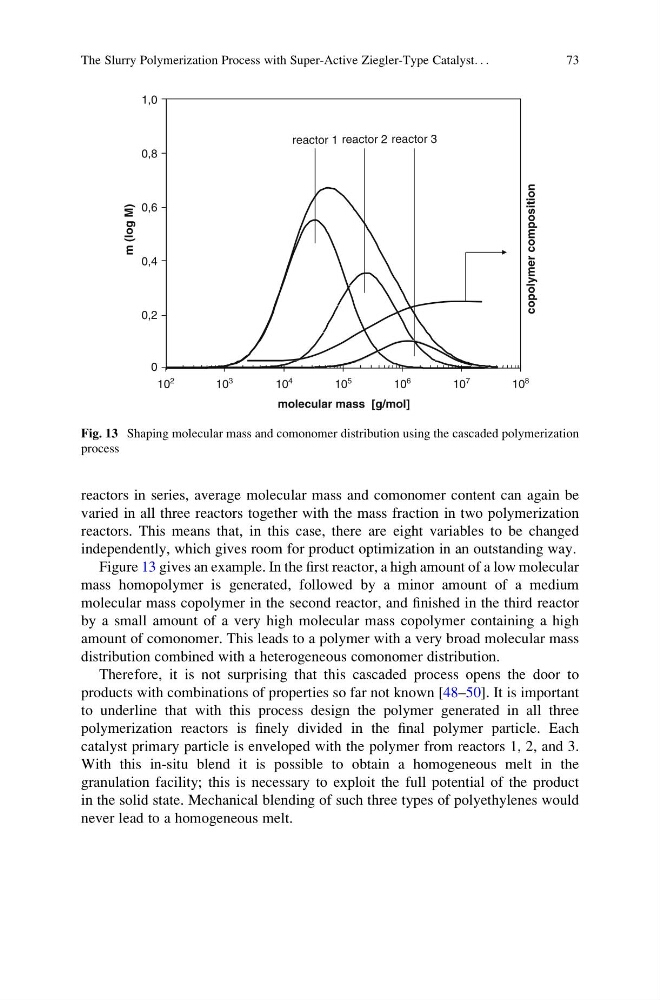
Figure 13 gives an example. In the first reactor, a high amount of a low molecular
mass homopolymer is generated, followed by a minor amount of a medium
molecular mass copolymer in the second reactor, and finished in the third reactor
by a small amount of a very high molecular mass copolymer containing a high
amount of comonomer. This leads to a polymer with a very broad molecular mass
distribution combined with a heterogeneous comonomer distribution.
Therefore, it is not surprising that this cascaded process opens the door to
products with combinations of properties so far not known [48–50]. It is important
to underline that with this process design the polymer generated in all three
polymerization reactors is finely divided in the final polymer particle. Each
catalyst primary particle is enveloped with the polymer from reactors 1, 2, and 3.
With this in-situ blend it is possible to obtain a homogeneous melt in the
granulation facility; this is necessary to exploit the full potential of the product
in the solid state. Mechanical blending of such three types of polyethylenes would
never lead to a homogeneous melt.
0,2
0,4
0,6
0,8
10
2
10
3
10
4
10
5
10
6
10
7
10
8
molecular mass [g/mol]
copolymer composition
m (log M)
reactor 1 reactor 2 reactor 3
1,0
0
Fig. 13 Shaping molecular mass and comonomer distribution using the cascaded polymerization
process
The Slurry Polymerization Process with Super-Active Ziegler-Type Catalyst. . .
73
varied in all three reactors together with the mass fraction in two polymerization
reactors. This means that, in this case, there are eight variables to be changed
independently, which gives room for product optimization in an outstanding way.
Figure 13 gives an example. In the first reactor, a high amount of a low molecular
mass homopolymer is generated, followed by a minor amount of a medium
molecular mass copolymer in the second reactor, and finished in the third reactor
by a small amount of a very high molecular mass copolymer containing a high
amount of comonomer. This leads to a polymer with a very broad molecular mass
distribution combined with a heterogeneous comonomer distribution.
Therefore, it is not surprising that this cascaded process opens the door to
products with combinations of properties so far not known [48–50]. It is important
to underline that with this process design the polymer generated in all three
polymerization reactors is finely divided in the final polymer particle. Each
catalyst primary particle is enveloped with the polymer from reactors 1, 2, and 3.
With this in-situ blend it is possible to obtain a homogeneous melt in the
granulation facility; this is necessary to exploit the full potential of the product
in the solid state. Mechanical blending of such three types of polyethylenes would
never lead to a homogeneous melt.
0,2
0,4
0,6
0,8
10
2
10
3
10
4
10
5
10
6
10
7
10
8
molecular mass [g/mol]
copolymer composition
m (log M)
reactor 1 reactor 2 reactor 3
1,0
0
Fig. 13 Shaping molecular mass and comonomer distribution using the cascaded polymerization
process
The Slurry Polymerization Process with Super-Active Ziegler-Type Catalyst. . .
73