

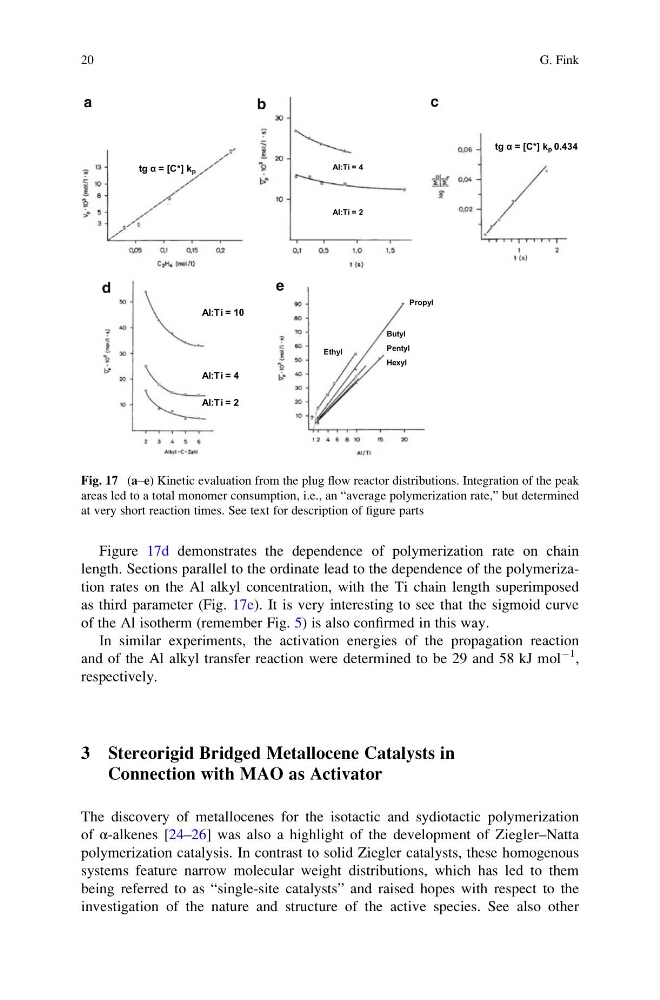
Figure 17d demonstrates the dependence of polymerization rate on chain
length. Sections parallel to the ordinate lead to the dependence of the polymerization rates on the Al alkyl concentration, with the Ti chain length superimposed
as third parameter (Fig. 17e). It is very interesting to see that the sigmoid curve
of the Al isotherm (remember Fig. 5) is also confirmed in this way.
In similar experiments, the activation energies of the propagation reaction
and of the Al alkyl transfer reaction were determined to be 29 and 58 kJ mol
À1 ,
respectively.
3 Stereorigid Bridged Metallocene Catalysts in
Connection with MAO as Activator
The discovery of metallocenes for the isotactic and sydiotactic polymerization
of α-alkenes [24–26] was also a highlight of the development of Ziegler–Natta
polymerization catalysis. In contrast to solid Ziegler catalysts, these homogenous
systems feature narrow molecular weight distributions, which has led to them
being referred to as “single-site catalysts” and raised hopes with respect to the
investigation of the nature and structure of the active species. See also other
Al:Ti = 4
Al:Ti = 2
Ethyl
Propyl
Butyl
Pentyl
Hexyl
tg α = [C*] k p 0.434
tg α = [C*] k p
Al:Ti = 10
Al:Ti = 4
Al:Ti = 2
a
b
c
d
e
Fig. 17 (a–e) Kinetic evaluation from the plug flow reactor distributions. Integration of the peak
areas led to a total monomer consumption, i.e., an “average polymerization rate,” but determined
at very short reaction times. See text for description of figure parts
20
G. Fink
length. Sections parallel to the ordinate lead to the dependence of the polymerization rates on the Al alkyl concentration, with the Ti chain length superimposed
as third parameter (Fig. 17e). It is very interesting to see that the sigmoid curve
of the Al isotherm (remember Fig. 5) is also confirmed in this way.
In similar experiments, the activation energies of the propagation reaction
and of the Al alkyl transfer reaction were determined to be 29 and 58 kJ mol
À1 ,
respectively.
3 Stereorigid Bridged Metallocene Catalysts in
Connection with MAO as Activator
The discovery of metallocenes for the isotactic and sydiotactic polymerization
of α-alkenes [24–26] was also a highlight of the development of Ziegler–Natta
polymerization catalysis. In contrast to solid Ziegler catalysts, these homogenous
systems feature narrow molecular weight distributions, which has led to them
being referred to as “single-site catalysts” and raised hopes with respect to the
investigation of the nature and structure of the active species. See also other
Al:Ti = 4
Al:Ti = 2
Ethyl
Propyl
Butyl
Pentyl
Hexyl
tg α = [C*] k p 0.434
tg α = [C*] k p
Al:Ti = 10
Al:Ti = 4
Al:Ti = 2
a
b
c
d
e
Fig. 17 (a–e) Kinetic evaluation from the plug flow reactor distributions. Integration of the peak
areas led to a total monomer consumption, i.e., an “average polymerization rate,” but determined
at very short reaction times. See text for description of figure parts
20
G. Fink