

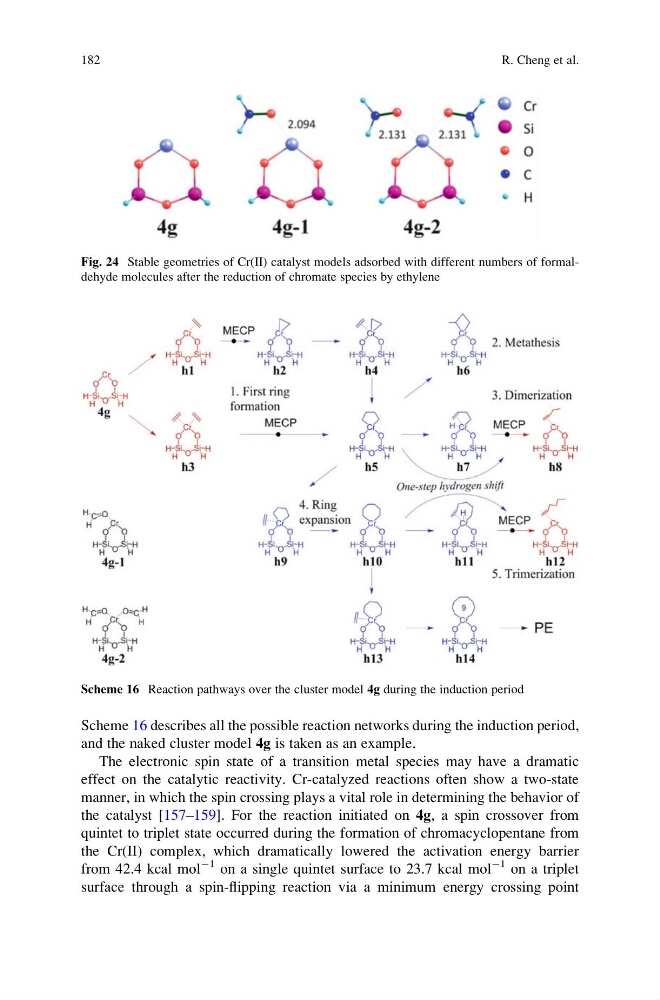
Scheme 16 describes all the possible reaction networks during the induction period,
and the naked cluster model 4g is taken as an example.
The electronic spin state of a transition metal species may have a dramatic
effect on the catalytic reactivity. Cr-catalyzed reactions often show a two-state
manner, in which the spin crossing plays a vital role in determining the behavior of
the catalyst [157–159]. For the reaction initiated on 4g, a spin crossover from
quintet to triplet state occurred during the formation of chromacyclopentane from
the Cr(II) complex, which dramatically lowered the activation energy barrier
from 42.4 kcal mol
À1 on a single quintet surface to 23.7 kcal mol
À1 on a triplet
surface through a spin-flipping reaction via a minimum energy crossing point
Fig. 24 Stable geometries of Cr(II) catalyst models adsorbed with different numbers of formaldehyde molecules after the reduction of chromate species by ethylene
Scheme 16 Reaction pathways over the cluster model 4g during the induction period
182
R. Cheng et al.
and the naked cluster model 4g is taken as an example.
The electronic spin state of a transition metal species may have a dramatic
effect on the catalytic reactivity. Cr-catalyzed reactions often show a two-state
manner, in which the spin crossing plays a vital role in determining the behavior of
the catalyst [157–159]. For the reaction initiated on 4g, a spin crossover from
quintet to triplet state occurred during the formation of chromacyclopentane from
the Cr(II) complex, which dramatically lowered the activation energy barrier
from 42.4 kcal mol
À1 on a single quintet surface to 23.7 kcal mol
À1 on a triplet
surface through a spin-flipping reaction via a minimum energy crossing point
Fig. 24 Stable geometries of Cr(II) catalyst models adsorbed with different numbers of formaldehyde molecules after the reduction of chromate species by ethylene
Scheme 16 Reaction pathways over the cluster model 4g during the induction period
182
R. Cheng et al.