

surface-stabilized Cr(III)O x,surf species on Phillips catalysts have been frequently
reported by other researchers [33, 81]. Although its specific molecular structure still
remains ambiguous, four plausible structure models (illustrated in Scheme 3) have
been proposed. The formation of this Cr(III)O x,surf species was thought to originate
from calcination-induced reduction of the chromate Cr(VI)O x,surf species and to
increase with calcination temperature and time.
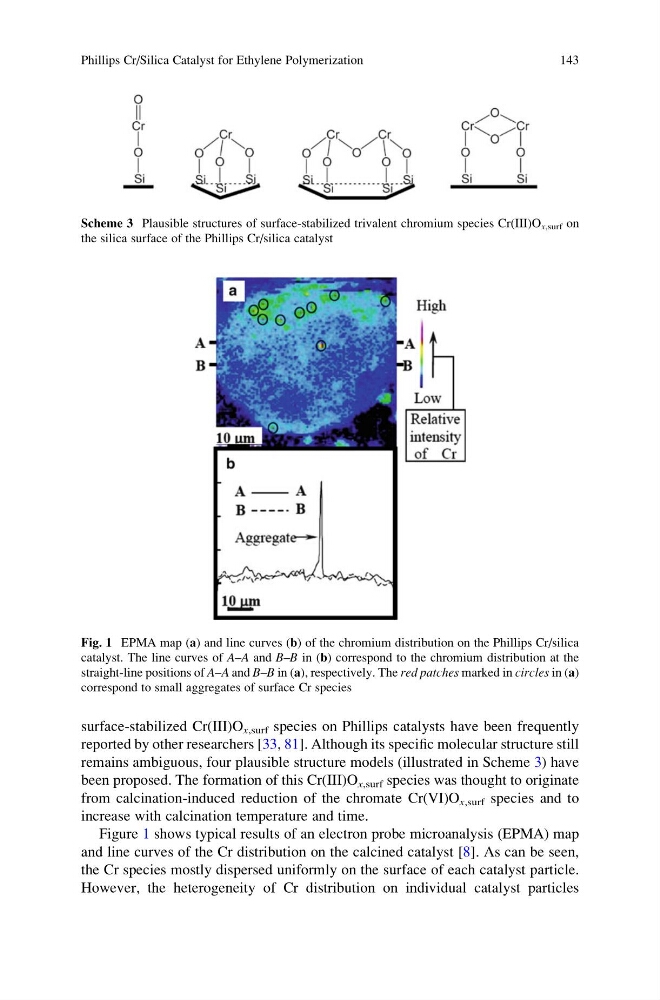
Figure 1 shows typical results of an electron probe microanalysis (EPMA) map
and line curves of the Cr distribution on the calcined catalyst [8]. As can be seen,
the Cr species mostly dispersed uniformly on the surface of each catalyst particle.
However, the heterogeneity of Cr distribution on individual catalyst particles
Scheme 3 Plausible structures of surface-stabilized trivalent chromium species Cr(III)O x,surf on
the silica surface of the Phillips Cr/silica catalyst
Fig. 1 EPMA map (a) and line curves (b) of the chromium distribution on the Phillips Cr/silica
catalyst. The line curves of A–A and B–B in (b) correspond to the chromium distribution at the
straight-line positions of A–A and B–B in (a), respectively. The red patches marked in circles in (a)
correspond to small aggregates of surface Cr species
Phillips Cr/Silica Catalyst for Ethylene Polymerization
143
reported by other researchers [33, 81]. Although its specific molecular structure still
remains ambiguous, four plausible structure models (illustrated in Scheme 3) have
been proposed. The formation of this Cr(III)O x,surf species was thought to originate
from calcination-induced reduction of the chromate Cr(VI)O x,surf species and to
increase with calcination temperature and time.
Figure 1 shows typical results of an electron probe microanalysis (EPMA) map
and line curves of the Cr distribution on the calcined catalyst [8]. As can be seen,
the Cr species mostly dispersed uniformly on the surface of each catalyst particle.
However, the heterogeneity of Cr distribution on individual catalyst particles
Scheme 3 Plausible structures of surface-stabilized trivalent chromium species Cr(III)O x,surf on
the silica surface of the Phillips Cr/silica catalyst
Fig. 1 EPMA map (a) and line curves (b) of the chromium distribution on the Phillips Cr/silica
catalyst. The line curves of A–A and B–B in (b) correspond to the chromium distribution at the
straight-line positions of A–A and B–B in (a), respectively. The red patches marked in circles in (a)
correspond to small aggregates of surface Cr species
Phillips Cr/Silica Catalyst for Ethylene Polymerization
143